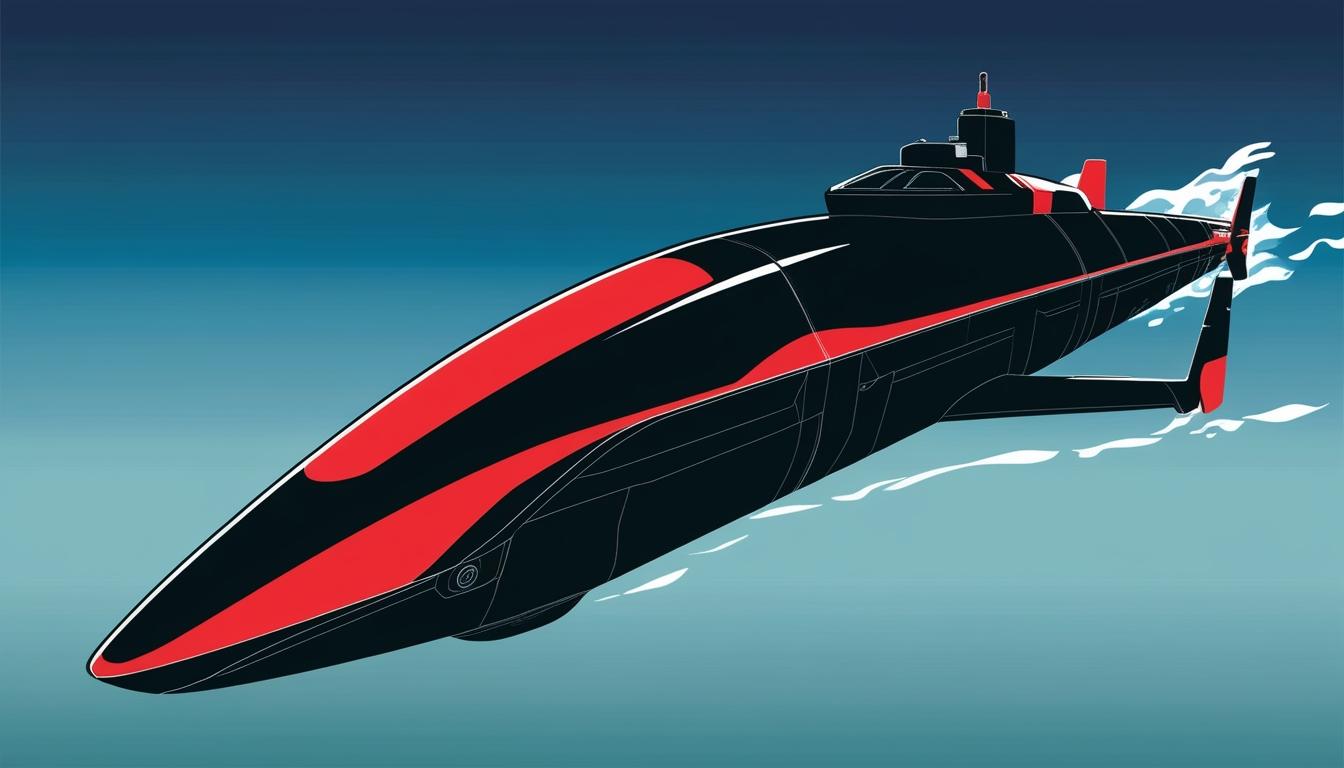
BAE Systems, a prominent British defence company, has recently achieved a significant milestone in underwater military technology with the successful trials of Herne, an extra-large autonomous underwater vehicle (XLAUV). These trials took place off the southern coast of England earlier this month, showcasing Herne's advanced capabilities and signalling a potential transformative shift in unmanned underwater operations.
Herne is designed to redefine military underwater operations with a comprehensive suite of capabilities aimed at safeguarding crucial underwater infrastructure, bolstering anti-submarine warfare, and conducting covert surveillance over expansive seabed areas. During the trials, Herne executed a pre-programmed intelligence, surveillance, and reconnaissance (ISR) mission through BAE Systems’ cutting-edge Nautomate control system, which is integral to its operation.
The endurance and efficiency of Herne are significant advantages, as the vehicle operates without the need for resupply or life-support systems. This feature enables extended missions in challenging environments, which, in turn, allows military personnel to focus on higher-value tasks that require human expertise. Scott Jamieson, the Managing Director of BAE Systems’ Maritime Services, remarked on the revolutionary nature of Herne, describing it as a “game changer in the underwater battlespace.” He highlighted the vehicle's role as a cost-effective solution for various missions, reducing reliance on crewed platforms and enhancing the safety of personnel.
Central to Herne's autonomy is the Nautomate control system, which has been previously validated during surface vessel trials. This system offers seamless integration, allowing it to be fitted to both existing and newly constructed vessels. Its operational flexibility facilitates unmanned missions in complex and contested environments, while its scalability ensures compatibility with future upgrades and technological advancements.
Herne’s modular, future-ready design is also noteworthy. Its open architecture allows for the easy integration of new technologies and mission-specific tools, a feature that was developed in collaboration with the Canadian company Cellula Robotics. BAE Systems progressed from concept to demonstrator trials in just 11 months, underscoring the rapid development of this advanced autonomous technology.
The deployment of Herne indicates substantial strategic advantages for military operations. By reducing the reliance on crewed platforms, it offers a more cost-effective defence solution. Additionally, it enhances safety by keeping personnel out of high-risk areas and acts as a force multiplier, enabling extended missions that could prove challenging for conventional submarines. Moreover, Herne’s capabilities extend to a variety of critical operations, ranging from surveillance to infrastructure protection.
The successful trials of Herne signal a notable shift in naval warfare strategies, where autonomous systems are increasingly pivotal to improving operational efficiency while simultaneously mitigating risks. BAE Systems' advanced technologies, particularly the Nautomate system, position the company at the forefront of developing unmanned maritime platforms.
The implications of Herne’s capabilities are significant as they reflect a growing trend towards the utilisation of unmanned systems in modern naval operations. With its versatile functionality, Herne is poised to become a cornerstone of future naval defence strategies. BAE Systems' swift development timeline and successful demonstration of Herne's capabilities highlight the transformative potential of autonomous technology in redefining the underwater operational landscape.
Source: Noah Wire Services