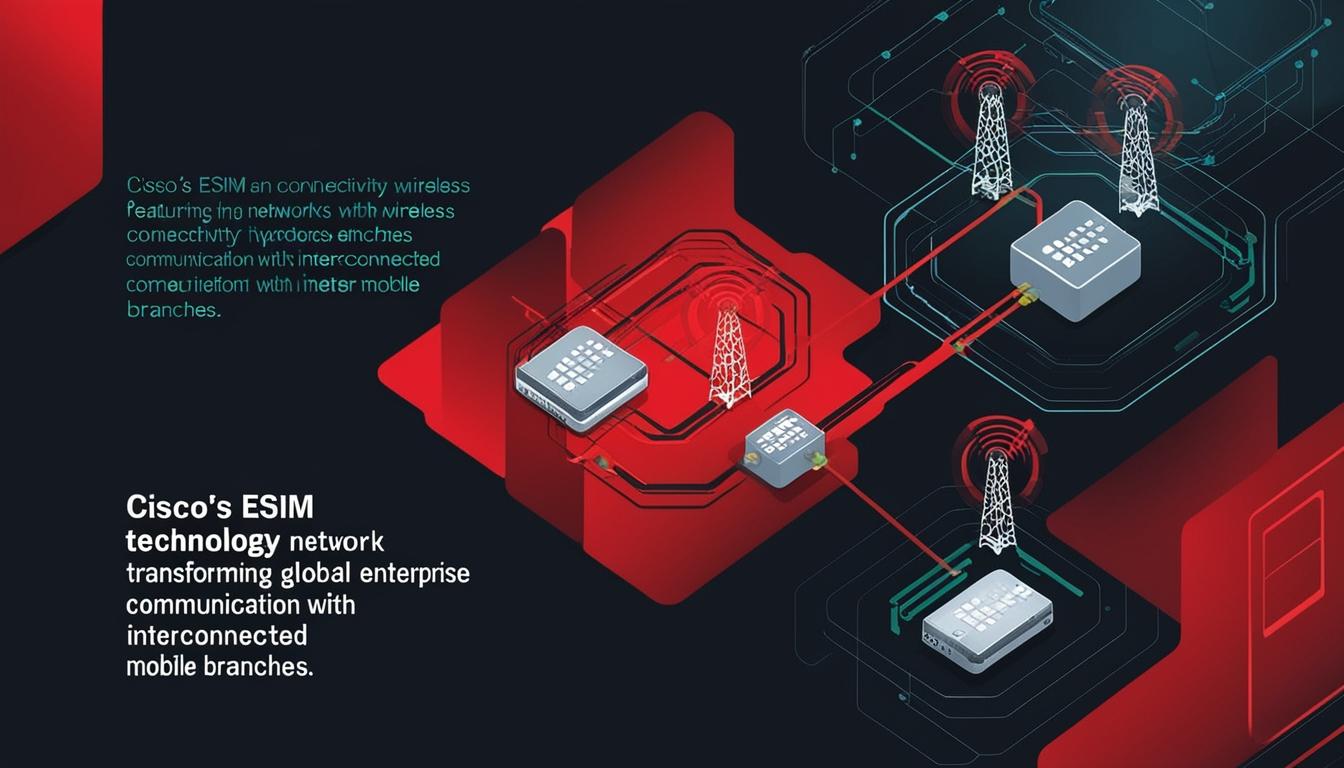
Cisco and NTT DATA have announced an expanded partnership aimed at revolutionising how global enterprises access wireless connectivity. This collaboration, officially unveiled on November 26, 2024, in San Jose, California, and London, UK, comes in response to the increasing demand for versatile and cost-effective connectivity solutions that transcend the traditional office-centric network model.
The partnership seeks to redefine connectivity by integrating Cisco's cutting-edge eSIM technology with NTT DATA’s robust Transatel network. This will allow businesses to easily activate, manage, and monitor their Cisco infrastructure across 180 countries through a simplified provisioning process. Customers can now implement secure mobile branches on-demand, facilitating faster connectivity and enhanced device management without the complexities typically associated with network setup.
Cisco's eSIM technology enables businesses to scale their network solutions efficiently, ensuring continuous performance optimisation. This advancement represents a significant shift from conventional landline connections, positioning digital connectivity at the forefront of enterprise needs.
The combined offerings of Cisco and NTT DATA target various industries, including financial services, retail, hospitality, and manufacturing, ensuring that enterprises can establish immediate and secure mobile branch services. Andrew Brown, Practice Lead for IoT Research at Omdia, highlighted the crucial requirement for businesses to reduce installation costs and install backup services in a managed manner. According to Brown, the integration of Cisco and NTT DATA will greatly enhance the customer experience by streamlining connectivity solutions.
Both companies anticipate that this partnership will provide substantial benefits, from enabling omnichannel retail experiences to ensuring uninterrupted communication in the financial sector. For example, in the hospitality industry, centralised cellular connectivity management can enhance guest experiences, featuring robust security for events and activities. In manufacturing, businesses can reduce downtime through self-provisioning solutions, which facilitate rapid deployments.
The partnership has been positioned as a “game-changer” for the enterprise market, according to Masum Mir, Senior Vice President and General Manager of Cisco Provider Mobility. He emphasised that the collaboration will ease the provisioning process for enterprises, enabling them to focus on digital transformation without being bogged down by network management complexities.
According to industry expert Alejandro Cadenas from IDC, the current shift towards seamless, scalable, and secure connectivity solutions is crucial for businesses striving to enhance decision-making through high-quality data accessibility. This movement reflects a broader trend aimed at democratising access to advanced technologies, ensuring all organisations can seize emerging opportunities effectively.
In parallel to this development in connectivity solutions, the cloud telephony service market is experiencing rapid growth, driven by the integration of communication technology that replaces traditional systems with cloud-based alternatives. By 2024, the market is estimated to reach US$ 22.8 billion and is projected to expand further, achieving a value of US$ 42.2 billion by 2031.
Cloud telephony presents multiple benefits, such as cost savings through reduced infrastructure needs, scalability to accommodate dynamic business requirements, and enhanced productivity via automated and integrated communication features. These advantages have positioned cloud telephony as a foundational component of modern enterprise communication systems.
The increasing hybrid work models have further accentuated the importance of cloud telephony, as more businesses seek flexible communication tools. Enhanced AI capabilities within cloud telephony systems are also transforming user interactions, providing features such as chatbots and advanced analytics. However, challenges including concerns over data privacy, internet reliance, and resistance from traditional systems users may impact adoption rates.
As the landscape of business communication evolves, both Cisco and NTT DATA's partnership, along with advances in cloud telephony, signify a notable shift towards integrating technology in addressing modern enterprises' operational challenges. The future of connectivity, underpinned by AI and 5G advancements, is shaping up to be more dynamic, efficient, and secure, promising a transformative impact on how businesses engage and connect globally.
Source: Noah Wire Services