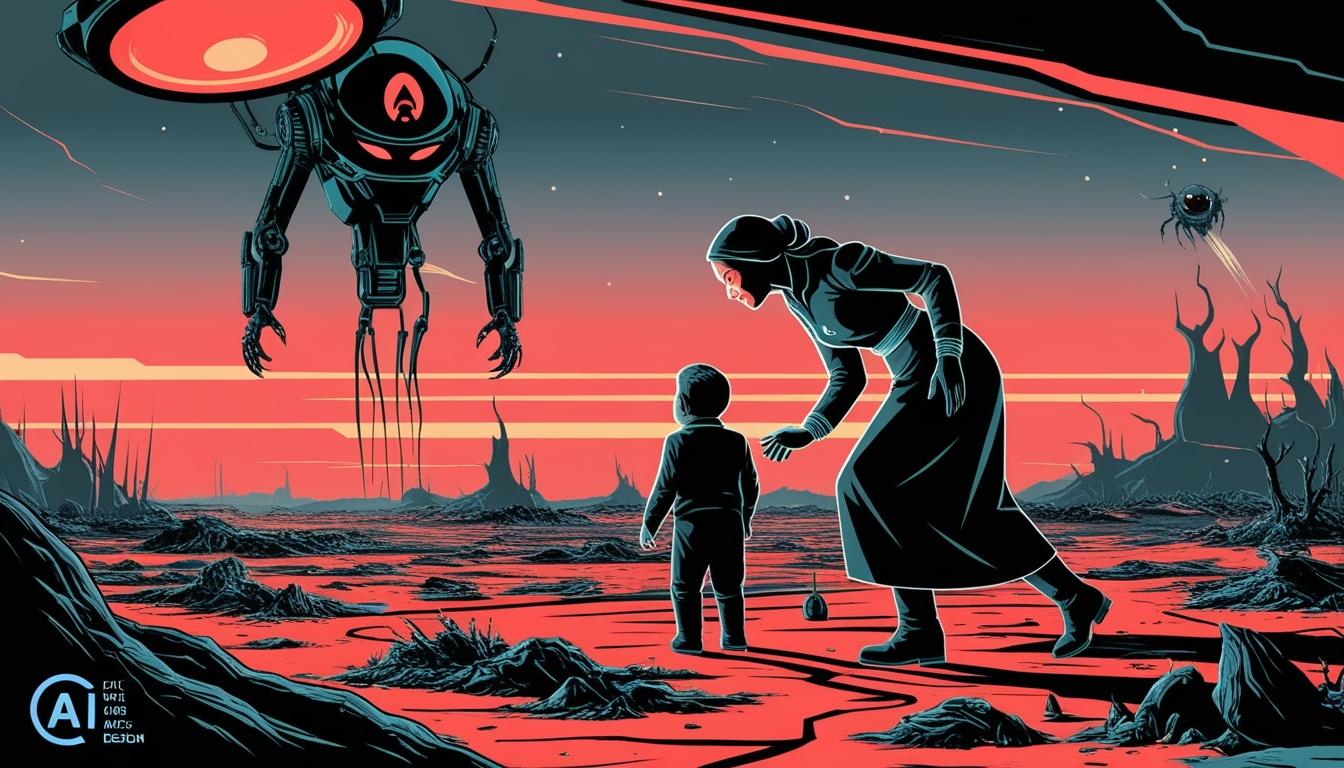
Scott Deal, a professor at Indiana University Indianapolis, is set to bring his innovative project, “Lexia: An AI Opera,” to life in January 2025. This groundbreaking opera, which merges music and artificial intelligence, is scheduled to premiere on January 11 at The Phoenix Theatre in Indianapolis, followed by a performance on February 14 at the Roulette Theatre in Brooklyn, New York.
Deal, who teaches in the Department of Music Technology at the Herron School of Art and Design, has worked closely with assistant professor Jason Palamara since 2018 to develop AVATAR, an AI-based machine-learning model capable of improvising music alongside live musicians. This distinguishing feature allows AVATAR to listen to human players, respond, and create music in real-time, moving beyond the standard practice of generating pre-set musical styles through input commands.
In developing AVATAR, Deal performed on a vibraphone, an instrument similar to a xylophone, while Palamara focused on the technical programming aspects of the AI. Following extensive trials and iterations, their collaboration culminated in a concert that showcased AVATAR's improvisational capabilities, surprising many who assumed the performance had been pre-arranged rather than improvised.
With a background in percussion and a longstanding interest in the integration of technology within music, Deal has been instrumental in furthering the music technology programme at IU Indianapolis since 2007. Under his guidance, this programme has emerged as a creative hub that fosters multidisciplinary innovation and artistic expression.
AVATAR’s musical style is particularly unique; instead of adhering to specific genres, it aligns itself with Deal's improvisational approach, enabling it to accompany him in a manner akin to a musical dialogue rather than mere imitation.
Once AVATAR was fully realised, Deal embarked on the ambitious project of creating an AI opera. He enlisted the expertise of a range of artists, including playwright and librettist Kat Mustatea, video artist Tanya Stolpovskaya, and internationally renowned soprano Tony Arnold, to assist in shaping “Lexia.”
The narrative of the opera is set 200 years in the future, where climate change has drastically altered Earth's landscape, rendering large portions of it uninhabitable and displacing millions of inhabitants. The central character, Lexia, is a midwife searching for her son amidst this turmoil while navigating interactions with an AI entity known as The Lung, engineered by an oppressive regime to oversee the population. Throughout her quest, Lexia also encounters the evolutionary changes that humanity undergoes in response to the transformed environment, adopting traits reminiscent of birds.
Deal’s work, deeply influenced by his concerns over climate change and ecological impacts, aims to inspire thought and convey a message of hope rather than serve as a mere cautionary tale. The opera will feature a blend of vocal performances, chamber music, and compositions generated by AVATAR, as it seeks to explore the evolving essence of humanity amidst ecological devastation and the rise of autonomous machines.
The project has been made possible through funding from the IU Presidential Arts and Humanities Fellowship, designed to support outstanding faculty in their endeavours to make significant contributions to the arts and humanities. Additional financial backing has been supplied by the Donald Tavel Arts and Technology Research Center at the Herron School. Tickets for "Lexia: An AI Opera" are available through the opera's dedicated website.
Source: Noah Wire Services