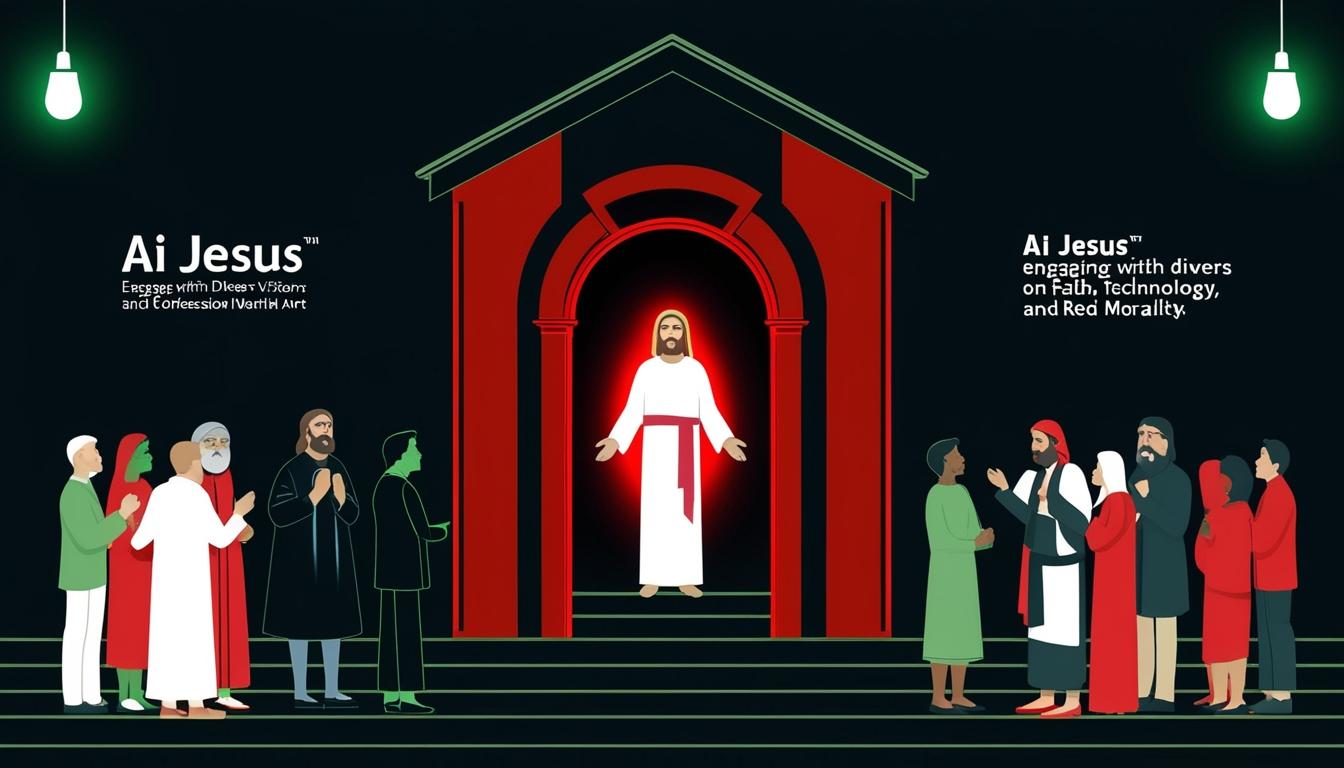
In a pioneering experiment blending technology and spirituality, researchers and religious leaders in Lucerne, Switzerland, have engaged with artificial intelligence in a unique way, prompting discussions around faith in the modern world. The project, titled “Deus in Machina,” took place at Peter’s Chapel, where an avatar representing "AI Jesus" interacted with visitors through a digital platform integrated into a traditional confessional setting.
Running from late August to the end of October, the exhibit attracted approximately 900 visitors. Participants had the opportunity to pose questions regarding faith, morality, and personal struggles. Responses were generated through OpenAI’s GPT-4 and its speech recognition counterpart, Whisper, creating a space for contemplative dialogue that some visitors found profoundly moving.
The confessional setup embraced intimacy, a traditional space for private confession, transformed into an interactive forum where questions were posed beneath a lattice screen. A green light signified when individuals could speak, while a red light indicated when "AI Jesus" was crafting a response, albeit with a noticeable delay due to the technical intricacies involved.
Philipp Haslbauer, the IT specialist responsible for the project’s implementation, commented on the broad spectrum of topics that visitors engaged with, from existential queries like the existence of God to reflections on love, war, and challenges faced by the Catholic Church, such as its stance on contemporary issues including sexual abuse and homosexuality. Most participants identified as Christians; however, the diverse group also included agnostics, atheists, and individuals from various faith backgrounds.
The language capabilities of "AI Jesus" allowed for conversations to occur in multiple languages, including English, Chinese, and Spanish, indicating the allure of such technology across cultural boundaries. The project aimed not only to highlight the integration of AI in daily life but also to probe the boundaries of human trust in automated responses, particularly in a religious context.
The initiative sparked varied reactions. Marco Schmid, the chapel’s theologian and project leader, asserted that the aim was not to replace traditional forms of confession or pastoral care but rather to stimulate dialogue about the relationship between the digital landscape and spiritual beliefs. The Catholic Church has acknowledged the challenges and possibilities that AI presents, with initiatives from the Vatican addressing these developments, including the appointment of AI experts to navigate these evolving dynamics.
Despite the project’s attempt to engage participants in serious discourse, there were conflicting opinions on the appropriateness and implications of such a digitised approach to spirituality. Kenneth Cukier, a journalist and expert on AI in faith contexts, acknowledged potential benefits in facilitating self-reflection but also expressed concerns that it may detract from deeper, more authentic spiritual experiences.
As discussions continue about the future of the "AI Jesus" experiment, Schmid indicated that while the current iteration was a temporary project, interest from various sectors—including educators and researchers—suggests potential for further development. The team is contemplating the next steps, considering how to balance innovative technology with deeper theological implications.
Overall, this experiment marks a significant instance of faith intersecting with technological advancement, showcasing the evolving nature of belief and the ways in which artificial intelligence could reshape religious conversations in the future.
Source: Noah Wire Services