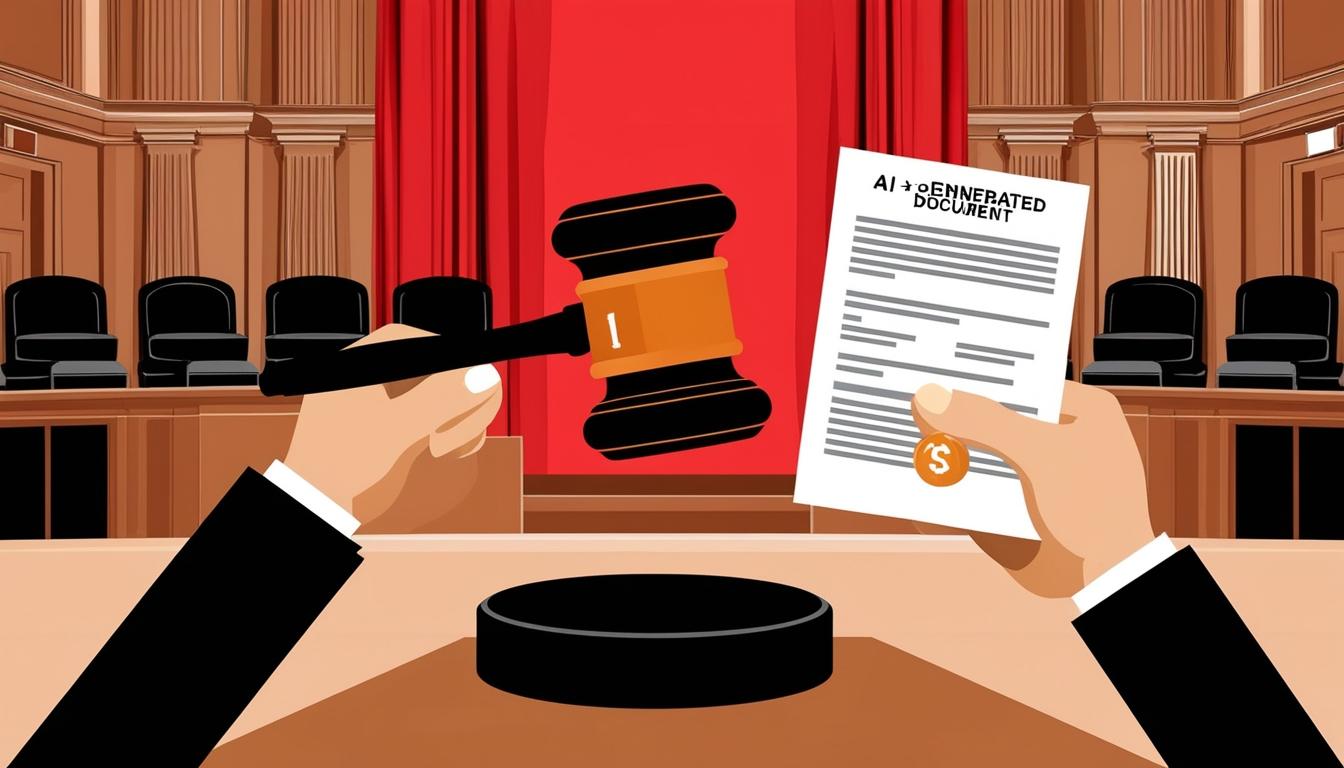
In a significant legal development, attorneys Steven Schwartz and Peter LoDuca faced sanctions in 2023 related to their involvement in a personal injury lawsuit, Mata v Avianca, filed by Roberto Mata. The plaintiffs’ legal counsel submitted court filings that included fabricated legal precedents, which were later determined to have been generated by the artificial intelligence tool ChatGPT. This incident raised profound questions regarding the reliability of AI in legal contexts and the responsibilities of legal professionals.
The controversy arose when Schwartz and LoDuca cited several cases in their filings, which they claimed were essential to support their client’s claims. However, an investigation, led by the defence team and presided over by Judge Kevin Castel, uncovered that these citations were entirely fictitious. Despite being alerted to their dubious nature, Schwartz reportedly chose to proceed without verifying the authenticity of the purported rulings.
The implications of this case extend beyond the involvement of the attorneys. It highlights a pressing issue within the legal profession: the trustworthiness of AI technologies for tasks historically requiring rigorous human scrutiny. While AI tools such as ChatGPT can enhance efficiency by rapidly processing vast amounts of information, they do so by generating outputs based on patterns in existing data without an inherent capability to confirm the validity of the information provided. Misleading outputs, often referred to as “hallucinations,” can include non-existent cases, false quotes, and inaccurate legal precedents.
Legal accuracy is of paramount importance, demanding that every case citation be meticulously verified. The American Bar Association’s Model Rules of Professional Conduct require that attorneys ensure the integrity of the information they present in court. Consequently, the introduction of fabricated information contravenes these standards and jeopardises the integrity of judicial processes.
Judge Castel imposed sanctions comprising a $5,000 fine alongside a requirement for the attorneys to apologise formally to the judges whose names were falsely cited in their documents. These penalties underscored the severity of ethical breaches in legal practice. The case garnered considerable media attention, stirring public discourse about the necessity of regulatory frameworks governing the deployment of AI in legal proceedings.
This issue resurfaced in 2024 when another New York attorney, Jae Lee, found himself under scrutiny for citing a fictitious case in the medical malpractice appeal, Park v Kim. Similar to Schwartz and LoDuca, Lee also relied on ChatGPT during his research and submitted non-existent case law. However, he acknowledged his failure to verify the sources, which has now exposed him to potential disciplinary measures. This sequence of events illustrates a troubling trend of negligence in the legal profession concerning AI-generated information.
As this situation evolves, courts are increasingly mandating that legal professionals confirm the validity of information prior to its submission. Furthermore, there is a growing consensus that law schools and continuing education programs must integrate training on AI literacy, concentrating on the risks associated with relying on potentially fabricated data.
There are calls for the creation of ethical guidelines governing the use of AI in legal practice. Such measures would aim to ensure that AI serves as a supportive tool rather than a substitute for the critical oversight provided by legal professionals. Lawyers are urged to verify AI-generated content against reputable legal databases and to engage in collaborative verification with colleagues to affirm the accuracy of their submissions.
The incident involving Schwartz and LoDuca serves as a cautionary tale regarding the dangers of uncritical reliance on AI technologies. While AI can undoubtedly augment legal research and drafting processes, it cannot replace the essential role of human lawyers in upholding the principles of accuracy, integrity, and professionalism. As legal professionals encounter the rapidly evolving landscape of AI, it is imperative that they remain vigilant and ethical, ensuring that the potential benefits of innovation are harnessed responsibly within the judicial system.
Moving forward, the integration of AI into legal practice will hinge on the legal community's efforts to maintain a balance between technological advancement and the preservation of essential professional standards.
Source: Noah Wire Services