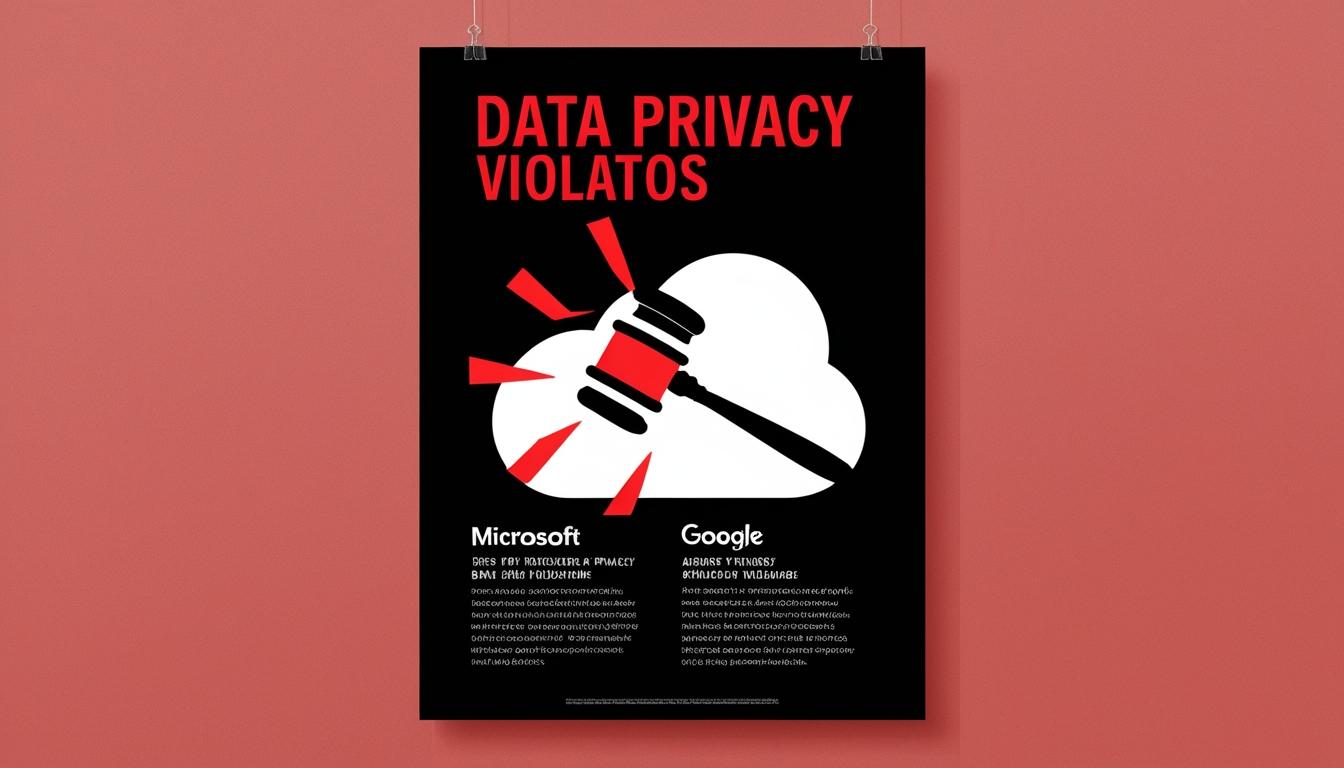
Barings Law, a legal firm based in the North of England that specializes in data privacy claims, has commenced the onboarding of clients for what it anticipates could be a significant class action lawsuit against tech giants Microsoft and Google. The firm contends that these companies have been unlawfully collecting and utilising personal data to train artificial intelligence (AI) systems.
The allegations put forth by Barings Law encompass a range of data misuses, particularly the extensive collection of sensitive user information. This includes voice recordings, demographic data, duration of app usage, personal details such as email addresses, and even the contents of emails. The firm suggests that a vast quantity of data is being retained and potentially shared for the training and development of large language models, a core component of contemporary AI technology.
Following an investigation lasting nearly two years, Barings Law has launched a national marketing campaign aimed at encouraging individuals with Microsoft or Google accounts, or those who have utilised their services, to come forward. The platforms under scrutiny extend well beyond the traditional services, incorporating widely used applications including YouTube, Gmail, Google Docs, browsing history, map searches, LinkedIn, OneDrive, Outlook, Microsoft 365, Xbox, among others.
Anticipating a high volume of sign-ups, Barings Law aims to initiate court proceedings in early 2025. With statistics indicating that more than 1.6 billion active devices running Windows and approximately 1.8 billion users of Gmail globally exist, the potential class action could involve a vast number of claimants.
Barings Law is no stranger to high-profile data protection cases, having previously tackled significant breaches such as the attack on Capita. The firm has also successfully settled notable claims in the past. Adnan Malik, Head of Data Breach at Barings Law, expressed the firm’s readiness to challenge the major tech firms, characterising the lawsuit as an unprecedented "Everest of data collection."
Malik voiced serious concerns regarding the extensive data collection, stating, "We are shocked and disgusted to learn about the level of data that has been and continues to be collected." He outlined the types of data being captured, which range from users’ preferences in sports and programming to specific details such as their daily commuting routes and vocal characteristics.
In discussing the ongoing transformation of businesses due to the proliferation of AI networks, Malik underscored that such developments should not infringe upon individuals' privacy rights. He asserted, “Individuals have the right to know what data of theirs is being stored and what it is being used for,” further noting the need for consent concerning the usage of personal data in AI training processes.
The rising awareness among users regarding the value of their personal data aligns with a growing global backlash against unchecked data collection practices. In the United States, for instance, another class action lawsuit has been filed against OpenAI and Microsoft, accusing them of violating users' privacy by clandestinely gathering substantial amounts of personal data to build AI chatbots. This lawsuit, lodged on 28th June in federal court in San Francisco, seeks damages amounting to USD $3 billion—indicative of escalating international apprehensions surrounding data security.
Malik emphasized that while similarities exist between the ongoing cases in the US and the UK, the focus of Barings Law remains strictly on legal action against Microsoft and Google, excluding OpenAI. He concluded by encouraging potential claimants to take action, inviting those who feel entitled to protect their data privacy to join the fight by signing up now. Through this proactive approach, Barings Law aims to assert individual rights in the face of evolving technology and data practices.
Source: Noah Wire Services