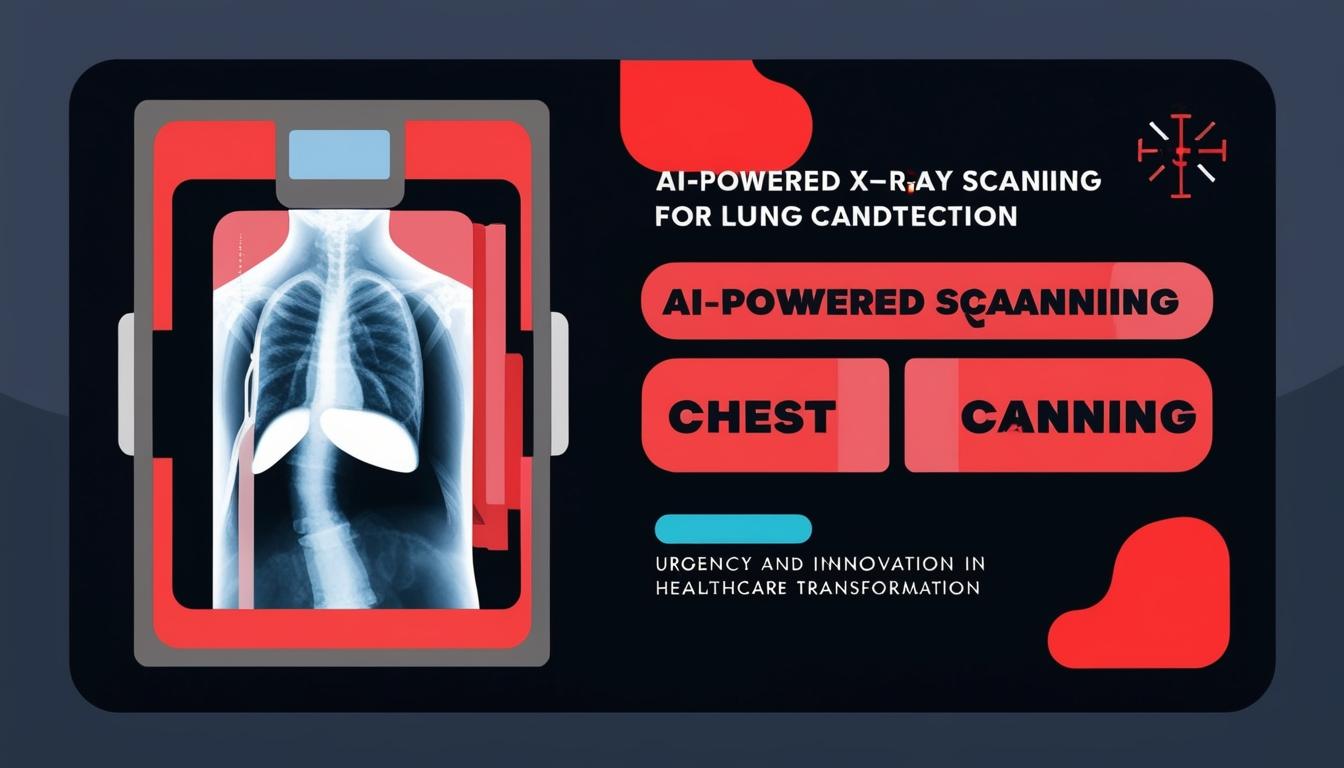
The health landscape in Greater Manchester is set to undergo a significant transformation with the introduction of an AI-powered chest X-ray decision-support system, aimed primarily at enhancing the detection of lung cancer. This innovative technology, capable of identifying up to 124 distinct findings on chest radiographs, will be implemented across seven NHS Trusts within the region, thanks to a collaborative effort between the Greater Manchester Cancer Alliance, the Greater Manchester Imaging Network, and the global health technology company Annalise.ai.
The integration of this AI system into routine medical practice is timely, as lung cancer incidence rates in Greater Manchester exceed the national average by 24 per cent, presenting an urgent need for effective diagnostic tools to improve patient outcomes. The system has the capacity to relay information regarding suspected lung cancer cases to the medical provider in less than one minute, significantly expediting the review process. This acceleration allows healthcare professionals to prioritise the evaluation of potentially suspicious chest X-rays, thereby facilitating quicker decisions to confirm or rule out cancer diagnoses.
The initiative, which represents a substantial commitment to improving cancer care within a population of approximately 2.8 million people, is funded by the Artificial Intelligence Diagnostics Fund (AIDF). The evaluation of the Annalise.ai solution will be comprehensively conducted across all seven participating Trusts through the Sectra Imaging platform, a prominent provider of imaging IT solutions to health systems worldwide.
Dr. Jo Balmer, a Consultant Radiologist at Bolton NHS Foundation Trust, emphasised the project’s significance, stating that innovative technologies are increasingly vital for early disease detection. "When it comes to cancer, we know all too well how important it is that we’re able to make a diagnosis as soon as possible,” she noted, highlighting the role AI will play in directing patients to potentially life-saving treatments more swiftly.
Prominent figures have also expressed their support for this advancement in medical technology. Andy Burnham, Mayor of Greater Manchester and co-chair of the Greater Manchester Integrated Care Partnership, remarked on the region's high lung cancer rates and the potential impact of the new partnership in addressing this public health challenge. “I’m glad to see Greater Manchester leading the way in this area,” he commented, reflecting optimism for the collaboration’s outcomes.
Health and Social Care Secretary Wes Streeting presented a personal perspective on the importance of such technological innovations, drawing on his own experience with cancer treatment. He asserted that breakthroughs like the AI tool represent significant progress in the healthcare sector, aimed at enabling quicker diagnoses and facilitating timely access to high-quality treatments. Streeting reaffirmed the government's commitment to integrating cutting-edge technology within the National Health Service as part of a broader 10-Year Health Plan.
In summary, the implementation of AI-powered diagnostic tools within healthcare systems, particularly for the detection of lung cancer in Greater Manchester, underscores a forward-looking approach to improving health outcomes. As the region prepares to leverage this technology, stakeholders anticipate that enhanced diagnostic efficacy will ultimately lead to better treatment pathways for patients facing serious health challenges.
Source: Noah Wire Services