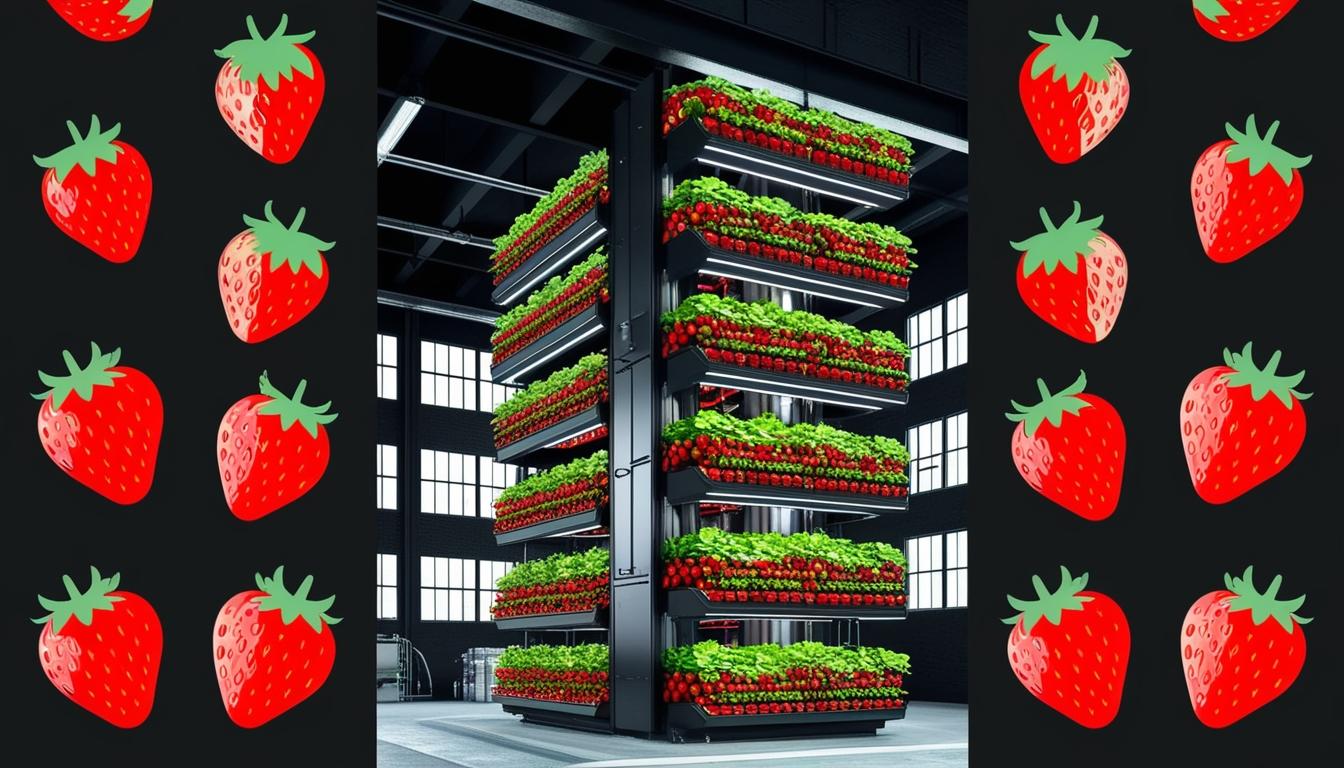
In the industrial Ahuntsic neighbourhood of Montreal, an innovative urban agriculture initiative has emerged, transforming a former textile factory into a state-of-the-art hydroponic farm that produces over 1,000 kilograms of strawberries each month, regardless of seasonal constraints. This ground-breaking venture, Ferme Gush, was established in December 2023 by 25-year-old entrepreneur Ophelia Sarakinis, reflecting a shift towards sustainable farming practices in urban environments.
Ferme Gush operates through an advanced vertical farming system that maximises space by cultivating 15,000 strawberry plants across six levels within its facility. The farm is divided into three chambers, each designed to maintain a continuous cycle of growth and harvest. Employing LED lighting and fully controlled environmental conditions, Ferme Gush delivers a reliable yield of fresh strawberries every day, showcasing how technology can revolutionise crop production.
Sustainability is a core tenet of Ferme Gush’s operations. The hydroponic system employed dispenses with the need for traditional soil, significantly reducing waste typically associated with conventional greenhouse practices. Instead, strawberries grow in nutrient-rich water solutions, enabling precise control over the input variables to promote plant health. Sarakinis explains the intricacies of such a system, noting that strawberries are particularly sensitive to fluctuations in their nutrient environment. Thus, the absence of soil as a stabilising factor means greater care must be taken to monitor conditions continuously.
Despite the risks involved with hydroponic farming, Ferme Gush has implemented strict biosafety protocols to mitigate potential pest issues. By controlling access to the facility and employing protective clothing, the farm has maintained a pesticide-free operation. While challenges such as aphid infestations can arise, these are managed through the introduction of natural predators, underscoring a commitment to environmentally friendly practices.
Financial sustainability remains a critical consideration, with initial investments totalling over $3 million. Sarakinis expresses optimism regarding the farm's profitability, as all harvested strawberries are sold daily to local restaurants, independent grocers, and via LUFA Farms' basket delivery service. Although the business is not yet profitable, Sarakinis asserts that the farm is on a positive trajectory, with a projected timeframe of several years to achieve profitability.
The rise of vertical farming is seen as a promising solution to the increasing demand for locally sourced and pesticide-free produce. A report from Grand View Research posits that the vertical farming market is forecasted to reach $31 billion by 2030, with North America anticipated to lead in the adoption of these practices. Urban farms like Ferme Gush are pivotal in this transition, providing a dependable source of fresh produce while minimising reliance on traditional agricultural spaces.
Ferme Gush stands as a testament to the potential of urban farming to tackle contemporary agricultural challenges by integrating sustainability with advanced technological innovation. As cities worldwide begin to explore similar urban agricultural initiatives, the success of Ferme Gush could have far-reaching implications for how food production is perceived and executed in the 21st century. This development not only reflects a change in food sourcing but also hints at the future of agricultural practices in urban environments.
Source: Noah Wire Services