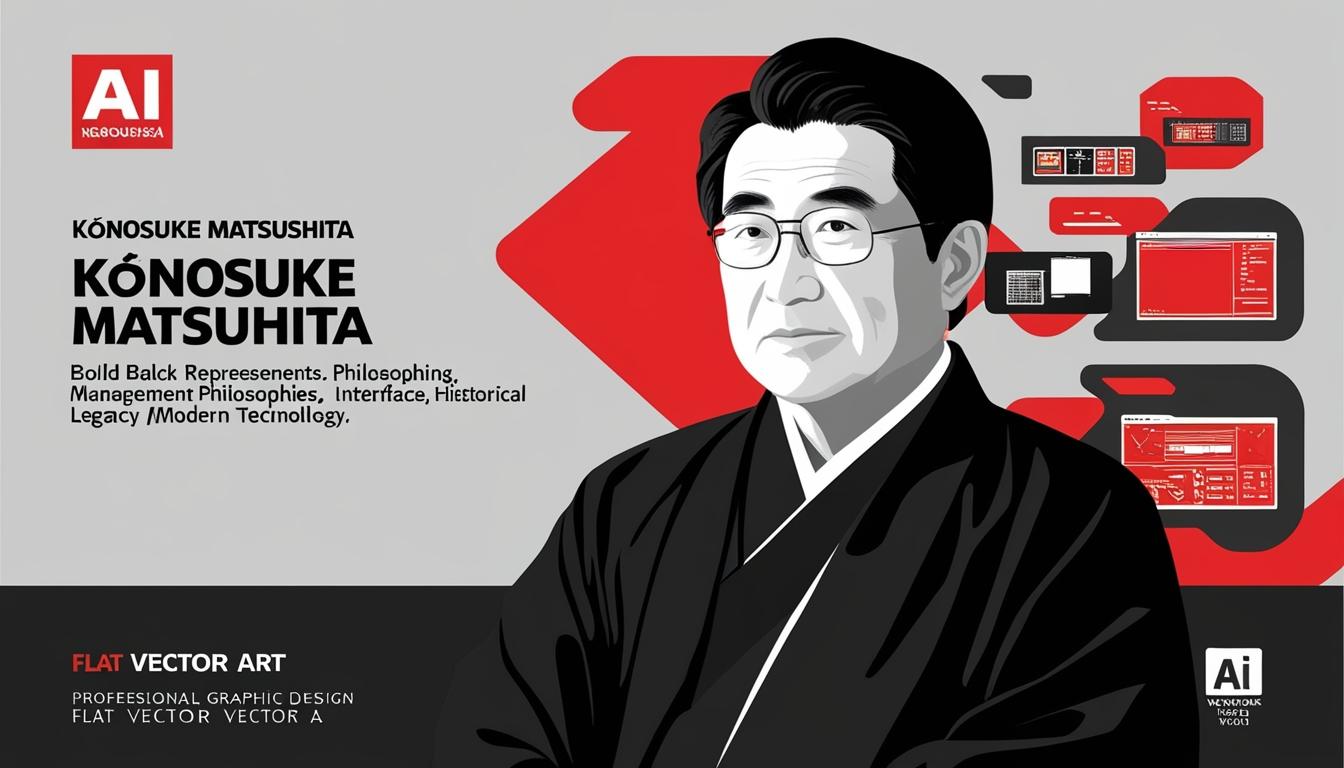
In a bold move within the realm of artificial intelligence, Panasonic has unveiled an innovative AI representation of its founding figure, Kōnosuke Matsushita, who passed away in 1989. This initiative aims to ensure that the management philosophies and values instilled by Matsushita are preserved and disseminated among current and future employees of the multinational electronics giant.
Founded in 1918 as Matsushita Electric Housewares Manufacturing Works, Panasonic has established itself as a global leader in technology and electronics, but it now faces the challenge of transmitting the knowledge and management principles championed by its late founder. With fewer individuals personally trained by Matsushita still within the company, Panasonic's leadership deemed it essential to create an AI version capable of embodying his mindset.
To synthesise the new AI construct, Panasonic utilised a substantial repository of over 3,000 recordings of Matsushita, alongside a range of his published writings, lectures, and interviews. This ambitious project was supported by the Peace and Happiness through Prosperity (PHP) Institute, an educational entity initiated by Matsushita himself. Furthermore, Panasonic partnered with the Matsuo Institute, linked to the prestigious University of Tokyo, to develop an AI that not only mimics Matsushita’s communicative style but also encapsulates his strategic thinking.
The rationale behind this AI initiative extends beyond mere nostalgia. Panasonic aims to employ this AI character as a tool for assisting employees with substantial management decisions, enabling them to leverage the insights and perspectives that Matsushita might have had regarding various business scenarios. This development coincides with a broader trend in AI applications across multiple industries, where such technology is increasingly used to address complex research questions and innovate traditional methodologies.
Kōnosuke Matsushita is often heralded as the "god of management" in Japan, where his legacy profoundly influences contemporary business philosophy. His transformative vision turned a modest lamp-selling company into a prominent global corporation, and he authored over 40 books that continue to resonate in professional environments today. Notably, his 1968 work, The Path, and Not for Bread Alone, explore themes surrounding individual success and the societal function of business, respectively.
In a cultural context where veneration for past figures is prevalent, Panasonic’s effort to resurrect the ideals of its founder is likely to be viewed positively rather than unsettlingly. This endeavour not only reflects a commitment to honouring Matsushita's legacy but also positions Panasonic at the forefront of AI technology advancements. The corporation has been diversifying its investments in various domains, including electric vehicle batteries, hydrogen energy, workplace digitalisation, and supply chain software—an essential move as businesses increasingly integrate AI solutions into their strategies.
Earlier in the summer, Panasonic introduced its generative AI model, ContextFlow++, which is anticipated to serve various functions, such as image classification, predictive maintenance, and unsupervised anomaly detection. This technological trajectory signifies Panasonic's dedication to harnessing the potential of AI while reinforcing its operational capabilities within the rapidly evolving landscape of business technology.
Source: Noah Wire Services