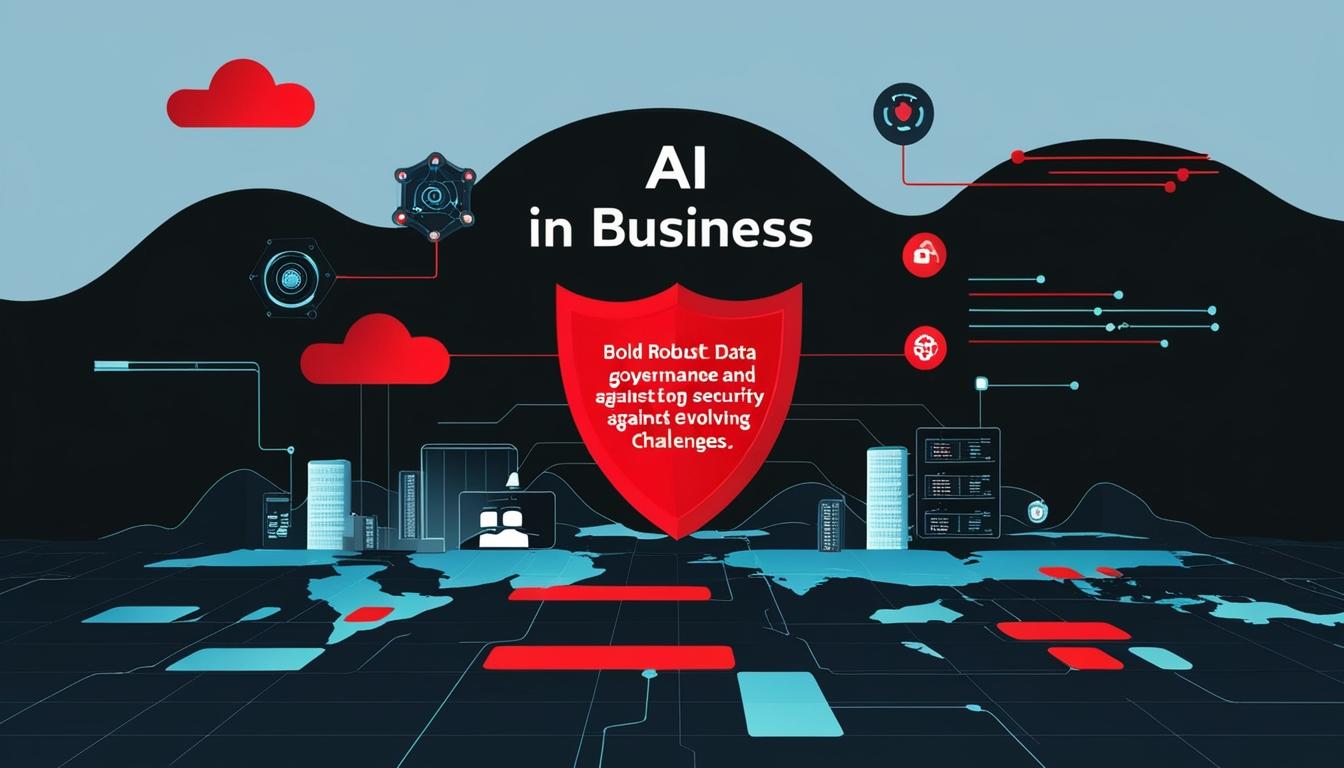
As artificial intelligence (AI) continues to evolve, its influence on business practices is becoming a critical focus for CEOs looking to maintain a competitive edge. Kitman Cheung, Chief Technology Officer and Director of Pre-Sales Engineering at IBM ASEAN, emphasises that having a solid technology architecture and robust data governance strategies is essential for organisations seeking to derive actionable insights from their data. “CEOs are right to be concerned about data quality and security,” Cheung said, highlighting how data governance must be intrinsically linked to an organisation's overall business strategy—particularly as it pertains to AI applications.
Many businesses have embarked on their data governance initiatives; however, Cheung asserts that these measures must be expanded to encompass AI usage. He insists that a strategic governance framework can facilitate the implementation of AI solutions across enterprise applications while mitigating associated risks.
A paramount consideration for organisations is the onboarding of new data sets into traditional data warehouses, which often proves to be challenging. Cheung notes that leading firms are seeking to adopt data-driven approaches to operations, with a consensus amongst business leaders on the need for trusted data to inform decision-making and improve AI and machine learning (ML) initiatives. Despite the promise of data lakes—repositories designed to store data in its raw format—Cheung points out that many have fallen short of their expectations. Companies often find themselves contending with sluggish data pipelines that hamper operational efficiency.
Cheung elaborates on the difficulties presented by data lakes, stating that locating high-quality data remains a significant challenge. Additionally, he highlights a lack of "contracts" between data providers and consumers, which leads to inadequate service-level agreements (SLAs). Furthermore, access control to data is often limited, complicating efforts to maintain usability.
Amidst a landscape of evolving data regulations such as the General Data Protection Regulation (GDPR) in Europe and the California Consumer Privacy Act (CCPA), ensuring compliance while managing data security has become a pressing concern for Chief Data Officers (CDOs). Cheung advises organisations to adopt AI and automation technologies to keep pace with these regulatory shifts. He posits that AI-powered solutions can help identify compliance gaps and provide necessary remediation, thereby reducing reliance on traditional audit processes.
In discussing Generative AI, Cheung draws a distinction between its capabilities and those of conventional machine learning. He describes Generative AI as an invaluable tool for content generation—ranging from text to imagery—while traditional machine learning excels in numerical predictions. He points to practical applications of GenAI, such as customer-facing chatbots, document summarisation, and retrieves-augmented generation (RAG) technologies that increase productivity across organisations.
Moreover, Cheung outlines the potential of new agentic AI systems designed to work alongside human employees, autonomously executing tasks while allowing supervision over broader objectives. Such innovations are seen as instrumental in reshaping workplace dynamics and enhancing operational efficiency.
Addressing the challenges posed by data lakes, Cheung highlights the advancements offered by IBM's watsonx.data platform. This technology integrates open-source standards to optimise data usage and storage, placing a single copy of data in S3-compatible cloud object storage. The platform promotes collaboration by enabling multiple engines to access shared data, significantly reducing data duplication.
In summary, navigating the complexities of data management, compliance, and AI integration remains a dynamic challenge for businesses. With tools like IBM’s Cloud Pak for Data and watsonx governance, organisations can establish comprehensive oversight over their data practices. These advancements are particularly crucial as the corporate landscape continues to evolve, necessitating agility in responding to both internal and external pressures influencing business operations.
Source: Noah Wire Services