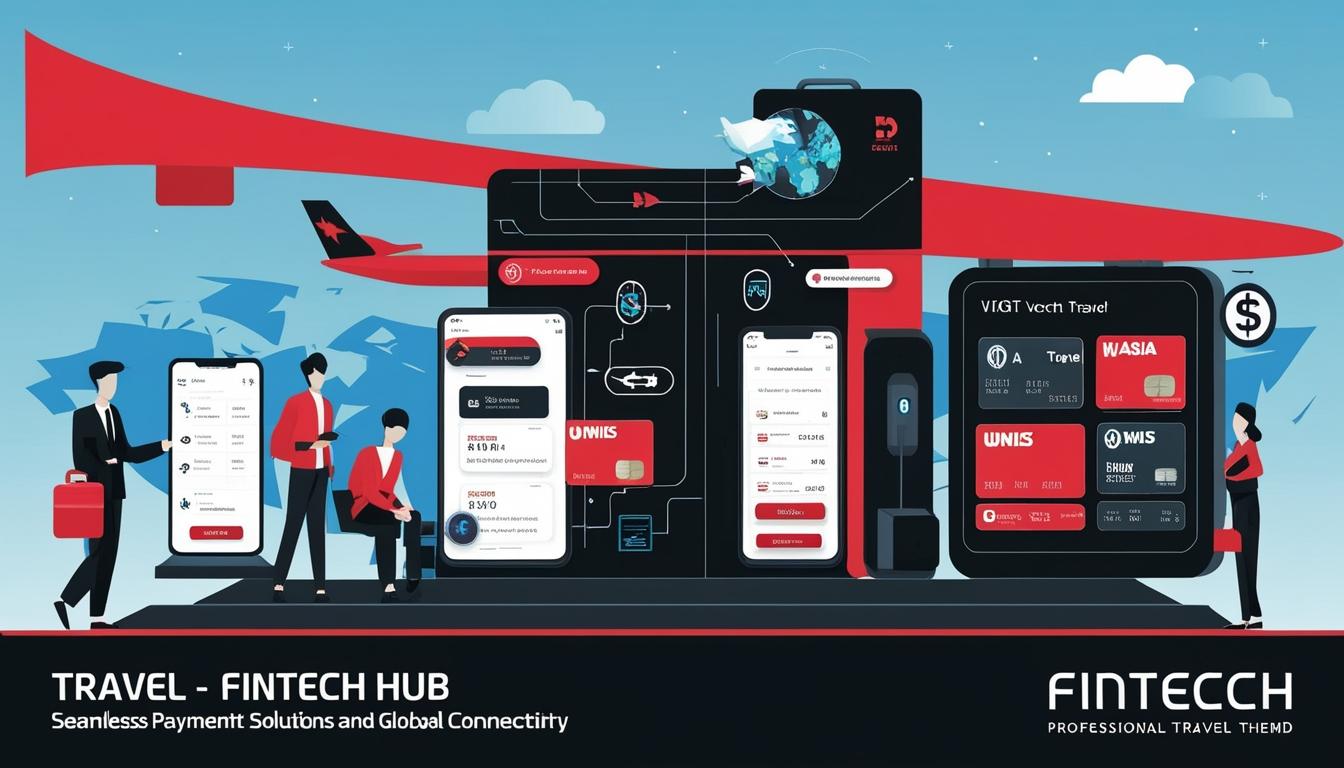
In the rapidly changing landscape of Asia's travel industry, a significant transformation is underway, fuelled by the increasing adoption of financial technology (fintech) solutions. This shift comes as consumers demand seamless travel experiences and companies seek cost efficiencies in an intensely competitive market.
As travel companies begin to harmonise their operations with fintech innovations, they are moving beyond the traditional role of booking flights and accommodations. This convergence encompasses a range of processes essential to the travel experience, including payment mechanisms, loyalty programmes, and cross-border services. Executive insights highlight that companies like Agoda are strategically positioning themselves as fintech players, with a strong focus on managing payment costs—often the largest expenditure category within the industry. Timothy Hughes of Agoda emphasises that even minor optimisations in payment processing can have a monumental impact on cash flow and overall profitability.
Recognising the importance of payment management, travel providers are increasingly developing in-house fintech capabilities or seeking partnerships with specialised fintech firms. Kelvin Li, Head of Platform Tech Business Unit at Ant International, underscores that payment costs often exceed distribution expenses, thus highlighting the strategic necessity of effective payment management.
Central to this fintech evolution is the emergence of payment orchestration platforms. These solutions enable travel companies to manage their payment processes comprehensively, streamlining operations and optimising transactions through a singular framework. Nakul Kothari from Juspay elaborates that payment orchestration facilitates enhanced checkout experiences, facilitates cost reductions, and can significantly improve conversion rates.
In terms of customer experience, the adaptation of local payment options is proving to be crucial. Ken Kim, CEO of GLN International, refers to this trend as “payment roaming”, which allows travellers to utilise familiar payment methods even while abroad. Ensuring that travellers can transact in a manner reminiscent of their home country enhances their overall experience and encourages increased payment activity during their trips.
Another trend gaining traction pertains to real-time cross-border payments. Ant International is advancing the implementation of instantaneous payment systems, aiming to reduce the costs and delays typically associated with international transactions. This development could substantially alleviate long-standing pain points in the travel sector concerning money transfers, potentially enabling travellers to manage their finances across borders as smoothly as they do domestically.
Super apps are also making a notable impact, epitomised by platforms like Tata Neu and AirAsia MOVE, which integrate an assortment of services, including travel bookings and financial transactions. These ecosystems not only enhance convenience for users but also signify a convergence between travel and lifestyle services.
While the consumer-facing side of fintech in travel is blossoming, B2B (business-to-business) payments remain comparatively underdeveloped. Kothari notes that B2B transactions are often encumbered by outdated systems, thereby leading to higher costs and inefficiencies. The exploration of potential innovations in this sector suggests room for considerable improvement.
Leveraging payment data is another emerging trend in the travel fintech landscape. This data provides insights into customer behaviours, enabling companies to create tailored financial products such as buy now, pay later (BNPL) options or customised loyalty programmes. Kothari indicates that by successfully managing payment handling, travel companies can unlock a myriad of strategic opportunities to enhance customer engagement and profitability.
Additionally, multi-currency pricing strategies are gaining attention, allowing for a more user-friendly payment experience in the diverse Asian market. With advanced technologies enabling travellers to pay in their local currencies, the potential for inter-monetary transactions that match customer preferences has expanded significantly.
Overall, while the travel fintech sector in Asia is still approaching its evolution, the opportunities for innovation and growth appear substantial. By integrating fintech solutions, travel companies are not only modernising but also laying the groundwork for a future that could redefine how travel and financial services coexist. The emphasis on technology and trend adaptation is vital, as companies in both travel and fintech realms seek to innovate in a landscape that is growing increasingly interconnected.
Source: Noah Wire Services