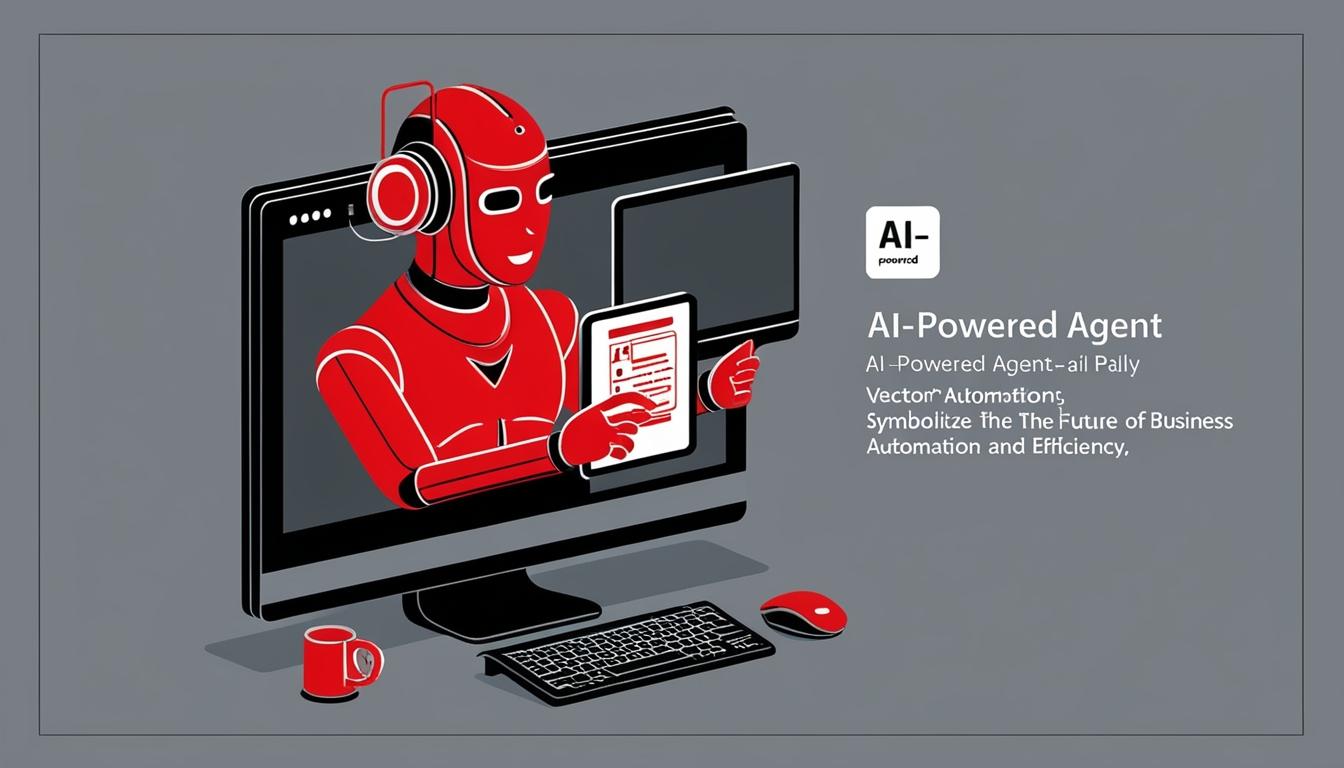
Emerging trends in artificial intelligence (AI) and automation are redefining how businesses operate, as recent studies indicate that AI-powered agents are gaining unprecedented capabilities in managing graphical user interfaces (GUIs). A survey conducted by researchers at Microsoft, in collaboration with academic partners, highlights this transformative shift, with AI agents increasingly able to perform tasks by interacting with software as humans do, such as clicking buttons and filling out forms.
These AI systems, particularly those powered by large language models (LLMs), utilise natural language requests to execute commands, thereby circumventing the need for users to navigate complex software commands. According to the researchers, "These agents represent a paradigm shift, enabling users to perform intricate, multi-step tasks through simple conversational commands." Companies like Microsoft and Google are integrating these capabilities into their products. For example, Microsoft's Power Automate facilitates automated workflows, while its Copilot AI assistant can directly control software applications based on user input. Google is reportedly working on Project Jarvis, an AI system designed to streamline web-based tasks, although this project remains in development.
Market analysts project that the enterprise AI assistant market could reach a staggering value of $68.9 billion by 2028, expanding from $8.3 billion in 2022, at a compound annual growth rate (CAGR) of 43.9%. This anticipated market growth reflects the increasing interest from enterprises in automating repetitive tasks and making software more accessible to non-technical individuals.
However, the path to widespread adoption of AI automation comes with hurdles. Key challenges identified include privacy issues as AI agents manage sensitive data, limitations in computational performance, and the necessity for enhanced safety and reliability. The researchers note that traditional automation methods have struggled with flexibility, making it essential to develop more efficient models capable of local operation on devices. They emphasise the importance of robust security measures and standardised evaluation frameworks to reinforce reliability. “By incorporating safeguards and customizable actions, these agents ensure efficiency and security when handling intricate commands,” the researchers added.
Enterprise technology leaders face a dual-edged scenario as LLM-powered GUI agents present both opportunities for productivity gains and strategic considerations regarding security and infrastructure requirements. By 2025, it is projected that at least 60% of large enterprises will be piloting some form of GUI automation agents, which could yield significant efficiency improvements, albeit amidst concerns about data privacy and potential job displacement.
Alongside advancements in AI, the big data and business analytics sector is also seeing substantial growth, with projections indicating a rise from $250 billion in 2023 to $500 billion by 2033. This expansion is driven by the increasing volume of data from various sources and the rising demand for data-driven decisions. AI and machine learning (ML) have revolutionised data analysis, enabling organisations to personalise customer experiences and optimise internal processes.
Cloud computing plays a critical role in this landscape, broadening access to advanced data analytics tools for small and medium-sized enterprises (SMEs), thereby enhancing their competitiveness. Nonetheless, the sector faces challenges such as data privacy concerns, integration of complex systems, and a shortage of skilled analysts, which must be addressed to realise the full potential of big data analytics.
Advancements in business technology are attributed to the acceleration of digital transformation, with companies increasingly adopting technologies such as AI, ML, and the Internet of Things (IoT) to remain competitive. The COVID-19 pandemic has further propelled this shift, prompting businesses to invest significantly in tech solutions.
Despite the optimistic growth projections, the industry also grapples with challenges. Data privacy and security remain paramount as businesses handle increasing amounts of information. Furthermore, there is a notable skills gap in the workforce, hindering the effective implementation of new technologies, and businesses often face difficulties when integrating these innovations with legacy systems.
Looking ahead, the dual focus of efficiency and competitive advantage underscores the importance of navigating ethical responsibilities and preparing the workforce for transformation. The ongoing evolution of business technology presents vast opportunities for those that can adapt while addressing inherent challenges to harness the full potential of emerging technologies.
Source: Noah Wire Services