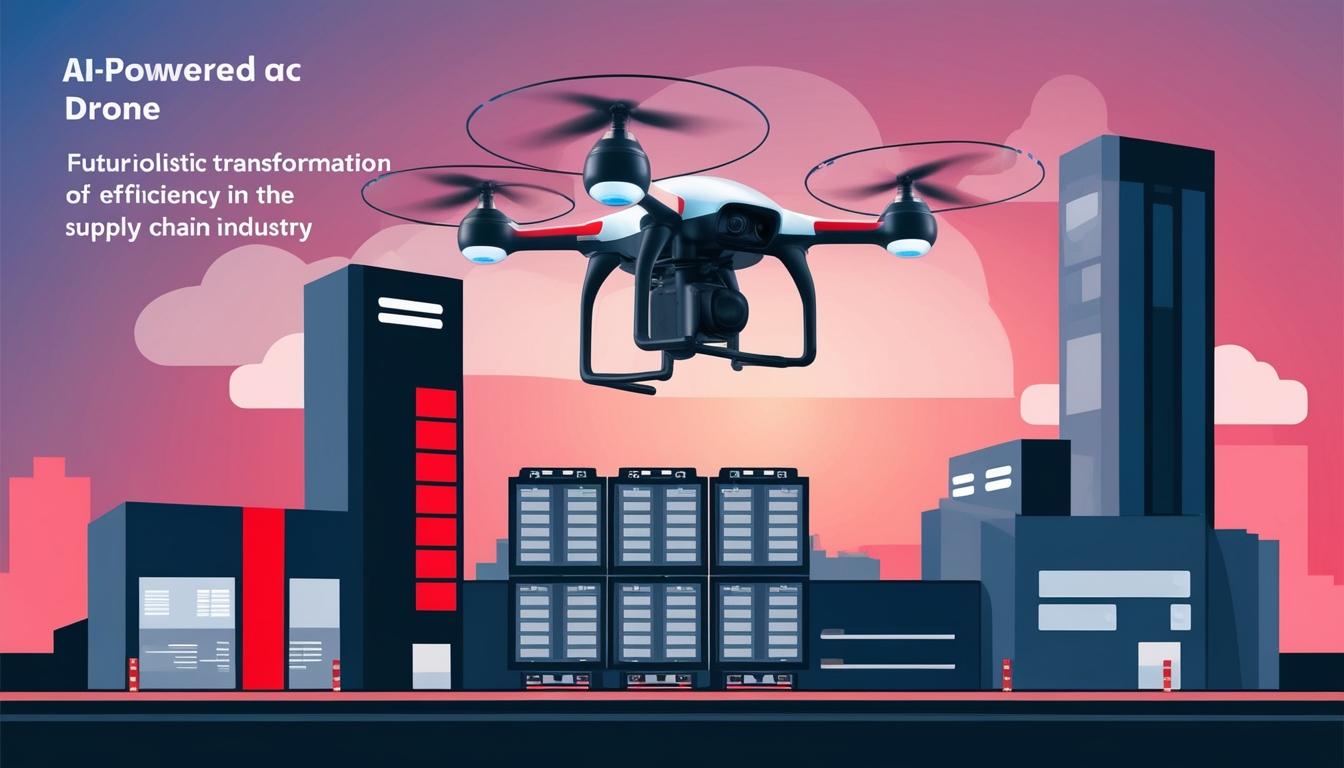
The logistics industry is currently experiencing a transformative shift as companies increasingly turn to artificial intelligence (AI) and advanced technologies to reshape their operations. According to a recent report by TechAnnouncer, businesses are adopting AI to enhance efficiency, reduce operational costs, and improve service delivery, fundamentally redefining the roles of logistics professionals in a rapidly evolving landscape.
AI is emerging as a cornerstone of logistics, enabling organisations to make data-driven decisions that significantly enhance operational efficiency. Applications of AI in this sector are varied and impactful, encompassing areas such as inventory management, demand forecasting, and route optimization. For instance, companies can leverage AI to process massive volumes of data, predicting customer demand while optimising delivery routes and managing inventory levels with precision.
The benefits of integrating AI into logistics are manifold. Firstly, cost reduction is a primary advantage, as AI minimises operational costs through the automation of routine tasks and more effective resource allocation. Additionally, increased efficiency is another benefit, with automated systems capable of processing information at speeds exceeding those of human workers, thereby facilitating quicker decision-making and improved service delivery. AI technologies also contribute to enhanced workplace safety by reducing the need for human intervention in potentially hazardous tasks, and they foster better customer service by analysing consumer data to offer personalised services and boost customer satisfaction.
In real-world scenarios, several companies have already begun to leverage AI to revolutionise their logistics operations. Notably, L'Oréal is employing drones equipped with AI for inventory checks, which not only accelerates the process but also minimises errors. Meanwhile, retailers such as Cdiscount are utilising AI-driven robots to automate order picking, significantly increasing both productivity and accuracy. Additionally, STO Express has implemented AI robots for parcel sorting, enhancing efficiency while simultaneously reducing labour costs.
As AI technology continues to advance, the logistics workforce is expected to undergo significant changes. While some traditional roles may see a decline, new job opportunities are anticipated to emerge in fields such as AI system management, where professionals will oversee and optimise AI systems in logistics. Similarly, the demand for data analysts, who will interpret AI-generated insights for business strategies, is predicted to escalate. Furthermore, roles focused on customer relationship management, which leverage AI tools to enhance customer interactions, are likely to become increasingly vital.
However, the integration of AI in logistics is not without its challenges. The initial investment costs required for implementing AI solutions can be significant and pose financial hurdles for many companies. Furthermore, there are pressing concerns about data privacy; organisations must carefully navigate the issues related to customer data usage in AI systems. Additionally, workforce adaptation represents another obstacle, as employees may need extensive training to effectively utilise new technologies, which could lead to resistance to change.
In summary, the integration of AI and advanced technologies within the logistics sector signifies a fundamental transformation that is reshaping current practices. As the industry continues to embrace these innovations, the landscape will evolve, presenting both new opportunities and challenges for professionals in logistics. Adapting to AI technologies will be essential for those aiming to thrive in the future of this dynamic field.
Source: Noah Wire Services