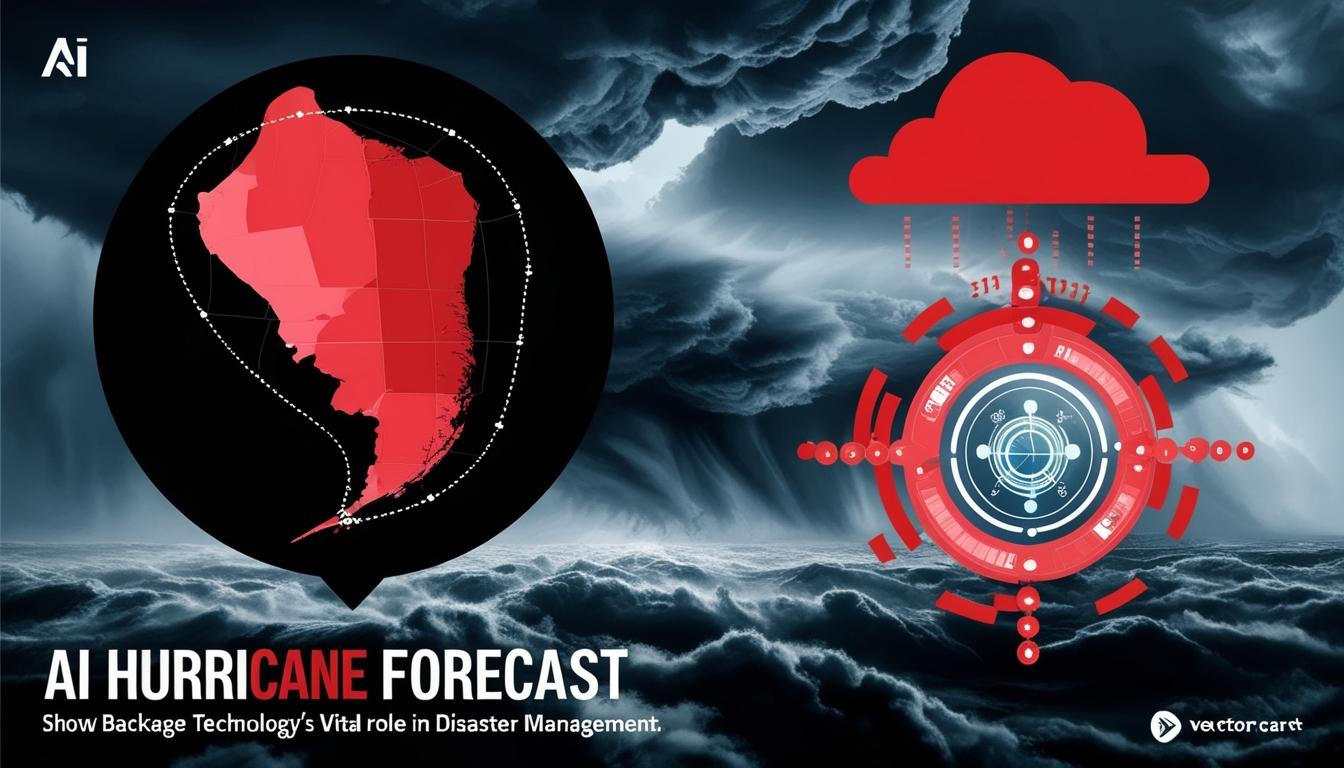
As the Gulf Coast braces for the impending arrival of a Category 5 hurricane, a surge in artificial intelligence (AI) technology is poised to transform disaster response efforts. Unlike previous storms such as Helene and Milton, the integration of AI into emergency management protocols could significantly enhance the efficiency and effectiveness of operations aimed at safeguarding lives and minimising damage. AI is predicted to play a vital role by accurately forecasting the hurricane's path, identifying vulnerable areas, and optimising evacuation routes – a shift that marks a substantial evolution in how crises are handled.
The necessity for AI's computing power is not limited to disaster management; its applications extend to military operations where commanders increasingly rely on advanced tools to process extensive data rapidly and make critical decisions. As military leaders continue to seek unprecedented computing capabilities, there remains a pressing need for a coordinated strategy to harness this power, especially in times of national need.
Recent developments indicate that the demand for computational resources has grown dramatically over the past few years. A proposal put forth three years ago by the White House Office of Science and Technology Policy called for a National Strategic Computing Reserve—a dedicated coalition ready to offer substantial computational support during times of crisis. Given the rapid evolution of AI technologies and their applications, experts now argue that establishing such a reserve is an urgent necessity.
According to the article, since 2018, the computational requirements for training large language models have surged, doubling every six months. By 2023, the compute power needed for the largest training operations had expanded over a millionfold compared to a decade earlier. This escalation is not solely limited to training; the demand also extends to running these models across numerous real-time applications, consequently straining existing computational infrastructure.
Officials have identified AI's potential to revolutionise responses to various crises beyond natural disasters, encompassing health emergencies—such as identifying treatments during a pandemic—cybersecurity, and economic stabilisation. However, without a unified strategy for ensuring robust compute power is available across diverse sectors, the capacity to leverage AI's full potential remains uncertain.
The concept of a National Strategic Computing Reserve echoes the function of the Strategic Petroleum Reserve but in a digital context. In periods of stability, this reserve could foster scientific research and innovation, while during crises, it could mobilise urgently needed resources. Experts envision a nationwide network of high-performance computing centres, equipped with cloud-based and edge computing capabilities, which could be redirected to address pressing national priorities as they arise.
To ensure the reserve can meet future demands rather than relying solely on private sector capabilities—often influenced by conflicting global interests—the call for a dedicated infrastructure has been emphasised. Critics question the cost of such an initiative, including concerns about energy consumption; however, proponents argue that the strategic advantages gained from this investment would significantly outweigh potential drawbacks and drive innovation in energy-efficient computing.
Furthermore, the escalating global competition in AI technology has placed the United States' position under scrutiny. Although the U.S. maintains a strong reputation for research quality, its lead in AI patent filings has dwindled, with China surpassing the country in both output and filing rates. The growing capabilities of nations such as China and Russia in AI research highlight the escalating stakes in this technological race.
With the passage of time since the initial proposal for a computing reserve, the imperative to act becomes increasingly clear. The current geopolitical climate demands swift action to enhance AI capabilities and ensure that the nation does not lag behind international competitors. By embedding technical expertise across its operations and ensuring adequate resources are accessible, the U.S. can prepare for both imminent challenges and exciting future developments in the AI landscape.
Ben Van Roo, co-founder and CEO of Yurts—a generative AI company collaborating with the US Department of Defense—has voiced significant insights regarding this urgent transformation, reinforcing the necessity of a strategic approach to secure a robust AI-driven future.
Source: Noah Wire Services