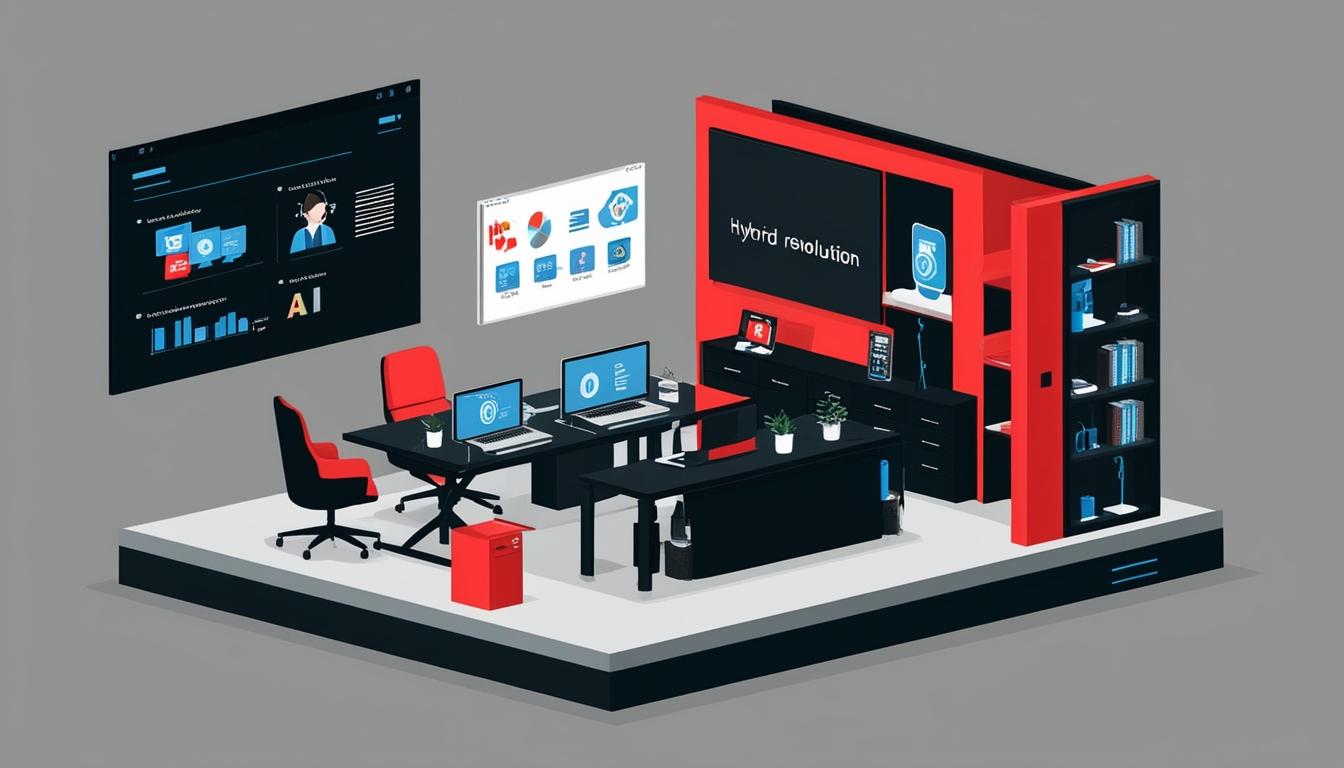
Recent findings from a study conducted by the International Workplace Group indicate a significant trend among businesses increasingly investing in technology to support hybrid work environments. The survey included responses from over 500 CEOs, revealing that an impressive 95% have allocated funds towards new technologies in the past year to enhance their hybrid working setups. This emphasis on hybrid work has become a crucial aspect of business strategy, with 43% of CEOs indicating that these technological investments represent their largest expenditure over the last 12 months.
The rise of hybrid working is notably influenced by employees' preference for working closer to home. Current data suggests that a mere 21% of individuals would consider a job that necessitates a daily commute exceeding 30 minutes, while 60% express a desire for roles that are within a 15-minute commute. In response to these shifting expectations, numerous businesses are reassessing their office space needs, leading to a trend of downsizing expensive central office locations in favour of more economical regional offices and co-working spaces. Prior research indicates that 44% of CEOs have reduced their office space by at least 25%, which assists in lowering overhead costs, particularly in areas such as energy consumption.
With the savings generated from these downsizing efforts, companies are reinvesting in critical technology sectors, notably cloud technologies, artificial intelligence (AI), automation, and cybersecurity. The study shows that 62% of CEOs are investing in cloud technology, 52% in AI and automation, and 41% in generative AI. Such technological advancements are recognised as vital for supporting employees' hybrid working requirements and enhancing overall productivity. Notably, 87% of CEOs plan to continue investing in technological tools to further improve the hybrid work experience.
The shift towards hybrid work appears to be advantageous for employees as well. The International Workplace Group reports that 74% of employees feel more productive in hybrid settings, with 76% noting heightened engagement levels and 85% indicating improved job satisfaction since transitioning to a hybrid model. Furthermore, insights from various academic institutions suggest that hybrid work could potentially elevate company productivity by approximately $19,000 per employee on a daily basis.
Support for hybrid working also emanates from human resources leaders, with around 86% of HR professionals affirming that hybrid working has become integral to employee well-being and productivity. This perspective aligns with the growing acknowledgment that offering flexible work arrangements can lead to a more satisfied and efficient workforce.
The transition to hybrid working was initially catalysed by the COVID-19 pandemic, which compelled businesses to adopt remote and flexible work strategies. As the benefits of hybrid working, including enhanced work-life balance, health advantages, and cost savings, have become clearer, its acceptance has surged. The confluence of technological progress and evolving employee expectations indicates that hybrid work is likely to remain a fixture in workplace practices, with both businesses and their employees continuing to benefit from its implementation.
Mark Dixon, CEO of the International Workplace Group, highlighted the sustained nature of this shift, affirming that the investments made by CEOs signify a long-term commitment to hybrid work. He pinpointed advancements in key technologies such as video conferencing, generative AI, and cloud services as pivotal factors facilitating effective remote collaboration, suggesting that future business practices will increasingly favour localized working arrangements.
Source: Noah Wire Services