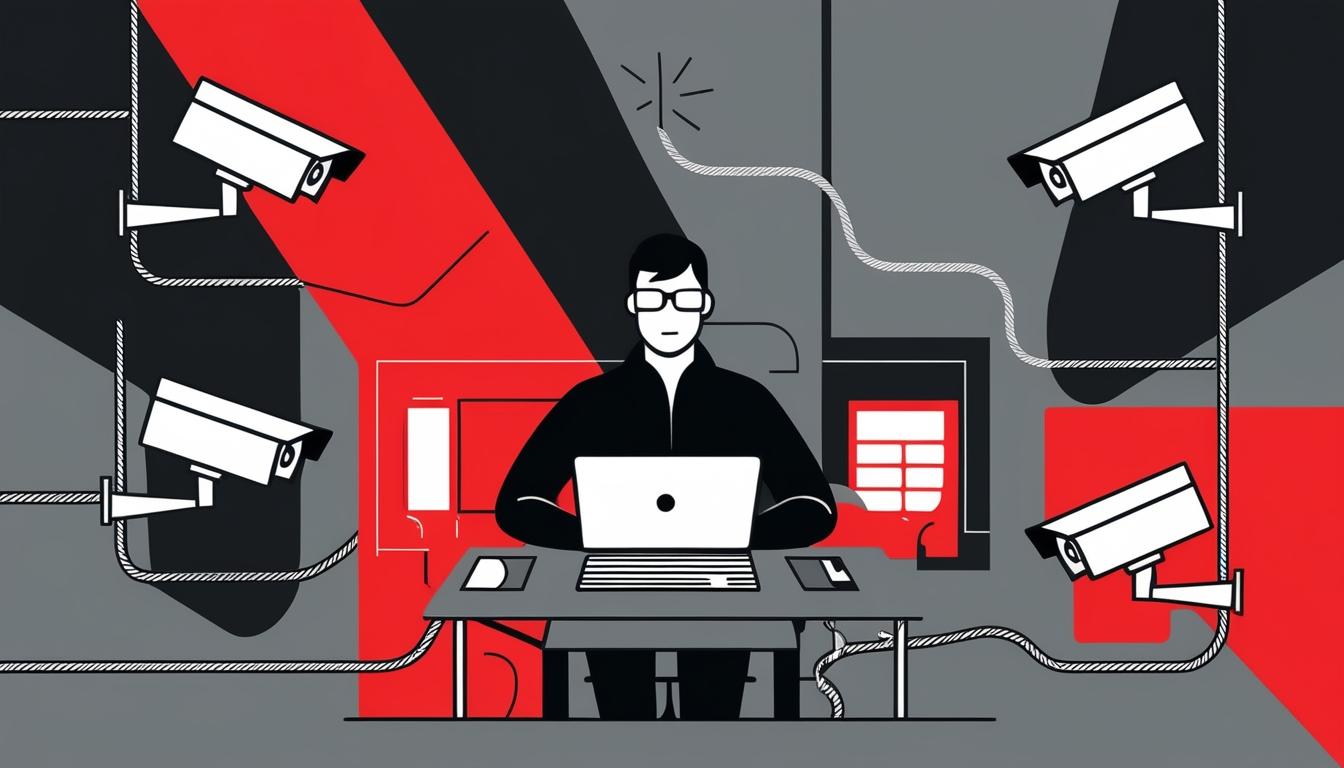
Employers navigating the evolving landscape of hybrid work face significant challenges as they attempt to balance productivity with employee well-being. In recent discussions about workplace monitoring, experts are suggesting that excessive surveillance methods may be doing more harm than good for remote workers. Dr. Gleb Tsipursky, a prominent figure in this discourse, highlights this issue in an analysis featured in Work Design Magazine.
As businesses implement various work-from-home strategies, some have adopted stringent surveillance measures to monitor employee productivity. However, evidence indicates that these "Big Brother" tactics may not yield the intended outcomes. A survey conducted by Glassdoor, which included 2,300 U.S. professionals, revealed that 41% reported feeling less productive when under their employers’ watchful eye. This sentiment appears particularly amplified among workers in high-pressure industries such as finance and technology, where the conscious awareness of being monitored is believed to detract from work output.
Companies such as JPMorgan, Barclays Bank, and UnitedHealth Group have reportedly tracked employee activities to ensure productivity amidst ongoing workplace transitions. This trend stems from a phenomenon dubbed “productivity paranoia,” where employers, facing nearly empty offices, worry that remote work equates to a decline in productivity levels. Yet Dr. Tsipursky argues that resorting to surveillance is a hasty and ineffective solution. He emphasizes, “while 96% of remote-first employers have admitted to monitoring their employees in some way... the data tells a different story.”
Research suggests that rather than boosting productivity, surveillance practices are increasing workplace stress and eroding trust, ultimately hampering overall performance. Citing this paradox, Tsipursky highlights a Harvard Business Review study where over 100 U.S. employees were analysed based on surveillance exposure. Results indicated that monitored individuals were more inclined to engage in rule-breaking behaviours such as taking unauthorized breaks or removing office supplies without permission.
To further explore this phenomenon, the researchers conducted an experimental study with 200 U.S.-based employees. Participants who believed they were under surveillance demonstrated a higher likelihood to cheat during tasks compared to those unaware of any monitoring. This surprising behaviour suggests that surveillance can diminish an employee's moral autonomy, leading them to feel less personally accountable for their actions and more inclined to act against their inherent ethical standards.
The findings underscore the pivotal role of fostering a work environment that prioritises autonomy and trust rather than dependence on surveillance. Tsipursky points out that by reinforcing an employees’ moral agency and treating them with respect, employers can nurture a culture that encourages ethical behaviour and reduces instances of misconduct.
In the age of hybrid work, the challenge for employers is to effectively balance oversight and independence. As research corroborates, heavy reliance on surveillance may generate numerous unintended consequences. Instead, the promotion of trust, respect, and personal responsibility may be crucial for unlocking the productivity potential of a hybrid workforce.
Critical analysis of current practices suggests that the myth equating physical or digital presence with productivity misrepresents the true nature of effective work output. Employers are encouraged to pivot away from monitoring and gravitate towards building a foundation of trust and autonomy. Strategies such as setting clear expectations, providing feedback, and facilitating open communication can construct an environment in which employees feel valued and motivated.
Looking ahead, the potential of hybrid work lies in creating spaces where individuals are empowered to perform optimally, without the burden of constant scrutiny. This model promises the opportunity to redefine traditional workplace norms. The choice facing businesses is whether to adopt a future defined by fear and surveillance, or to embrace a new era characterised by trust, autonomy, and a focus on human-centric practices.
The implications of these shifts are vital for understanding how companies can adapt to the future of work—a landscape that, if navigated thoughtfully, could mark a significant evolution in workplace culture and employee engagement.
Source: Noah Wire Services