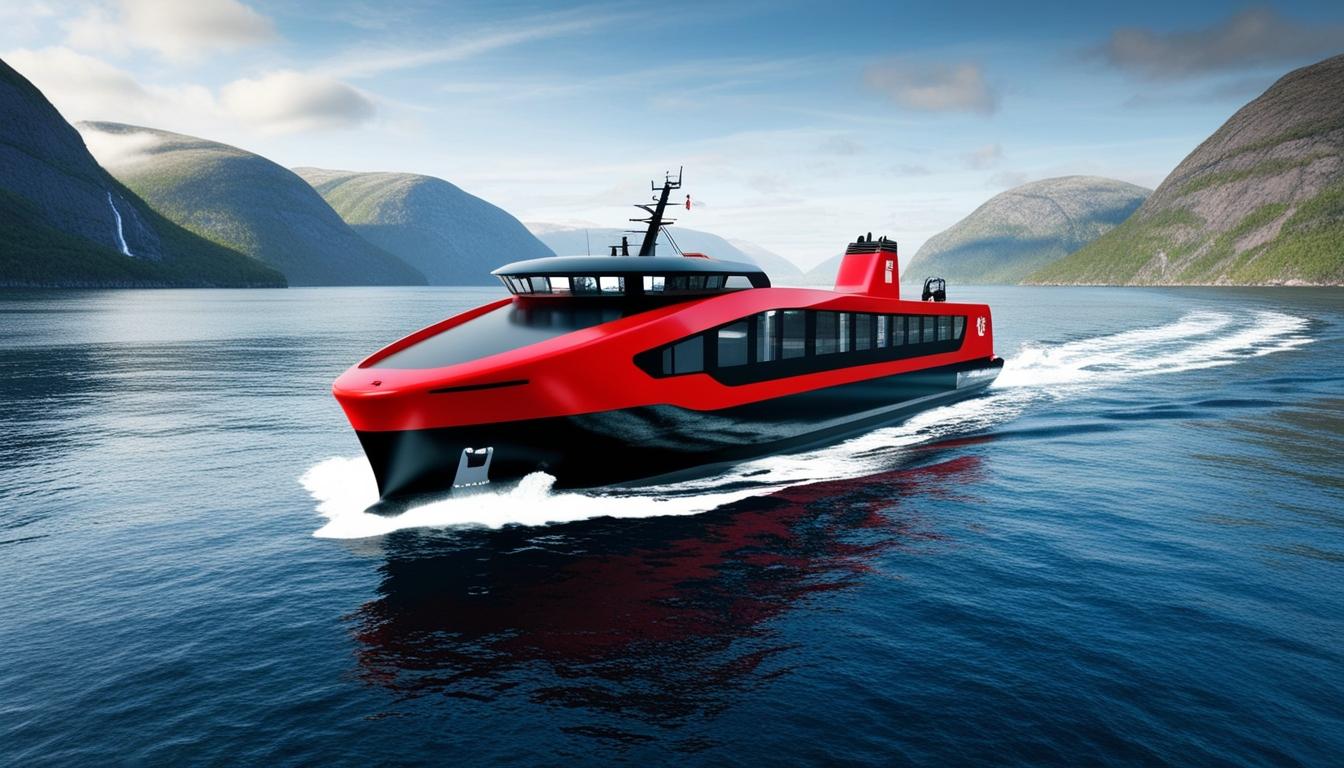
As the maritime industry witnesses a significant transformation with the advent of autonomous shipping, construction has commenced on Fjord1's new fleet of double-ended, zero-emission autonomous ferries. This project represents a pivotal shift towards modernising ferry transport along Norway’s northwest coast, particularly on the Larvik-Oppedal crossing, which spans 5.6 kilometres and takes approximately 20 minutes. The ferries, intended for delivery in 2026, are being constructed by Turkey’s Tersan Shipyard.
The initiative at Fjord1 is reflective of broader trends within the sector, as shipping organisations increasingly seek to establish regulations that will facilitate a growing number of projects involving remotely-controlled vessels. Capt Ajay Hazari, who has been instrumental in developing BIMCO’s Autoshipman—a standard contractual framework for third-party ship managers—emphasised the commercial viability of remotely controlled ships already operational in various global locations. He stated, “We are seeing growth in this sector, with several companies emerging and offering remote control management services to shipowners.”
While the current projects largely consist of vessels with lean crewing models, research indicates a future trajectory towards unmanned operations. The rise of autonomous technology is reaching well beyond subsea applications and is being integrated into various sectors, including military, passenger, and hydrographic shipping. BIMCO notes that, historically, remotely controlled ships have predominantly been used in inland waterways and coastal trade, but a clear expansion into more versatile applications is occurring.
Autoshipman is designed as an evolution of existing maritime contractual arrangements such as Shipman, but it takes into account the unique obligations and liabilities associated with operating autonomous vessels. Grant Hunter, BIMCO's director of standards, innovation, and research, highlighted the importance of input from companies already engaged in remote operations during the document's development. “We gained valuable insights throughout the process from companies who are already operating ships remotely around the world,” he remarked.
Despite the advancements, the regulatory landscape is struggling to keep pace with the rapid evolution of technology. Bureau Veritas has pointed out that the existing regulatory framework is lagging behind the burgeoning capabilities of autonomous shipping technologies. The complexity of creating standards is compounded by the fast evolution of systems and equipment, which makes standardisation an elusive goal. Additionally, the legal environment surrounding remote operations poses distinctive challenges, particularly when the operational centre and the vessel itself may fall under different national regulations. There is the added concern that a single operations centre might oversee multiple vessels navigating through various international waters, further complicating compliance.
Capt Hazari acknowledged these issues, noting that flexibility has been incorporated in the operational procedures to accommodate the diverse legal requirements across jurisdictions. For example, some regions mandate that remotely controlled vessels must remain partially or fully manned while traversing their territorial waters or docking at their ports.
This wave of innovation in shipping reflects a significant shift towards more automated, sustainable transportation solutions. As the technology progresses, stakeholders in the maritime industry are urged to create a framework that not only anticipates but can adapt to the profound changes that autonomous operations will inevitably bring.
Source: Noah Wire Services