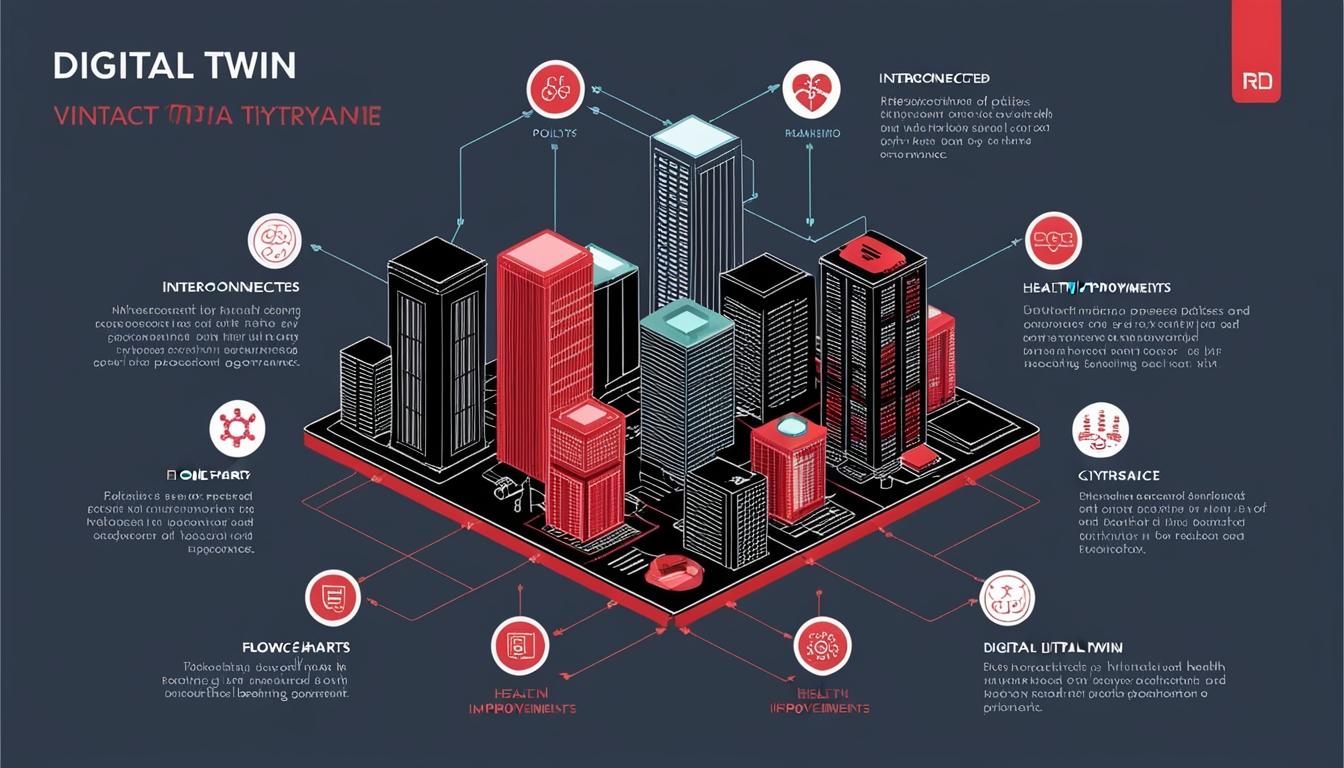
Fujitsu has recently introduced an innovative digital twin technology known as Policy Twin, aimed at transforming governmental policy-making practices. This technology, designed for local governments, focuses on simulating the impacts of diverse policies to enhance decision-making, resource allocation, and overall community outcomes.
The unveiling of Policy Twin highlights a substantial leap in how municipalities can engage with societal challenges, especially in an era that demands efficiency amidst constrained budgets and increasing public needs. Fujitsu's technology was notably effective during preventive healthcare trials, demonstrating its capability to identify solutions that not only doubled cost savings but also significantly improved health outcomes.
As explained by Fujitsu, the essence of Policy Twin involves the simulation, evaluation, and refinement of policies within a virtual environment before they are implemented in real-world settings. This process promotes cross-jurisdictional learning, allowing different municipalities to implement and adapt successful policies tailored to their unique needs.
The Policy Twin operates by transforming existing municipal policies into machine-readable flowcharts, utilising advanced large language models (LLMs). This transformation enables easy comparisons across various localities, incorporating factors like demographics and geography. From there, the system generates new policy candidates by merging elements from successful initiatives, while also considering resource constraints.
A significant feature of the Policy Twin is its predictive capability, enabled through machine learning models that assess historical data and human behaviour patterns. In practical applications, Policy Twin has shown an accuracy rate within 5% for its predictions concerning health improvements and cost savings. This automation represents not just a significant time-saving measure, but also the potential for enhanced decision-making processes.
The efficacy of Policy Twin was markedly demonstrated in the realm of preventive healthcare, where municipalities reported key achievements, such as doubling medical expense savings and realising notable improvements in public health metrics. The technology also facilitated quicker consensus-building among various stakeholders, showcasing its capacity to foster collaboration.
While the focus initially centred on healthcare, Fujitsu intends to extend the functionality of Policy Twin to other areas, including workforce planning, disaster preparedness, and supply chain resilience. These developments are expected to roll out as part of Fujitsu’s comprehensive Uvance Wayfinders consulting services by 2025, expanding the tool’s applicability across a range of societal needs.
Moreover, Policy Twin promotes standardisation of policies, enabling municipalities to share best practices and improve policy interoperability. The tool encourages collaboration, establishing a shared database of proven solutions. This collaborative approach could enhance transparency and accountability within public administration, allowing policymakers to make informed, data-driven decisions.
Fujitsu’s commitment to sustainable innovation underpins their introduction of Policy Twin. The technology aligns with the United Nations Sustainable Development Goals (SDGs), addressing crucial global challenges such as health, education, and sustainable urban development. Fujitsu stated, "Innovation is at the heart of Fujitsu’s mission to build trust and make the world more sustainable."
As the company continues to lead in digital transformation with revenues exceeding ¥3.7 trillion in 2024, its advancements in technologies such as AI and data security signal a promising future for public policy. The introduction of Policy Twin encapsulates a significant paradigm shift, presenting governments with a powerful resource to enhance service delivery, optimise resource use, and generate tangible social benefits.
With more municipalities beginning to adopt this transformative technology, the long-term effects could be vast, leading to improved health outcomes, robust community structures, and a sustainable societal framework. As such, Policy Twin is poised to not only refine existing policies but also fundamentally reshape the landscape of future governance.
Source: Noah Wire Services