Marek Helm, the CEO of GScan, boasts an extensive and varied background that spans both public service and the private sector. With two decades as the Director of the Estonian Tax and Customs Board, Helm helmed a team of 1,500, spearheading reforms and implementing the innovative e-Tax system, Estonia’s electronic tax filing platform. Transitioning to the private sector, he spent time in the Gulf Cooperation Council countries working for an Estonian IT firm before returning to his homeland and taking the reins at GScan.
GScan has emerged as a leader in cutting-edge technology, leveraging naturally occurring cosmic rays—specifically muons, electrons, and positrons—to facilitate advanced 3D scanning and chemical composition analysis. This pioneering approach allows for the detection of defects within built environments and infrastructure with extraordinary precision, achieving an accuracy of one millimetre. Notably, the systems are radiation-safe, posing no risk to individuals or the surrounding environment.
The company’s muonFLUX technology modules excel in imaging capabilities, capable of penetrating up to 20 metres of solid material while maintaining unmatched spatial and chemical resolution. GScan has prioritised scalability, reliability, and a minimal carbon footprint in its development. Their systems are designed without moving parts, which ensures energy efficiency and the absence of hazardous waste throughout the entirety of their use, aligning with the company’s commitment to sustainability.
Experts in the field emphasise that preserving existing assets is the most environmentally viable option. GScan’s technology enables clients to make data-driven decisions that can optimise reconstruction efforts and reduce capital expenditures, facilitating a decrease in construction-related carbon emissions by as much as 60 per cent. The potential reduction translates into millions of tonnes of carbon savings and significant cost reductions in infrastructure projects.
In practical applications, GScan's muonFLUX Infra detectors have been employed for non-destructive testing in Estonia and the United Kingdom. A recent notable project involved mapping and conducting atomic detection on decommissioned nuclear reactors used in training for nuclear submariners. Given the complexity and danger associated with dismantling such sites, GScan provided high-resolution 3D imaging and composition analyses crucial for ensuring a safe disassembly process.
Helm highlights the advantages of their innovative technology over traditional methods like ultrasound and X-ray imaging. "There are huge benefits to this novel technology, when compared to what is currently being used," he stated, underscoring its non-invasive nature and ability to create three-dimensional models of solid objects by detecting changes in density and composition.
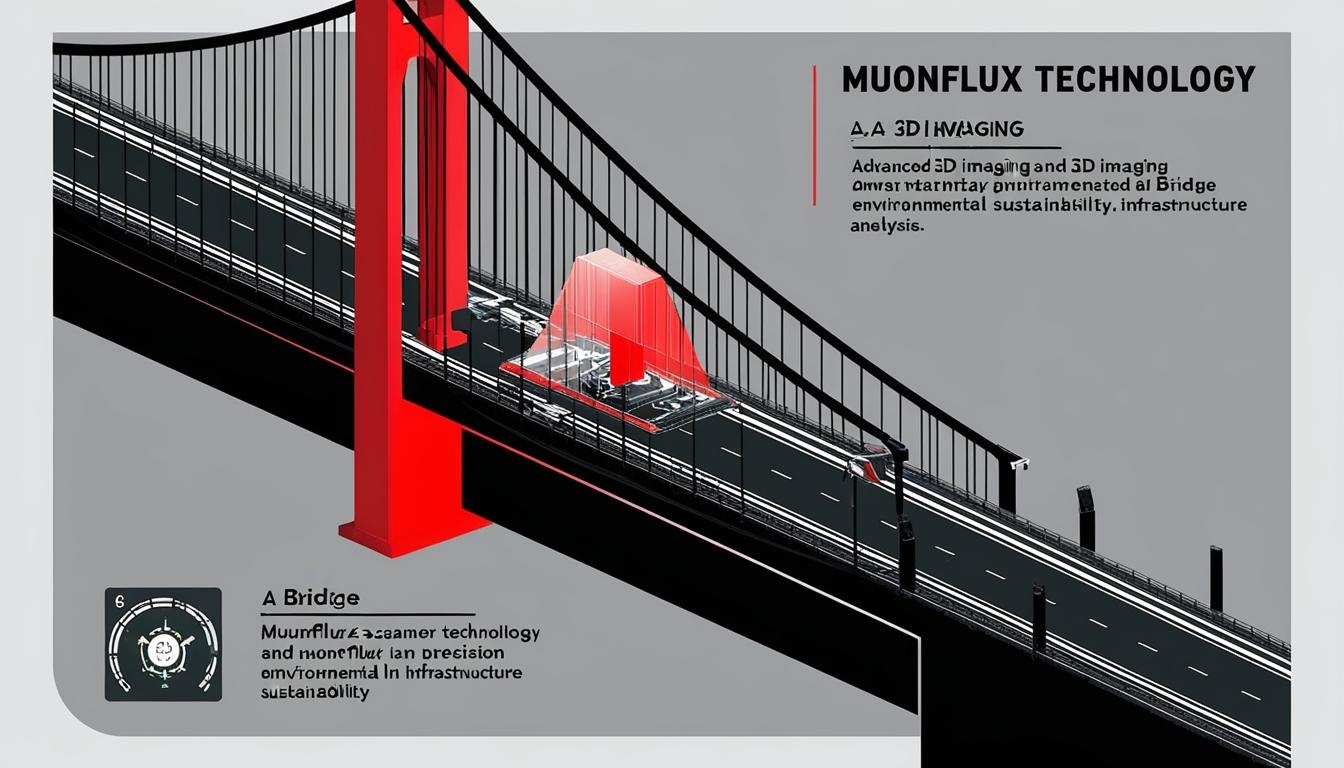
While opportunities in Estonia for GScan’s expansion have been limited, the UK’s National Highways has proven to be a progressive client, demonstrating openness to innovative approaches. In collaboration with the Atkins-Jacobs joint venture, GScan’s muonFLUX Infra AI scanning solution was utilised to assess the condition of post-tensioned bridges. The technology facilitated the mapping of internal geometry in reinforced concrete structures and collected valuable data surrounding condition changes due to various environmental factors.
Helm noted the significance of their collaboration with National Highways: “National Highways was a real champion of our technology, and the project was the first time it was used in this market." He expressed optimism about expanding GScan's technology into other countries, as Europe faces an ageing infrastructure issue; in fact, half of the bridges on the continent are over five decades old.
To further drive innovation, Andi Hektor, GScan’s Chief Strategy Officer and Co-founder, brings a wealth of expertise from academia and entrepreneurship to the enterprise. Hektor has spent over twenty years in academic research roles, including at CERN, and is focused on translating complex concepts into practical solutions for the civil engineering sector. “We can apply this technology in real life to help society,” he asserted, highlighting the balance between fundamental science and its applications in addressing real-world needs.
With a commitment to excellence and innovation, GScan continues to bolster the Estonian economy while eyeing growth in the UK and Germany. The company’s technology holds promise for enhancing safety and lowering maintenance costs across public infrastructures, particularly pertinent to the estimated 100,000 bridges throughout Europe and beyond.
Source: Noah Wire Services