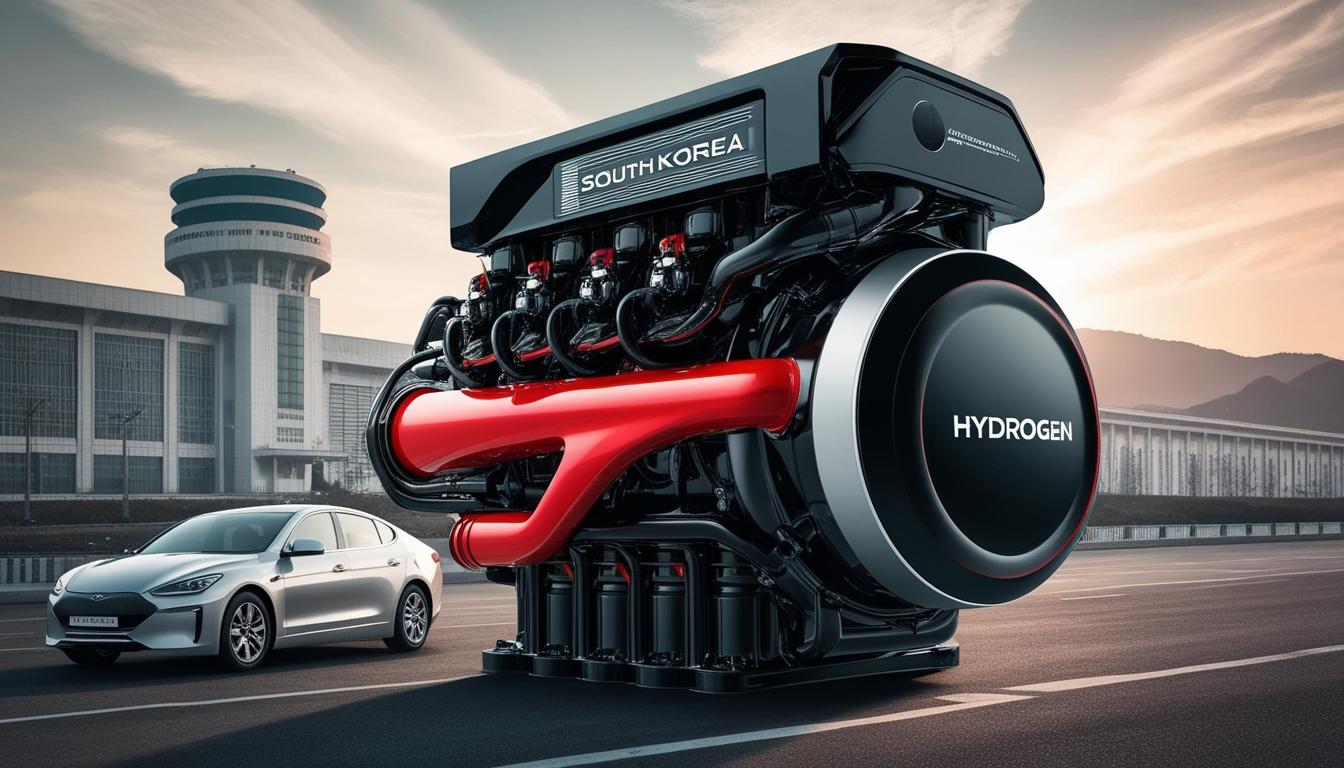
In a significant development within the automotive industry, South Korean automotive giants Hyundai and Kia are forging ahead with groundbreaking innovations focused on hydrogen technology. Their intentions to collaborate in the development of a new hydrogen engine underscore a strategic shift aimed at addressing the longstanding challenges that have historically hampered the widespread adoption of hydrogen fuel cells.
Historically, hydrogen fuel cells have faced two major hurdles: high production costs and a lack of infrastructure for refuelling. Speaking to El Diario 24, representatives from both car manufacturers outlined their strategy to tackle these issues head-on. The new designs being developed by Hyundai and Kia will utilise less rare and more affordable materials, making them a more accessible and environmentally sustainable option than traditional fuel cell vehicles.
This ambitious initiative not only seeks to improve the efficiency and range of hydrogen engines but also positions South Korea as a serious contender in a technological space long dominated by Japanese firms like Toyota and Honda. These companies were the pioneers of hydrogen fuel-cell vehicles, most notably with models such as the Toyota Mirai. However, Hyundai and Kia's focus on a combustion-based hydrogen engine may disrupt Japan's existing technological leadership. The approach promises to create a scalable alternative with less reliance on extensive hydrogen refuelling networks.
Analysts suggest that this development is indicative of a broader geopolitical context, hinting at a potential technological "war" between South Korea and Japan. With substantial investment in Research and Development (R&D), South Korea aims to redefine industry standards and push the boundaries of automotive innovation, potentially accelerating the global transition to hydrogen-powered vehicles.
On a broader scale, while electric vehicles (EVs) have been at the forefront of discussions surrounding sustainable transportation, hydrogen combustion engines represent a viable alternative, particularly in scenarios requiring long-distance travel and heavy-duty transportation. Unlike EVs, which are hindered by battery longevity and the resource-intensive nature of their production, hydrogen engines offer a clean and efficient solution that may redefine sustainability standards within the industry.
The ramifications of this technological breakthrough extend far beyond South Korea and Japan. Should Hyundai and Kia's hydrogen engine technology prove successful, it could catalyse a global reassessment of automotive strategies, challenging competitors to innovate further. Additionally, a heightened competitive atmosphere between these nations may lead to improved hydrogen infrastructure around the world, diminishing reliance on fossil fuels and contributing to the overall goals for climate action.
The automotive sector is poised for significant transformation as these developments unfold. Analysts predict that Hyundai and Kia’s hydrogen engines may outperform traditional diesel engines in several key metrics including durability and cost-effectiveness and may offer a less costly initial investment compared to existing fuel cell technology. As investments into hydrogen research continue to expand, the innovative strides made by these companies are generating a palpable sense of anticipation for a cleaner, more sustainable future in mobility.
In conclusion, the evolving landscape of hydrogen technology positions South Korea as a potential leader in this new frontier, challenging established norms and prompting a re-evaluation of the roles various players will have in the transportation sector’s shift toward sustainability.
Source: Noah Wire Services