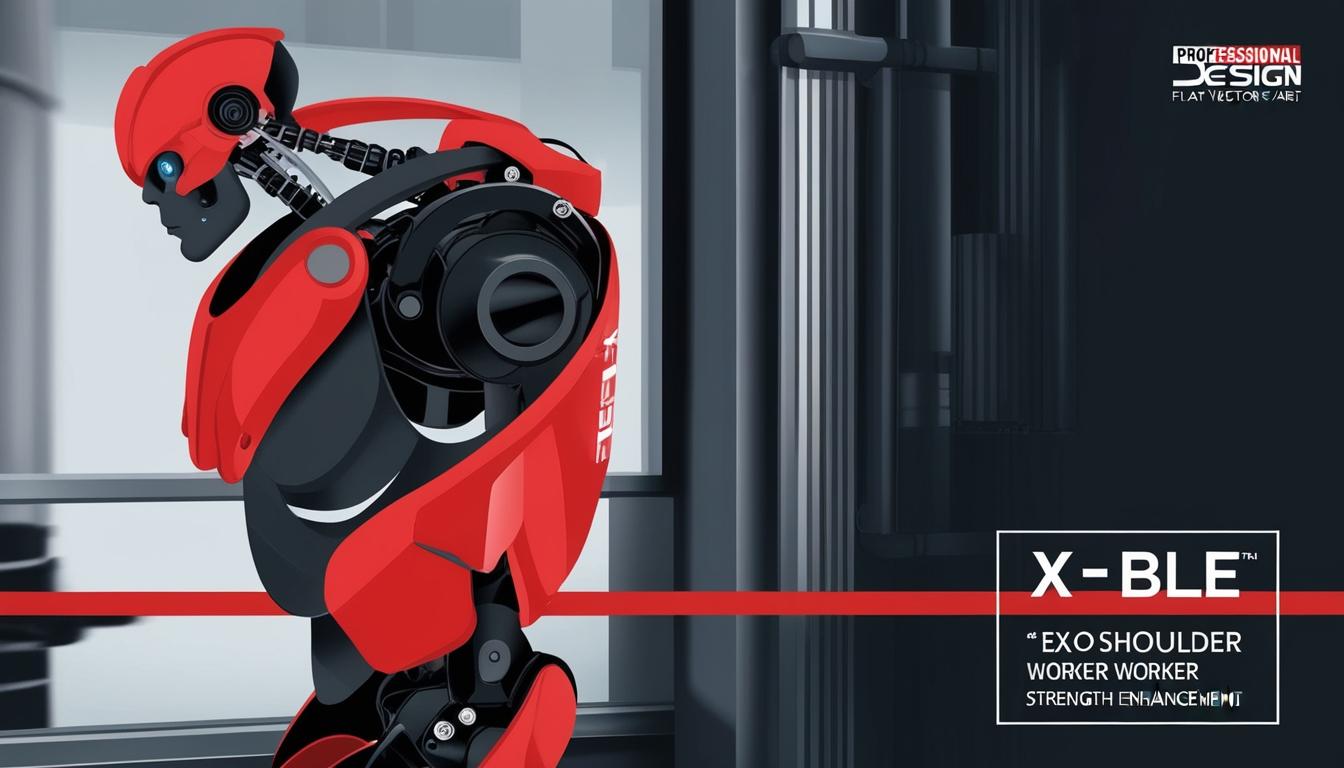
Hyundai and Kia have unveiled their newest innovation in wearable technology, showcasing a sophisticated robot designed to enhance worker strength and minimise injuries. At their “Wearable Robot Tech Day” event, the companies revealed the “X-ble Shoulder," which is part of an upcoming series of wearable robot technology. Currently available for consultation in South Korea, the X-ble Shoulder is set for deliveries in the first half of 2025, with plans for international rollout to markets such as the United States and Europe anticipated for 2026.
The X-ble Shoulder is positioned as a pivotal advancement in assisting workers across various industries, including automotive, aviation, agriculture, construction, logistics, and shipbuilding. Hyundai claims that the technology can significantly improve efficiency by reducing shoulder load by 60% and muscle activity by 30%, particularly beneficial during overhead tasks. Dong Jin Hyun, head of Hyundai and Kia's Robotics Lab, explained, “The X-ble Shoulder is a wearable robot that leverages the technical capabilities of the Robotics LAB and implements feedback from actual users,” underscoring the technology's user-centric design.
The product will be made available in two models: a basic version, suitable for general movement, providing assistive force up to approximately 6.4 lbs (2.9 kg), and an adjustable version specifically designed for repetitive tasks. The latter includes the ability to set an angle for maximum torque, facilitating assistance up to about 8.1 lbs (3.7 kg).
The immediate focus for the new wearable technology will be within Hyundai and Kia’s production divisions, with inquiries for consultations already available on the Robotics Lab's website. Following the initial rollout, Hyundai has indicated that the technology will expand its reach to 27 Hyundai Motor Group affiliates and other industries concerned with lifting and physical strain.
Looking ahead to the broader market, the wearable robots and exoskeletons sector is projected to experience significant growth, with Motor Intelligence forecasting a rise to $10.25 billion by 2029 from approximately $2.55 billion in 2024. This projection highlights the increasing interest and investment in robotic solutions aimed at enhancing workplace safety and productivity.
In line with their ambitions to lead in the wearable robot landscape, Hyundai is also preparing to develop additional products, including the “X-ble Waist,” designed to aid in lifting heavy loads, and a medical wearable robot dubbed “X-ble MEX,” aimed at assisting with walking rehabilitation. As Hyundai and Kia push forward, the introduction of wearable robotic technology marks a significant step in the evolution of workplace assistance devices, promising to change business practices across multiple sectors in the coming years.
Source: Noah Wire Services