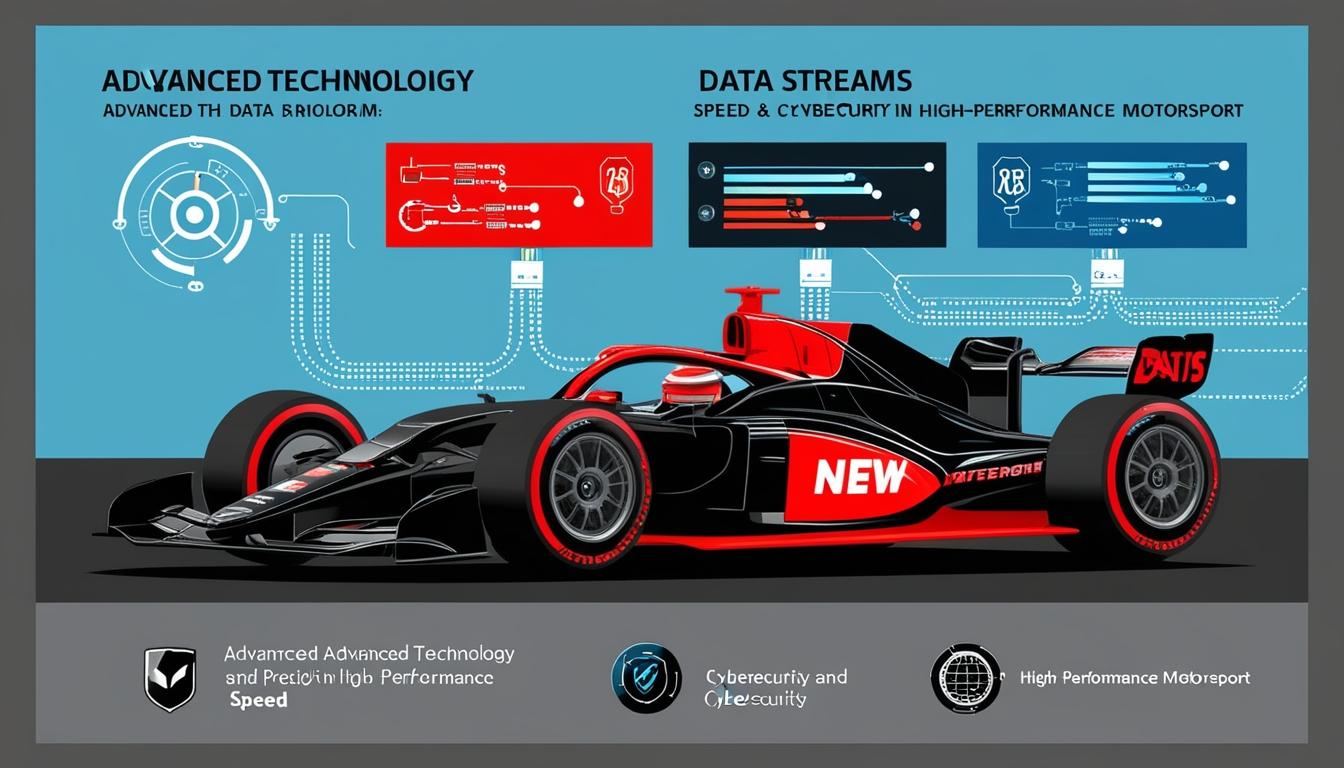
In an exclusive interview with VentureBeat, Friedemann Kurz, Head of IT for Porsche Motorsport, provided insights into the intersection of technology and high-performance motorsport, particularly within the context of the TAG Heuer Porsche Formula E Team. Kurz's role encompasses overseeing critical IT operations, including data management, cybersecurity, and logistical coordination, all of which play a vital role in maintaining Porsche’s commitment to innovation in the high-stakes environment of racing.
The TAG Heuer Porsche Formula E Team competes in a series of 16 races across 10 cities globally, a format that necessitates a highly flexible IT infrastructure. "Data is a critical competitive asset for us, driving decisions on race strategy and car diagnostics," Kurz stated, emphasising the importance of secure and efficient data management. His team faces significant challenges, such as strict bandwidth limitations, with only 50 Mbps shared across all applications during races. This necessitates prioritisation of bandwidth-heavy tools for telemetry and communication, all while on-site infrastructure must be deployed rapidly and handled by a minimal team.
Since 2023, the team has collaborated with Cato Networks to enhance cybersecurity and connectivity. The partnership enables the integration of secure networks for a variety of stakeholders, including pit crews and operational sites. Kurz explained how “Cato Networks enables rapid configuration and ensures a stable, encrypted connection in diverse environments,” which is vital given the unique regulations and logistical challenges encountered at each race location.
The dynamics of racing mean that real-time data such as tire temperatures and energy usage are imperative for making immediate adjustments. Kurz noted that "we can’t afford data delays or integrity issues; they could disrupt our entire race strategy." These insights highlight the intricate relationship between data flow and strategic decision-making during races.
Furthermore, Kurz acknowledged the transition to lightweight infrastructure, driven by Formula E's unique constraints on equipment. He shared that reliance on Cato’s SD-WAN technology allows for standardised connections across various race locations, simplifying data management while ensuring compliance with local regulations. “This lightweight setup helps us save on transportation costs and reduces emissions,” he said, demonstrating a commitment to sustainability alongside performance.
The conversation also touched on the evolving role of artificial intelligence (AI) and machine learning within motorsport. Kurz outlined plans to harness these technologies to improve operational efficiency, particularly in automating the monitoring of network health and optimising data flows. He stated, "On race day, for instance, AI could dynamically reallocate bandwidth to critical telemetry data if there’s a surge in demand," highlighting the potential for AI to affect real-time race strategies directly.
As global expansion poses cybersecurity challenges for organisations across various industries, Kurz shared insightful strategies for balancing agility with security. He noted that "lightweight, flexible infrastructure—especially cloud-native solutions—can streamline operations without sacrificing security," further asserting that lessons learned from the TAG Heuer Porsche Formula E Team's experiences could benefit other sectors looking to enhance their operational frameworks.
Kurz concluded by reiterating the importance of a collaborative approach to technology adoption, stressing that new tools must integrate seamlessly with existing systems and offer tangible improvements in performance or security. The TAG Heuer Porsche Formula E Team’s commitment to adaptability and innovation in technology not only reinforces Porsche's standing in motorsport but also sets a precedent for businesses seeking to navigate the evolving landscape of IT infrastructure and cybersecurity.
Source: Noah Wire Services