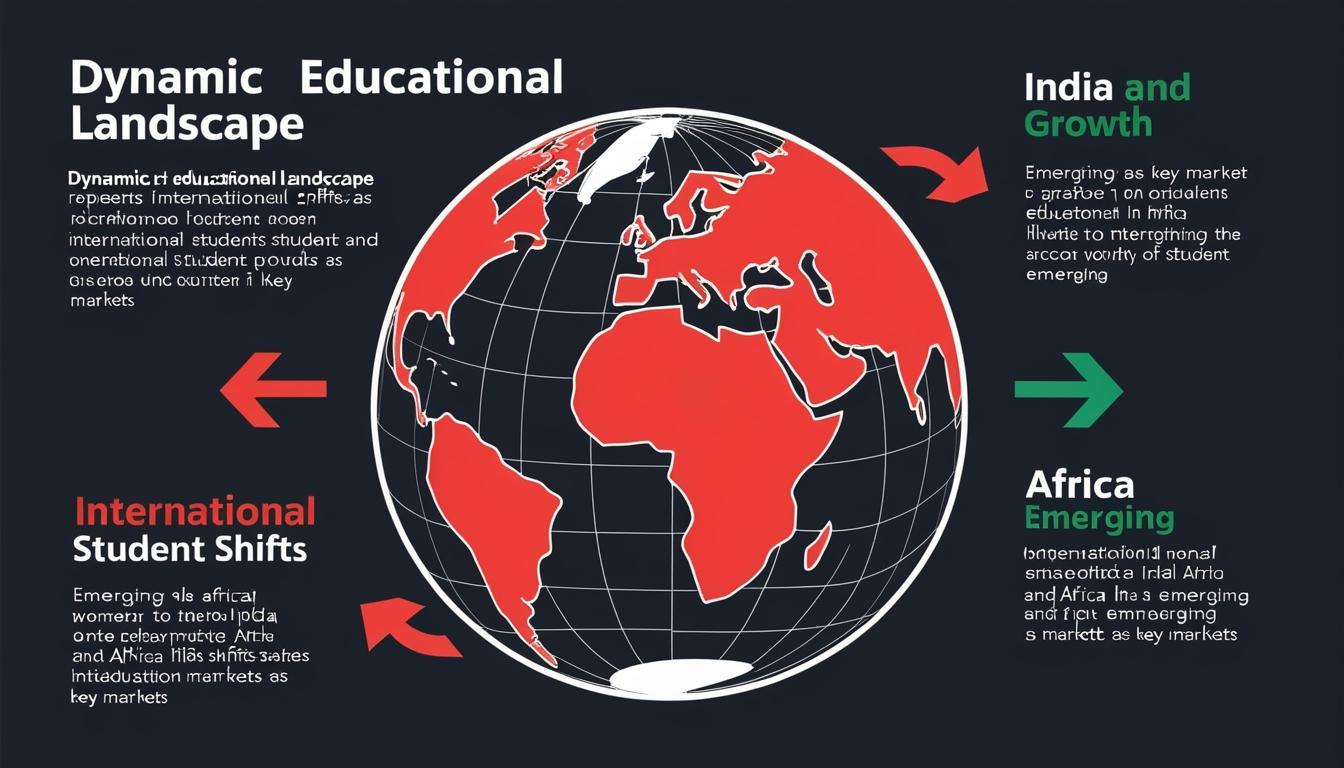
Institutions worldwide are being urged to recalibrate their educational offerings in response to divergent market demands, particularly in light of anticipated demographic shifts and evolving trends in international education. Patrick Brothers, co-CEO of HolonIQ, highlighted these points at the PLNA conference 2024, emphasising that dramatic changes in student demographics are on the horizon, particularly from emerging markets.
Current forecasts suggest that India is poised to increase its share of international students in the US from 29% to approximately one third by 2030. Concurrently, the proportion of Chinese students is expected to decrease to around 23%, while the remainder of the world will account for 43%. Brothers noted the urgency of adapting educational strategies, stating, “If you thought the last 10-20 years were tough serving the volume of students around the world, you haven’t seen anything yet,” indicating that the influx of potential students will drastically alter the landscape of international education.
According to HolonIQ predictions, the global population of postsecondary students is projected to swell by an additional two billion by 2050, with a notable increase of 970 million individuals attaining postgraduate credentials. This surge is attributed primarily to the burgeoning population of children aged 10–14, which currently includes 500 million individuals, with significant concentrations in India and China.
Brothers underscored India’s impact on global education trends, indicating that Indian students now constitute a third of the world’s STEM graduates. He reported that 89% of Indian postgraduate and undergraduate students studying in the US are involved in STEM disciplines. As he articulated, “This is important when we think about future workforce planning and OPT, as well as the demands that these countries have in their own workforces and why they are seeking to upskill here in the US.”
Beyond 2050, the focus is shifting towards Africa, where nations such as Niger, Uganda, Nigeria, Tanzania, and the Congo are witnessing rapid youth population growth. In contrast, countries like China and India are expected to experience a decline in their 10-14-year-old demographic over the coming decade. Brothers remarked, “By 2050 we will see more growth, from eight billion to over nine billion, but Asia will plateau and will move into decline and Africa will be booming,” signalling a substantial potential market for educational institutions.
These dramatic market shifts necessitate a rethinking of programme offerings to accommodate the varied financial capabilities of students from different regions. For instance, in 2022, Nigerian students paid an average of $15,000 per year for postgraduate programmes in the US, significantly less than the $48,000 paid by their Chinese counterparts. Brothers stated, “As institutions switch from a dominant China to an emerging Africa, you have to dramatically change your entire program portfolio, not just change the price of the individual programs,” highlighting the need to adapt not only pricing but also the types of programmes available.
During the PLNA conference discussions, the escalating costs associated with traditional educational pathways were acknowledged as a driving force behind the swift acceptance of non-traditional models of education. The shift towards online programmes, transnational education, and global institutional partnerships is becoming increasingly prevalent.
Brothers also highlighted that employment patterns are evolving, with growing interest in alternative credentials and micro-credentials as employers place more value on skills rather than traditional degrees. He pointed out the declining wage premium associated with bachelor’s degrees, stating, “Those who earn a certificate or other non-degree certification are achieving a higher personal income.”
HolonIQ’s findings indicate that more than 100 million learners are currently investing over $10 billion annually on micro or alternative credentials, reflecting a burgeoning marketplace for non-traditional educational offerings. This shift has been particularly pronounced in sectors such as private education and health services, which have seen a significant rise in demand since 1973.
As the global educational landscape undergoes these shifts, institutions are being prompted to reconsider their strategies to remain competitive and relevant in attracting a diverse range of students from emerging economies. The landscape is set for a transformation as educational institutions adapt to the pressing demands of an increasingly interconnected and rapidly changing world.
Source: Noah Wire Services