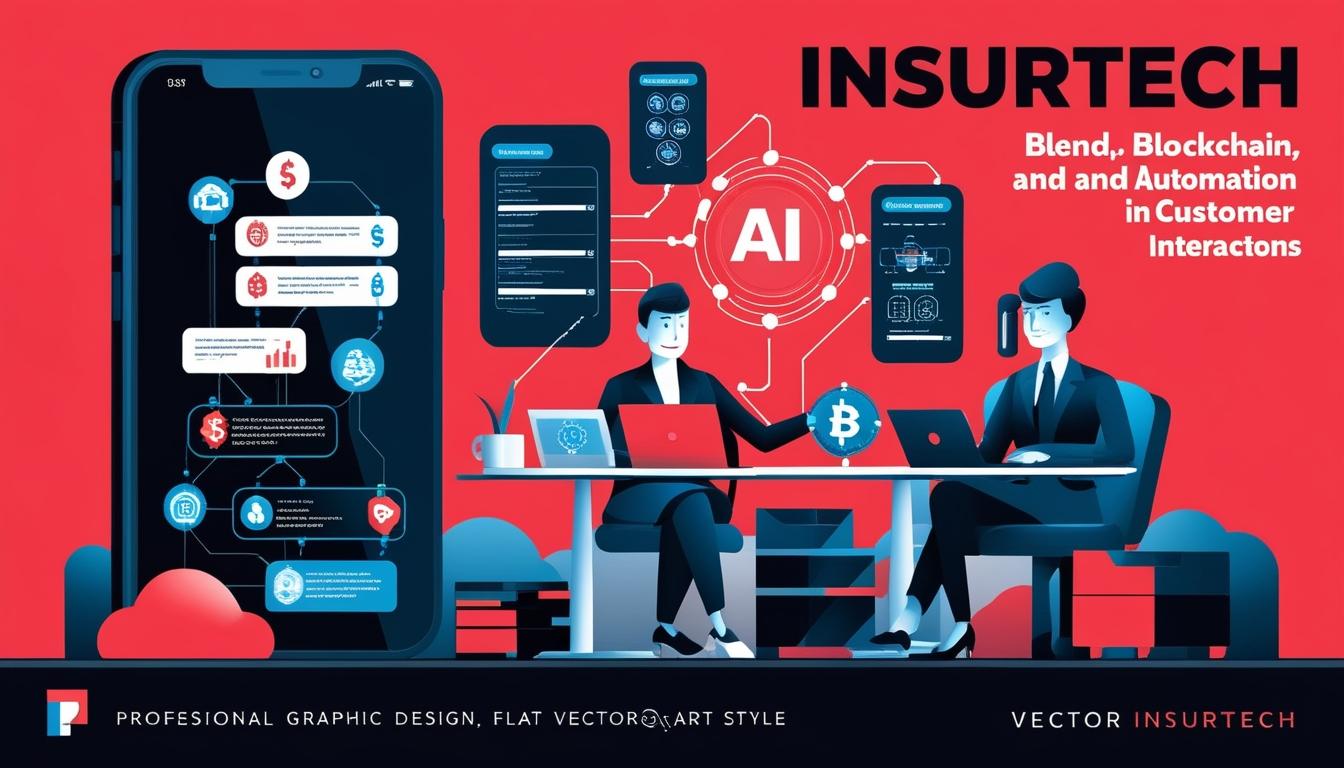
The insurance industry is currently experiencing a transformative shift, largely driven by the burgeoning segment known as InsurTech. InsurTech harnesses advanced technologies, such as Artificial Intelligence (AI), automation, and sophisticated analytics, to enhance traditional insurance methodologies. This integration has fundamentally altered how insurers conduct business, engage with clients, and assess risks, leading to improved operational efficiency, personalized services, and enhanced consumer experiences.
InsurTech, a term that represents the application of technological innovations in the insurance sector, includes a diverse range of advancements. These innovations encompass AI, machine learning, data analytics, blockchain, and automation, which collectively advance processes from underwriting and claims management to customer service and fraud prevention. Rapid consumer demand for enhanced transparency and efficiency has prompted traditional insurers to adopt these technological advancements as a means to remain competitive in a quickly evolving marketplace.
Focal to this InsurTech revolution is AI, which significantly optimises decision-making processes and operational workflows in insurance. One key application of AI is in underwriting, a traditionally laborious task that often involves manual reviews of substantial data sets. With AI, insurers can leverage algorithms capable of analysing large volumes of information quickly and accurately, yielding faster risk assessments. In an illustrative example, insurers can draw on data from social media interactions, wearable technology, and Internet of Things (IoT) devices to formulate more nuanced risk profiles for customers, allowing for customised coverage that aligns with individual needs.
Claims processing, another critical aspect of the insurance sector, also benefits from AI technologies. Historically, the verification of claims was a slow, error-prone process reliant on manual oversight. In contrast, AI-driven systems can streamline this process by swiftly validating claims. Additionally, machine learning models can detect patterns in historical claims data, thereby enhancing the identification of fraudulent activities. Research indicates that the integration of AI could significantly mitigate fraud by recognising suspicious claims at early stages.
Automation, a vital force in advancing InsurTech, further enhances operational efficiency by enabling the automation of routine tasks. By applying automation in various areas such as policy issuance and claims management, insurance firms can cut costs and enhance service delivery. For instance, automated policy issuance systems can expedite the traditionally lengthy process, which often spans several days, into mere minutes. This notably contributes to improved customer satisfaction by drastically reducing wait times for gaining coverage.
Data analytics plays a crucial role in empowering the insurance industry with data-driven insights. Insurers can harness analytics to understand customer behaviour, assess risks accurately, and analyse market dynamics. Predictive analytics, prominently featured in risk management strategies, allows insurers to extrapolate insights from historical data to foresee potential future risks. Such foresight enables insurers to establish competitive pricing models while remaining profitable.
The advent of blockchain technology also holds promise within the InsurTech ecosystem. Known for its secure and transparent ledger capabilities, blockchain enhances trust and transparency in insurance transactions. Its application in fraud prevention is significant; blockchain can ensure secure record-keeping for all transactions, thereby decreasing the likelihood of altered records and dishonest practices. Additionally, the concept of smart contracts—self-executing agreements stored digitally—offers an avenue for increased automation in processes like policy issuance and claims settlement, allowing for swifter transactions without intermediary involvement.
The incorporation of these technologies culminates in substantial benefits for consumers. Enhanced efficiency translates to quicker service delivery, with insurers equipped to handle claims in real-time and issue policies almost instantaneously. Moreover, with the advancements in data analytics, insurers can provide tailored products and competitive pricing models unique to each consumer's risk profile. Furthermore, blockchain ensures a transparent process, enabling customers to track their claims and policies in real-time, thereby instilling confidence in insurance dealings.
As the InsurTech landscape continues to progress, the future appears poised for even greater innovative potential. Advances in AI-driven risk assessments, wider implementation of blockchain technology, and increased operational automation are anticipated to reshape the insurance sector. This evolution is expected to produce an insurance environment characterised by efficiency, transparency, and a pronounced focus on the consumer.
In summary, the InsurTech domain is redefining the insurance narrative through the deployment of AI, automation, analytics, and blockchain technology. These advancements promise to enhance operational efficiencies, elevate customer experiences, and cultivate personalised insurance solutions. As the industry progresses towards an increasingly tech-centric framework, the potential for InsurTech to shape a customer-focused, efficient, and secure insurance landscape remains astoundingly vast.
Source: Noah Wire Services