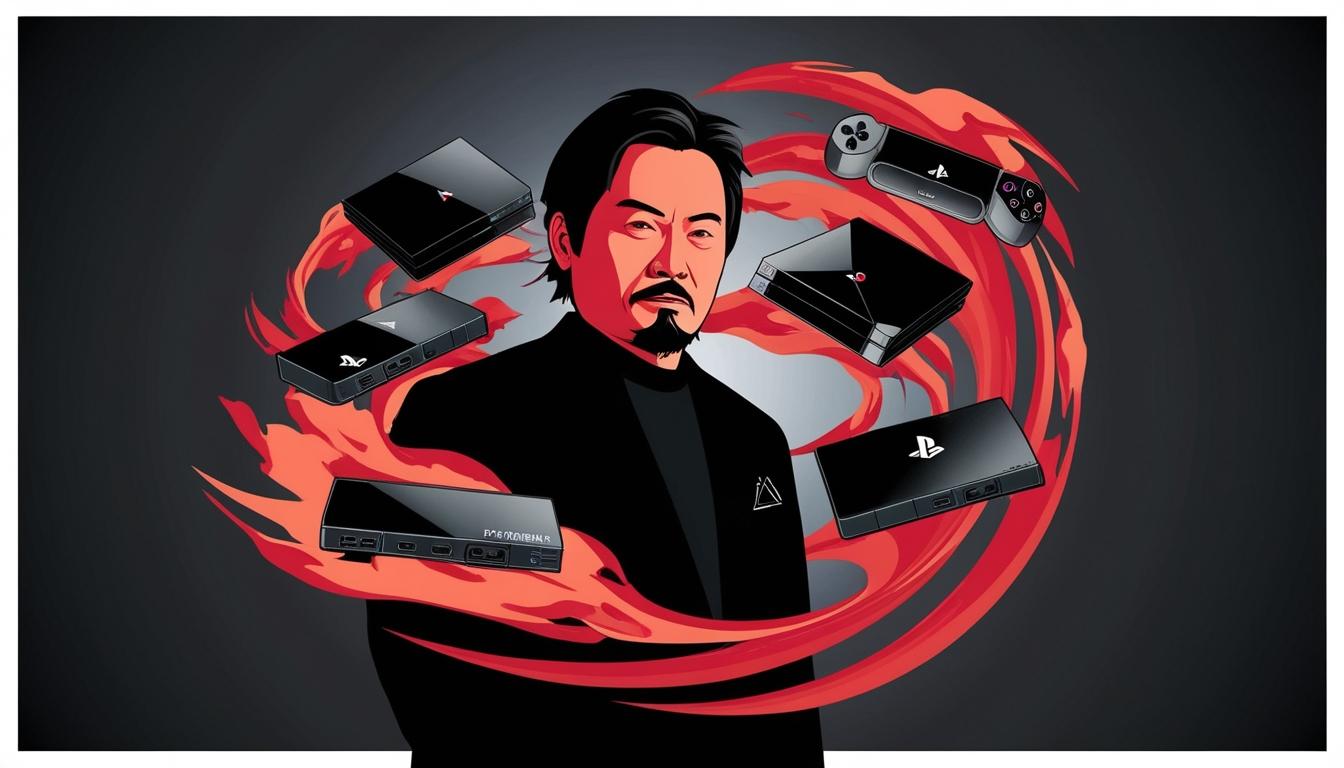
Ken Kutaragi, the visionary behind the PlayStation, reflected on the initial struggles he faced in the early development of the gaming console during a recent interview. Speaking to AFP, Kutaragi recounted how he was met with skepticism from both Sony executives and Japanese game developers when he proposed the idea of a console with advanced 3D graphics. “Everyone told us we would fail,” he stated, indicating that the prevailing belief at the time was that video games were merely a pastime for children, not a serious entertainment medium.
The PlayStation made its market debut on December 3, 1994, at a time when the gaming landscape was dominated by two-dimensional games, most notably the likes of “Super Mario Bros.” Despite an unfavourable response from within Sony and a similar sentiment from game-makers who viewed the creation of real-time 3D games as "unthinkable," Kutaragi persisted in his vision. “We wanted to make the most of technological progress to create a new form of entertainment,” he expressed, highlighting the transformative potential of emerging technologies.
Kutaragi’s ambition proved fruitful as the PlayStation evolved into a cultural phenomenon and a household name. Its successor, the PlayStation 2, became the best-selling games console of all time, with an impressive 160 million units sold worldwide. The path to success was not without its challenges, particularly in light of a dramatic split between Sony and Nintendo that Kutaragi attributed to their fundamentally different philosophies regarding video games. What was once a collaboration to create a CD-ROM reader compatible with the Super Nintendo turned into a public split, with Nintendo opting to partner with Philips instead, an outcome Kutaragi deemed inevitable given their divergent paths.
In his position, Kutaragi applied insights from the music industry to redefine marketing strategies for game consoles, choosing to sell them through electronics retailers rather than toy stores. This strategic decision facilitated a new supply chain that could adapt to varied local markets, allowing Sony to carve out a niche in the primed gaming sector.
As technology and consumer preferences evolve, Kutaragi noted that the future of console gaming might not be as assured. He foresaw the rise of "cloud gaming," a trend that has indeed started to reshape the industry. Kutaragi stated that he consistently anticipated advancements in technology, having predicted mobile gaming years in advance. His reflections on technology extend beyond gaming; he is currently at the helm of a start-up focused on robotics and artificial intelligence, portraying a remarkable shift in his career after leaving Sony in 2007.
Kutaragi sees vast potential in AI, indicating that we are advancing towards a future where computations and predictive analytics are deeply integrated into various sectors, including medicine, music, and art. “We are entering a world where everything can be calculated," he remarked, alluding to the capabilities that generative AI, like ChatGPT, have unveiled. He posits that if artificial intelligence can make language computable, the same principles could potentially apply to concepts like time and space in the broader landscape of technology.
As Kutaragi melds his expertise in gaming with cutting-edge AI innovations, he inspires a vision of what future entertainment may hold, highlighting that what once seemed like mere science fiction might soon transcend into reality.
Source: Noah Wire Services