Microsoft has recently unveiled a range of artificial intelligence (AI) models that are specifically designed to cater to the needs of various industries. By adapting its offerings to suit industry-specific scenarios, the company aims to enhance the effectiveness of AI solutions for its clientele. This initiative builds upon Microsoft’s collaboration with leading firms across multiple sectors, which have contributed their expertise and data to help refine these tailored models.
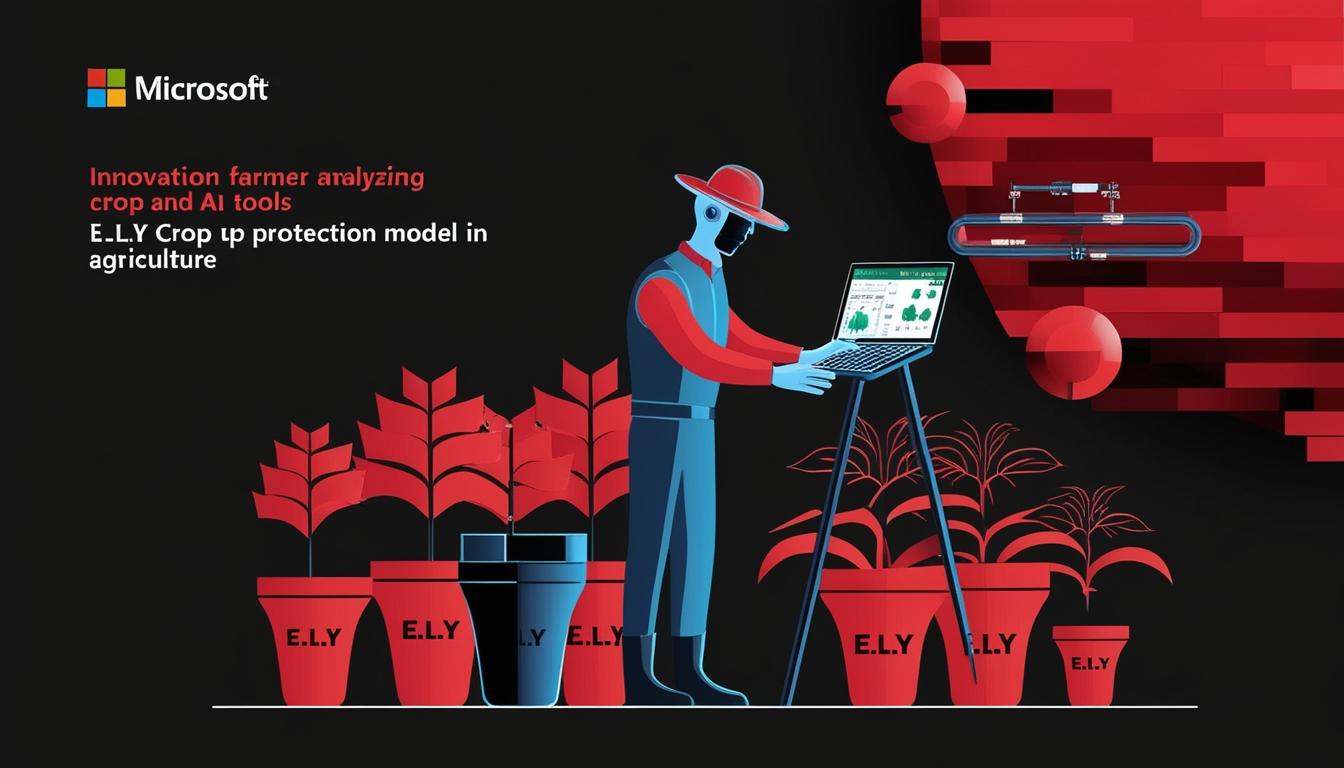
Among the new offerings is the introduction of the E.L.Y Crop Protection model, developed in partnership with Bayer, a specialist in life sciences and healthcare. This agro-specific small language model (SLM) is now available in the Azure AI model catalog and is designed to assist businesses in the agriculture sector. E.L.Y is notably pre-trained on thousands of real-world queries, enabling it to facilitate compliance, crop protection, and sustainability efforts within farming operations.
Microsoft's AI initiatives extend beyond agriculture, with partnerships across various domains including automotive, industrial automation, financial services, and manufacturing. Notable collaborators include Cerence for automotive applications, Rockwell Automation for industrial solutions, Saifir for financial services, and Sight Machine for manufacturing optimization. The integration of these industry-specific capabilities with Microsoft’s cloud infrastructure is anticipated to foster greater innovation in each sector.
In addition to the tailored models, Microsoft is rolling out five open-source models through Hugging Face, each fine-tuned for financial data analysis, specifically focusing on summarization and sentiment analysis. This move is part of a broader strategy to deliver open, accessible tools that organisations can leverage to enhance their data processes.
Furthermore, Microsoft has introduced AI agents within Copilot Studio aimed at streamlining industry-specific operations. These agents can be configured to meet the distinct requirements of businesses. For instance, a Store Operations AI Agent assists retailers in managing store operations effectively, while a Factory Agent aids manufacturers in identifying production inefficiencies and addressing operational issues. By equipping employees without technical expertise with tools to conduct data analyses, Microsoft’s initiatives are designed to empower businesses in seeking out insights and solutions to significant challenges.
As Microsoft continues to expand its portfolio of niche AI solutions tailored for specific industries, it is positioning itself as a leader in the evolving AI landscape. The firm’s focus on integrating these advanced technologies into core business practices rather than merely offering isolated tools signifies a strategic advancement in the AI sector. Future developments are expected as Microsoft seeks to leverage deep industry knowledge and customer understanding to enhance its AI offerings further.
Source: Noah Wire Services