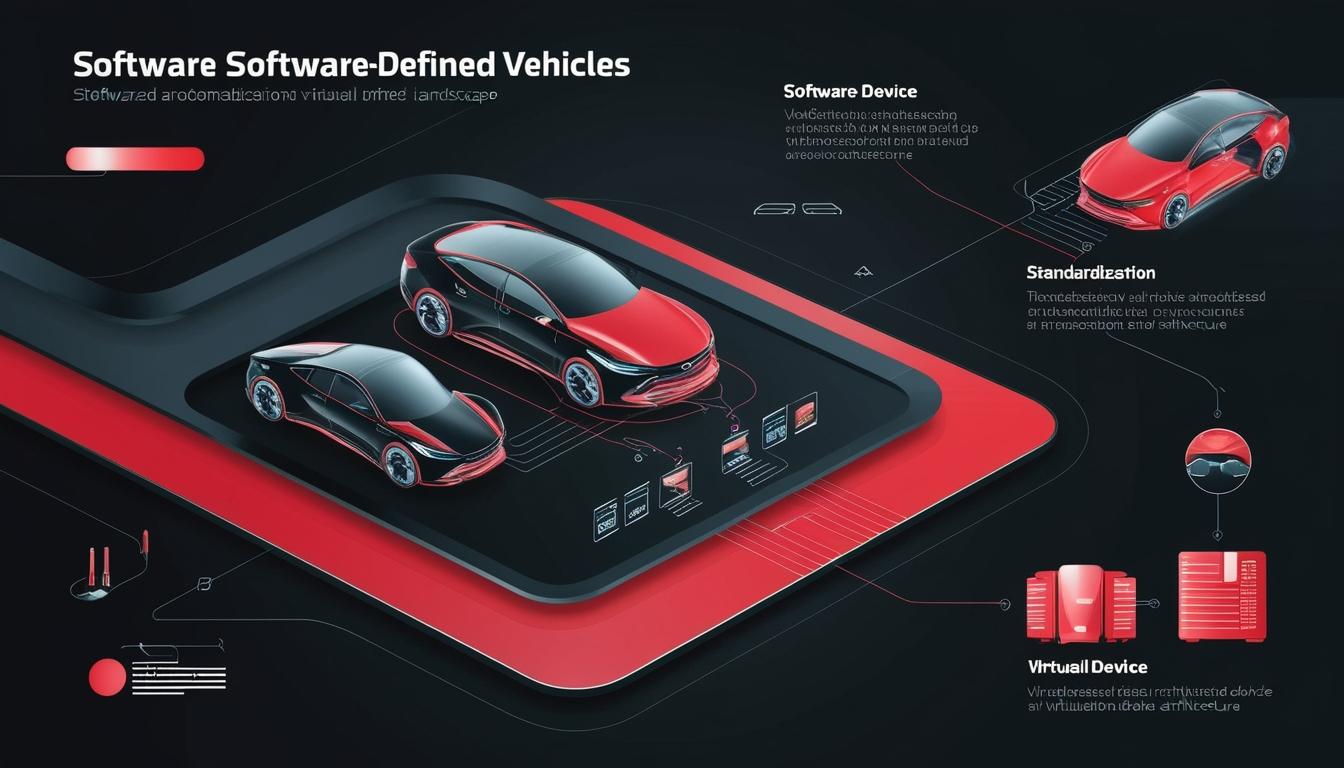
Panasonic Automotive Systems (PAS) and chip designer Arm have entered into a strategic partnership aimed at standardising automotive architecture specifically for Software-Defined Vehicles (SDVs). This collaboration comes at a time when the automotive industry is increasingly transitioning towards more sophisticated software frameworks to enhance vehicle functionality and operational efficiency.
Both organizations, driven by a common vision for developing a flexible software stack, have aligned their goals through their active participation in SOAFEE (Semantically Orchestrated Architecture For Embedded Ecosystems), an initiative dedicated to fostering collaboration in standardised software development across the automotive sector. The partnership will leverage existing technologies to address crucial challenges faced by automotive manufacturers and their suppliers.
A key aspect of this partnership will involve the adoption and extension of the device virtualisation framework VirtIO. By utilising VirtIO, PAS and Arm aim to decouple automotive software development from hardware, which is expected to accelerate the development cycles within the automotive industry. This shift is particularly relevant as manufacturers work to consolidate Electronic Control Units (ECUs) into single, powerful units such as Cockpit Domain Controllers (CDC) and High-Performance Computers (HPC).
Historically, many automakers and tier-1 suppliers have faced significant hurdles related to vendor-specific proprietary interfaces, which can lead to increased costs and delays when transitioning between different vendor solutions. Recognising this, PAS and Arm are advocating for a transition from a hardware-centric model to a software-first approach. This standardisation of interfaces between automakers, tier-1 suppliers, and the hypervisors and chipsets they utilise will facilitate the adoption of modern technologies tailored to evolving automotive needs.
The partnership has outlined several key initiatives:
Utilising VirtIO-based Unified HMI: PAS and Arm are set to standardise zonal architecture by leveraging VirtIO for virtualising devices connected to the central ECU, as well as remote devices associated with zonal ECUs. The organisations showcased a proof-of-concept that involves PAS's open-source remote GPU technology, Unified HMI, which is based on a Display Zonal Architecture constructed on Arm technology. This innovation is aimed at distributing GPU loads from the central ECU to multiple zonal ECUs, thereby reducing heat generation and harness weight without necessitating changes to the applications currently operating on the central ECU.
Ensuring Environmental Parity from Cloud to Car: PAS’s vSkipGen will operate on Arm Neoverse-based cloud servers, maintaining consistency in architecture and device virtualisation frameworks. This initiative aims to achieve full environmental parity between the virtual hardware in cloud environments and automotive hardware, enhancing flexibility and performance across both domains.
Expanding VirtIO Standardisation: Initially focusing on cockpit applications like Android Automotive and Automotive Grade Linux, PAS and Arm intend to broaden the VirtIO standards to cover a wider range of automotive applications. This expansion includes developing standard interfaces for Real-Time Operating Systems (RTOS) to facilitate the decoupling of Advanced Driver Assistance Systems (ADAS) software from hardware concerns.
Masashige Mizuyama, executive vice president and chief technology officer of PAS, remarked, “Our partnership with Arm aims to promote the standardisation of VirtIO and bring this industry reference standard to the next level. By combining the expertise and industry leadership of our organizations, we are confident this collaboration will unlock software potential and serve as a crucial foundation for building the future of automotive technology towards SDV.”
Echoing this sentiment, Dipti Vachani, senior vice president and general manager of the automotive line of business at Arm, said, “SDVs continue to be one of the most exciting opportunities for automakers today, but realising this vision demands innovative approaches that allow software developers to begin their work before physical silicon is available. Our partnership with PAS stems from both organizations’ active participation in SOAFEE and builds on a shared goal to reduce fragmentation in the industry through standardisation, which will ultimately accelerate automotive development cycles for our partners.”
This significant partnership represents a forward-looking approach to addressing the complexities of automotive software development and reflects the growing trend towards software-defined solutions in the automotive market.
Source: Noah Wire Services