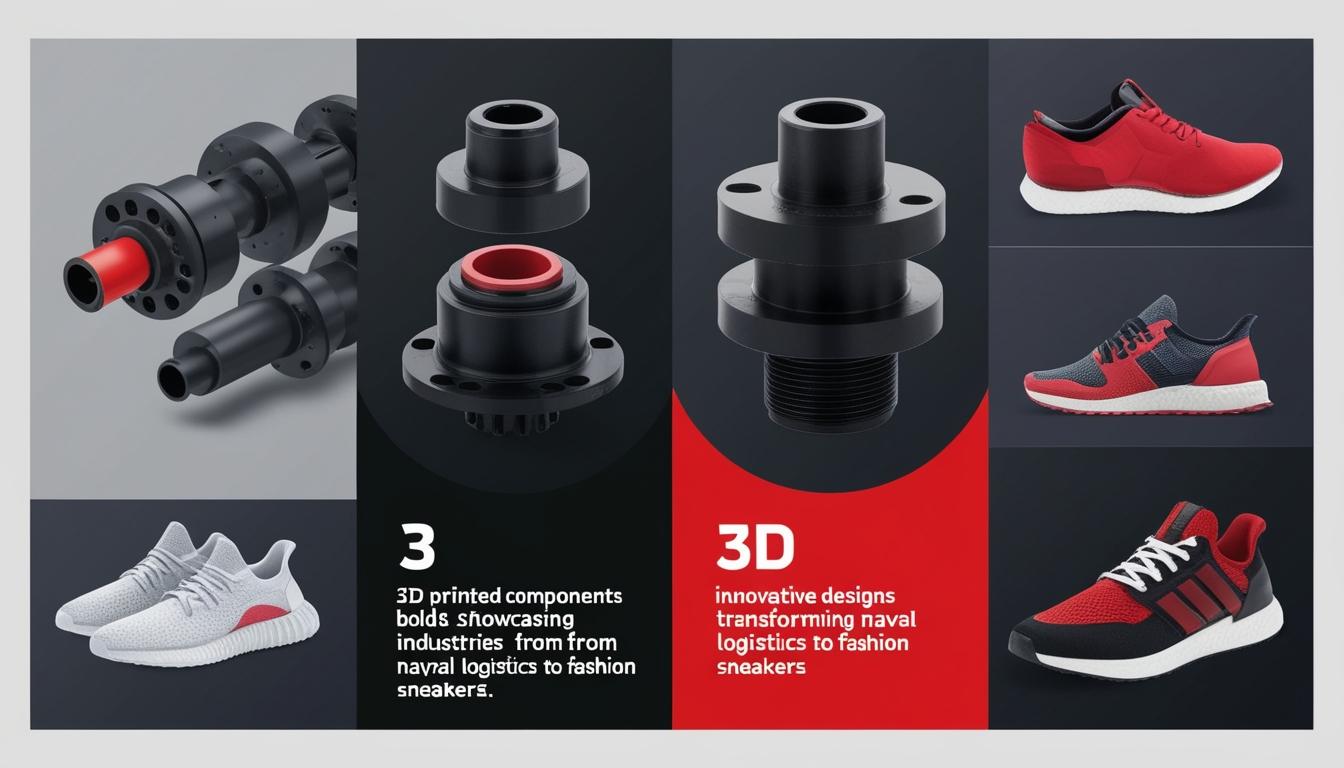
A series of significant developments in additive manufacturing have emerged recently, highlighting the expanding role of 3D printing across different industries. Today, innovations from companies like Phase3D, Ultimaker, and Angelelli Automobili exemplify the diverse applications and potential future trends in this rapidly evolving field.
Phase3D has introduced a pivotal addition to its Fringe Inspection product suite known as Fringe Qualification. This new in-situ inspection technology allows manufacturers to certify and manage additive manufacturing (AM) builds in real-time across multiple printers. Significant features of the Fringe Qualification system include automated, layer-by-layer inspection and instant alerts for any out-of-specification constructs. Niall O’Dowd, the Founder and CEO of Phase3D, noted, “With Fringe Qualification, we’re transforming how manufacturers approach quality control in additive manufacturing. Our customers can now certify builds layer-by-layer, reducing post-processing costs and enabling faster delivery of critical parts.” This system, demonstrated at Formnext 2024, aims to redefine production-scale AM quality control through enhanced accuracy and efficiency.
In another notable initiative, the Royal Netherlands Navy has adopted Ultimaker 3D printers for on-demand spare parts production, addressing logistical challenges faced by naval fleets. The Navy's approach involves designing and testing parts at their Den Helder headquarters, followed by the addition of approved designs to a digital catalog accessible to crew members on board. This method eliminates the need to transport large quantities of spare parts, which can be costly and cumbersome, particularly in maritime operations. The Ultimaker Cura and Digital Factory software are employed to meet stringent operational requirements, while various filaments, such as PETG, ABS, and composite carbon fibre, are utilised to meet diverse application needs. For example, a water filter recently printed with PETG replaced an old brass model, showcasing the capability to provide strong, lightweight parts under demanding conditions.
Additionally, 3D printing has made its way into the motorcycle industry, as exemplified by Angelelli Automobili's creation of a Titan-Alu frame for the Ducati Panigale V4. The company, which previously gained attention in 2018 for its 3D printed car chassis, has now collaborated with the WEAREAM team to fabricate this innovative frame using AI-driven generative design and topological optimization. Showcased at the Formnext and Milan Motorcycle Shows, Angelelli described the frame as featuring “15% less weight” and highlighted its unique monolithic construction devoid of welds, claiming it represents a significant leap in additive manufacturing capabilities for the upcoming R-GP1 superbike.
Lastly, the fashion industry is also embracing 3D technology, as seen with Alexander McQueen sneakers customised using the Stratasys J850 TechStyle 3D printer. This printer allows for direct printing on fabrics, enabling intricate designs and a wide array of customisation options. Jason Brown, a systems supervisor at Purple Platypus, elaborated on the capabilities of the J850 TechStyle, stating, “The colorful bubble design surrounds the raised branding logo, and the 3D-printed detailing gives the sneakers a fresh, unique look that only someone with a J850 TechStyle printer could achieve.” With the ability to produce durable designs that can withstand rigorous testing, the J850 TechStyle represents the integration of advanced technology with fashion.
Overall, these advancements showcase how different sectors are incorporating 3D printing technology to enhance production efficiency, reduce costs, and elevate product innovation. As these trends unfold, they highlight the increasing relevance of additive manufacturing in contemporary business practices.
Source: Noah Wire Services