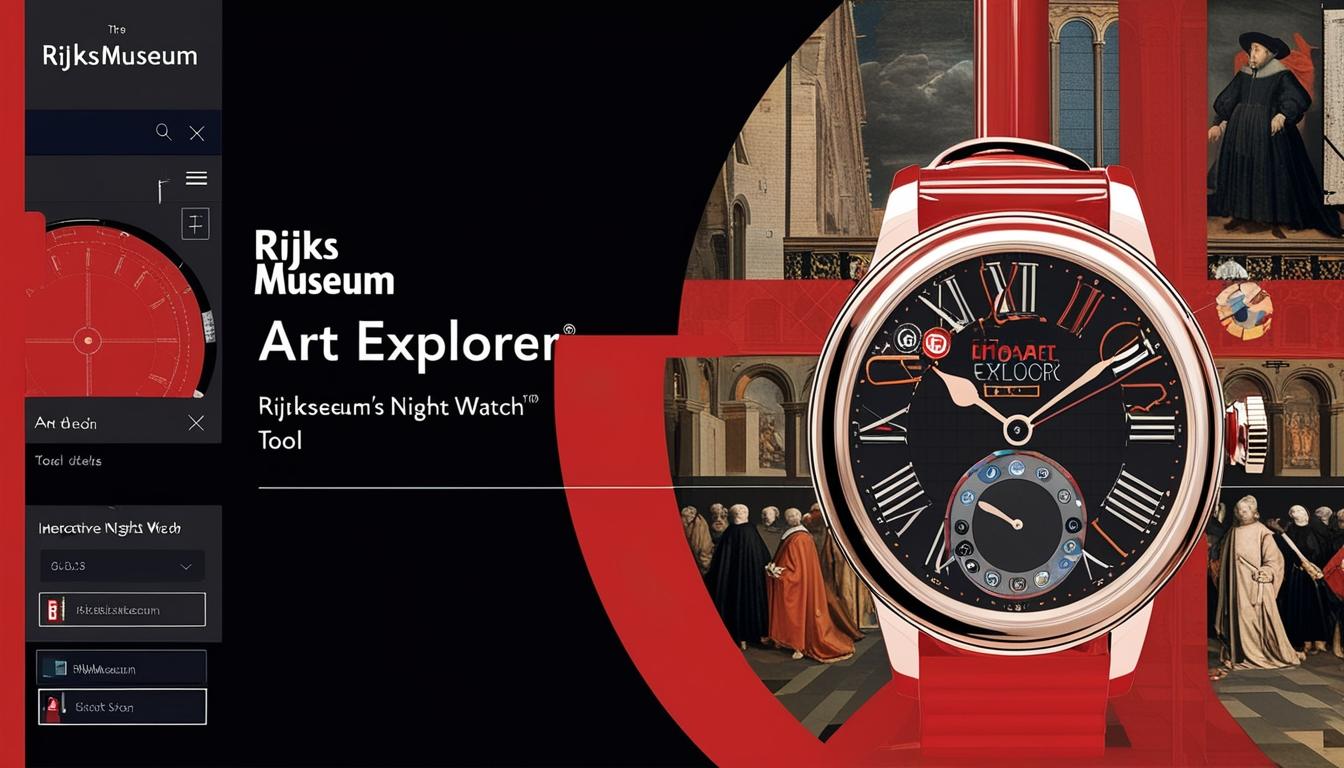
The Rijksmuseum in Amsterdam has launched an innovative AI-powered platform, combining its extensive collection of art, objects, and research, marking a significant advancement in the museum's digital initiatives and setting a precedent for cultural institutions globally. This initiative was officially unveiled on Wednesday, and the museum aims to enhance accessibility and interactivity within its vast repository of artwork and historical documents.
Taco Dibbits, the general director of the Rijksmuseum, highlighted the crucial role of this new tool, particularly in its ability to establish connections across the museum's extensive collection which includes 800,000 works of art, 500,000 books, and numerous archival documents. "The Rijksmuseum was the first museum to throw its collection open to the world," he stated. "We wanted to digitise the whole collection, including scanning the Night Watch in the greatest resolution ever, but there was so much more. The Rijksmuseum is a catalyst for scientific knowledge…but with 800,000 objects online, search was a challenge. We wanted to make them more accessible.”
The museum's pioneering efforts in digitisation began in 2012, when it became the first major institution to publish its entire collection online. The introduction of the Kunstverkenner, or "art explorer", project represents a new frontier in the use of artificial intelligence within the cultural sector. This tool provides users with interactive questions in Dutch such as “what do you love?” and “what is your favourite memory?”, allowing them to compare various art pieces and curate personal virtual galleries.
Speaking about the potential of the "art explorer", Dibbits remarked, "We saw that a tool that makes comparisons—something art historians always thought was their domain—is very logical for people who want to compare one thing with another.” He further noted that due to the AI's learning capabilities, the tool's performance could improve over time, becoming more adept at providing meaningful insights.
While other institutions such as the Harvard Art Museums and the Smithsonian Institute have implemented AI in more limited capacities for research and description generation, the Rijksmuseum is focusing on knowledge sharing rather than entertainment-driven algorithms popularised by social media platforms. Alexander Klöpping, a notable Dutch internet entrepreneur who participated in the launch, emphasised this distinction, suggesting that the museum's AI has a unique learning potential, grounded in cultural enrichment rather than commercial imperatives.
Despite concerns surrounding the risks of generating misleading information or competing platforms, Dibbits expressed confidence in the museum’s role in preserving authenticity. He stated, “People stand in a ‘TikTok’ queue looking for authenticity. People visit websites like the Rijksmuseum looking for real facts. This collection doesn’t belong to the state but to every Dutch resident and that is what makes it so extraordinary.”
Through this initiative, the Rijksmuseum is positioning itself as a leader in the intersection of culture and technology, aiming to not only increase engagement with its collection but also to contribute to the broader discourse surrounding art and knowledge in the digital age.
Source: Noah Wire Services