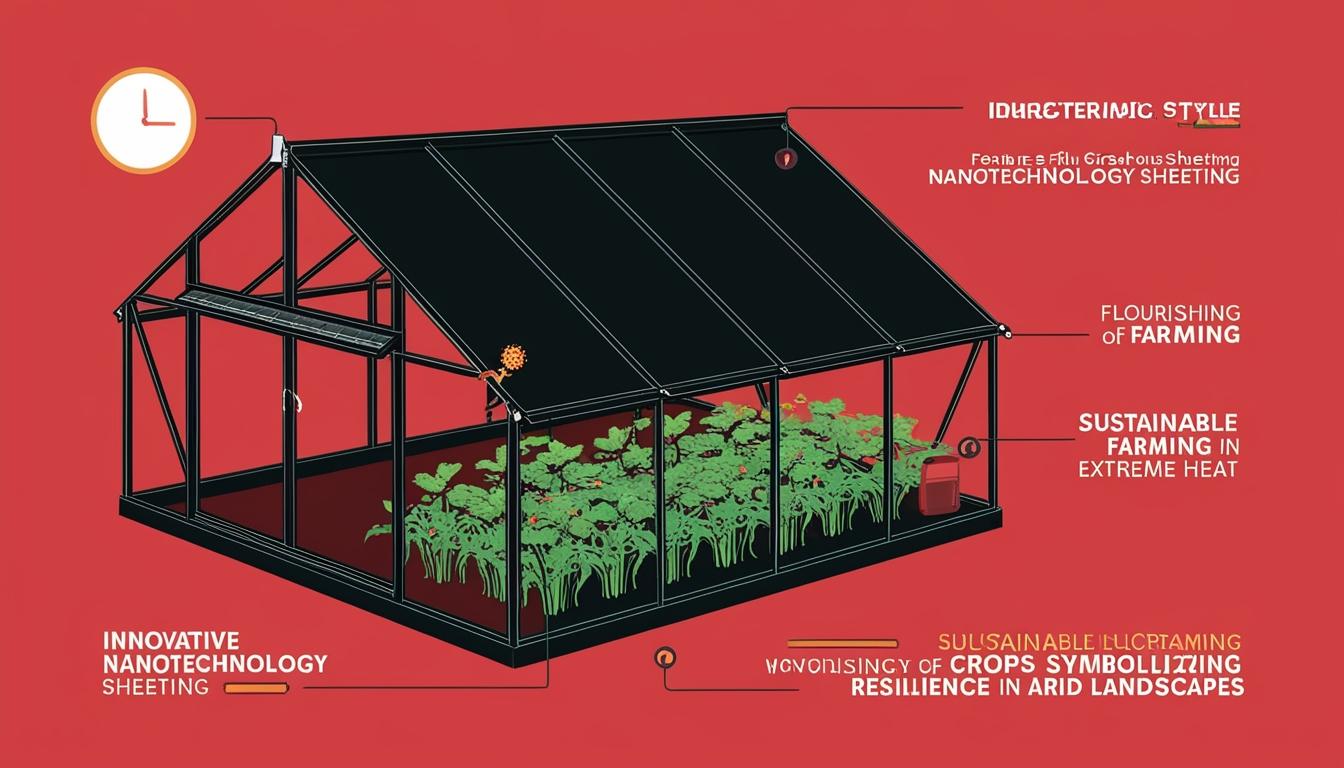
In response to the escalating challenges posed by increasingly extreme climate conditions, a Saudi Arabian startup named SecondSky is gaining attention for its innovative approach to agricultural sustainability. Founded in the arid climate of Saudi Arabia, SecondSky has developed a unique technology that utilises nanotechnology embedded within plastic polymer sheeting to significantly reduce temperatures in greenhouses by up to 7 degrees Celsius while allowing light to permeate. This advancement claims to enable crops to grow with 30% less water, significantly alleviating the water-intensive demands of traditional greenhouse agriculture.
The technology was pioneered by Derya Baran, an associate professor in material science and engineering at the King Abdullah University of Science and Technology (KAUST), and has been successfully commercialised through Iyris, a company that evolved from research efforts at KAUST. Iyris's executive chairperson, John Keppler, shared insights on the product's reach, stating that it has attracted buyers from 15 countries, including nations in the Middle East, such as Saudi Arabia, Egypt, and the United Arab Emirates, which have been among the first to leverage this technology to reduce dependence on imported fresh produce. Farmers from the US, Latin America, Europe, South Africa, and Morocco have also started adopting the SecondSky coverings, reflecting its growing international appeal.
Speaking to CNN, Keppler described the technology as a measure of "current-proofing," asserting the necessity of adapting to rapid climate changes. He noted that the last summer recorded the highest global temperatures, and 2023 is anticipated to be the warmest year on record, according to the European Copernicus Climate Change Service. Such high temperatures cause significant distress to crops, resulting in decreased yields and heightened susceptibility to pests and diseases unless mitigated by increased energy resources and water, which may be scarce.
Vincent Martin from the UN Food and Agriculture Organization highlighted the surge of agritech startups rising to meet regional food production challenges, particularly in the face of extreme heat. He stated, “a number of agritech start-ups have emerged to address regional food production challenges, especially investing in protected agriculture.” He noted that while innovations are crucial, increasing awareness and accessibility among smallholder farmers is essential for broad adaptation.
As part of its commitment to sustainable agriculture, SecondSky has engaged in collaborative initiatives like the National Food Production Initiative in Saudi Arabia, which aims to transform underutilised land into productive farmland using its technology. This initiative has established a 0.75-hectare farm in the hot and dry region of Bada, cultivating vegetables such as tomatoes and cucumbers, aiming ultimately to supply local resorts. Keppler stated that this endeavour is about proving the feasibility of advanced agricultural techniques in one of the world’s most challenging environments.
The pressing issues of desertification and agricultural sustainability are at the forefront of discussions, particularly as the upcoming UN Convention to Combat Desertification’s COP16 will take place in Riyadh in December. The UN estimates that at least 100 million hectares of healthy land are degraded every year, emphasising the need for effective agricultural innovations.
By switching focus from open-field production to protected agriculture solutions, there is potential for substantial water savings and increased land productivity. Martin noted that greenhouse systems can yield up to five times more productivity per land area and seven times more effective water use than traditional agricultural methods.
Through its ambitious growth plans, Iyris intends to enhance SecondSky’s application in a broader array of agricultural products by 2025. As farmers and agriculturalists continue to seek out solutions to combat climate-related adversities, technologies like SecondSky offer promising advances in facilitating sustainable farming practices worldwide.
Source: Noah Wire Services