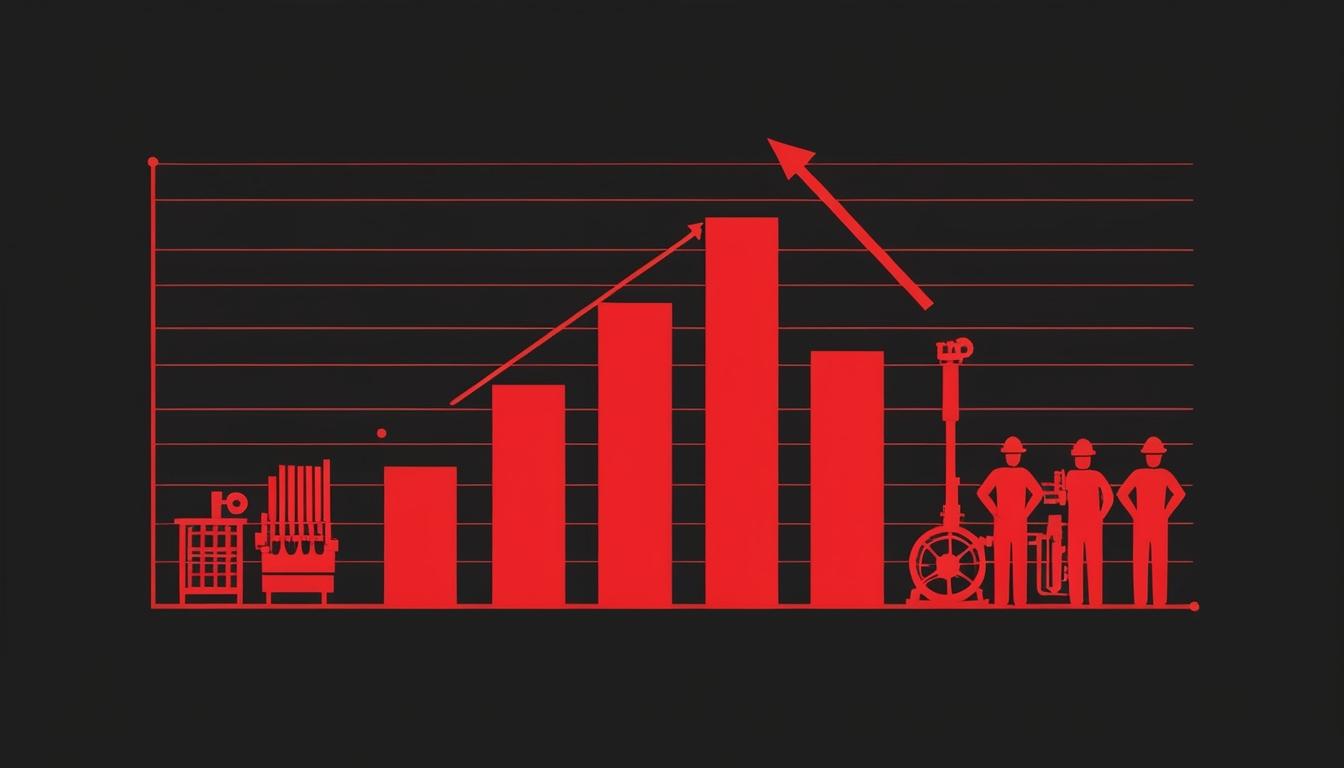
The current economic landscape has seen governments adopting what has been termed 'spray and pray' economics, characterised by expansive monetary policies and large budget deficits aimed at stimulating growth. However, experts warn that for sustained long-term prosperity, the focus must shift towards enhancing productivity, a measurement defined in terms of GDP per hour worked or output relative to total labour and capital inputs. This concept is crucial as economies worldwide grapple with stagnant productivity levels.
A key report from "The New Indian Express" outlines the multifaceted drivers of productivity performance. Investment in capital—such as new machinery and technology—enables increased production capabilities. Additionally, an educated and skilled workforce paired with innovation is pivotal to boosting output levels. Entrepreneurship also plays a vital role, facilitating market dynamics including entry and exit processes, while competition and trade improve how resources are allocated across the economy, thereby enhancing overall productivity.
Despite these potential drivers, the report highlights a concerning trend in advanced economies, where productivity growth has dwindled to below 1 percent annually. This figure stands in stark contrast to the 3-4 percent growth observed in the post-World War II era and the more recent rates of 2-2.5 percent. Comparatively, emerging markets continue to experience higher productivity growth, although this too is on a downward trajectory.
The decline in productivity growth can be linked to shifts in industrial structures. Significant productivity gains previously achieved in manufacturing look increasingly unattainable. Historically, advancements through mechanisation, automation, mass production techniques, workforce training, and improved supply chains had driven productivity. However, many of these gains have reached a saturation point, with notable examples like Henry Ford's groundbreaking assembly line being viewed as unique milestones in industrial innovation.
In contrast to manufacturing, the service sector presents its own challenges for productivity enhancement. Services, which are inherently personal and localised in nature, resist the same levels of mechanisation and global trading as manufactured goods. As outlined in the article, the non-routine and non-repetitive tasks evident in industries like healthcare and aged care complicate efforts to streamline processes and achieve productivity gains. The report notes that, despite management consultants' efforts, improving the efficiency of medical diagnoses and procedures remains a complex challenge.
This disparity in productivity growth has led to broader implications for costs across sectors. The prices of manufactured goods—such as automobiles, household appliances, and electronics—have generally decreased over time. Conversely, costs associated with essential services such as education, healthcare, aged care, and childcare have seen significant rises, often outpacing general inflation rates. This phenomenon has been termed the Baumol effect, named after the economist William Baumol, and suggests that the labour-intensive nature of many service sectors inherently leads to lower productivity improvements.
The current economic landscape is characterised by the service sector making up 60-70 percent of GDP in advanced economies, contributing to the observed decline in productivity growth. As this trend continues, the challenge remains for policymakers and industry leaders to find effective pathways to improve productivity in both manufacturing and services sectors to foster sustainable economic growth.
Source: Noah Wire Services