Emerging trends within the global market are significantly reshaping industries and consumer behaviours, particularly highlighting a dual focus on sustainability and health-conscious demands. Recent innovations have surfaced in two prominent areas: sustainable plastic recycling and the increasing demand for alcohol-free beverages, offering new opportunities within these sectors.
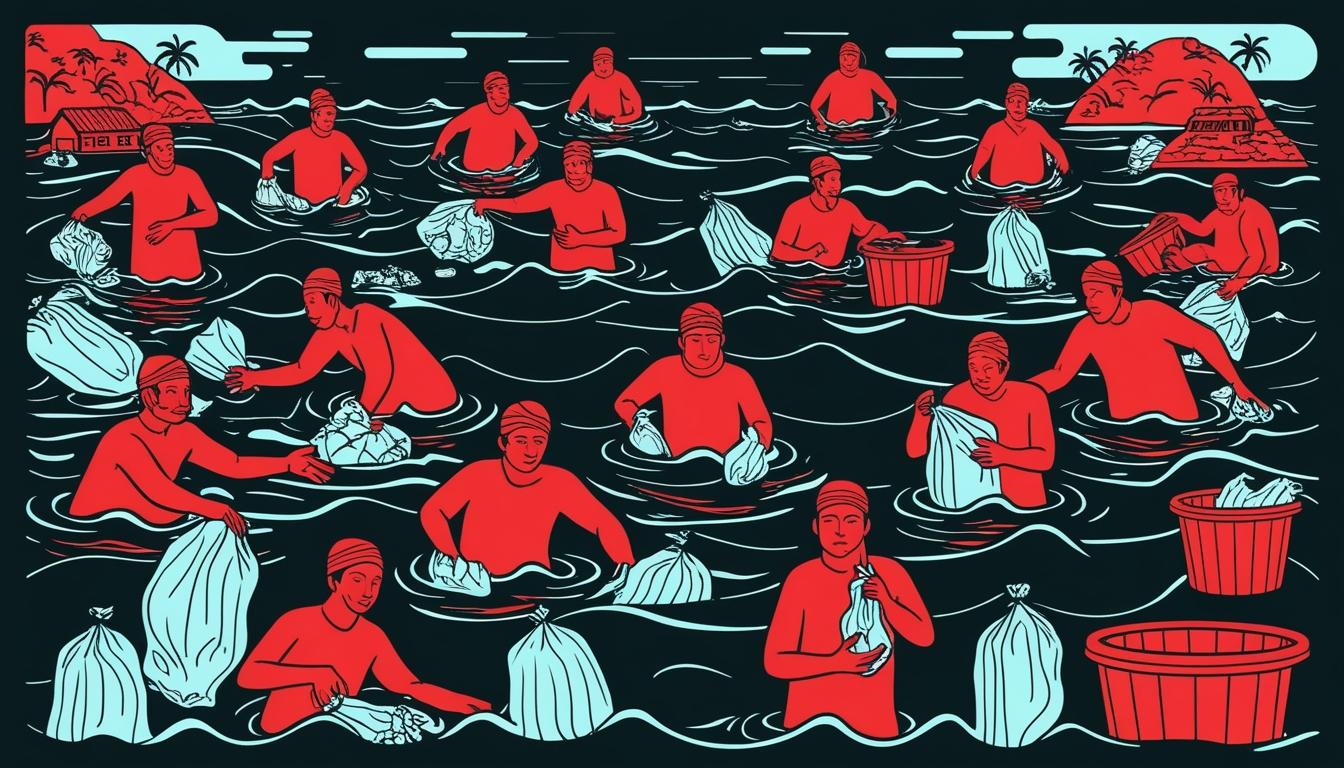
In an ambitious effort to address the urgent problem of ocean plastic waste, Tide, a Swiss start-up, has taken notable steps on the Thai island of Koh Chang. The company has established a partnership with local villagers, particularly from the Moken community, enabling them to gather and sell plastic scrap collected from the ocean. This initiative not only provides financial incentives for the Moken people but also contributes to combating environmental degradation caused by plastic pollution.
Data from the Organisation for Economic Co-operation and Development (OECD) highlights a staggering issue: over 6 million tonnes of plastic enter the oceans annually, exacerbated by poor waste management and rising consumption rates. To counteract this, Tide has developed a strategy focusing on creating traceable and certified recycled products, referred to as "ocean-bound" plastic. Each year, the company collaborates with plastic collectors and ensures transparency through annual audits conducted by third-party non-governmental organisations. Co-founder Marc Krebs expressed his optimism by stating, "We are convinced there is more than enough plastic in our world, and we should take what already exists." Since its inception in 2019, Tide has managed to collect roughly 1,000 tonnes of plastic annually, predominantly sourced from Thailand, as well as locations such as Mexico.
On the shores of Koh Chang, local collectors like 65-year-old Mimi have experienced tangible benefits from this initiative, receiving profit for their collection of various types of plastic waste, including discarded fishing nets and PET bottles. Despite certain items being non-recyclable, Tide has implemented incentivisation strategies to enhance collection efforts, setting specific payment rates. Nirattisai Ponputi, Tide's director of operations in Thailand, highlighted the challenge of processing plastic by stating, "Each day, we have unstoppable influxes of plastic items. Many cannot be processed, yet we are confident there is so much more lying adrift in our oceans."
The collected plastics are transported to Tide's processing facility in Ranong, where they undergo meticulous sorting and pressing. The processed materials are then shipped to various customers, including the European carpet manufacturer Condor Group, which utilises Tide’s recycled materials in approximately 25% of its products. Jan Hoekman Jr., a director at Condor Group, remarked, "You can follow the product from collection to the final products, which you see here. That’s all transparent, which is very important if you talk about sustainability."
Transitioning from the discussion on sustainable practices in plastic recycling, an equally innovative trend is emerging in the beverage sector, with a particular emphasis on alcohol-free alternatives. The Carl Jung winery, located in Ruedesheim, Germany, is capitalising on the rising interest in non-alcoholic beverages by producing zero-alcohol wine. Founded by Carl Jung, who developed the de-alcoholisation process in 1907, the winery has adapted to evolving consumer preferences and currently produces around 17 million bottles of alcohol-free wine each year. Bernhard Jung, the current owner, noted, "We are seeing this growth in demand and it’s going strong," with annual growth figures reported at approximately 35%.
Cultural shifts and health-conscious behaviours are driving the demand for alcohol-free options, especially among younger generations. Insights from beverage analysis firm IWSR forecast an 11% annual growth rate for the U.S. market for alcohol-free beverages until 2028, a trend echoed in other countries including Britain, France, and Germany.
The Carl Jung winery is collaborating with various establishments to provide alcohol-free offerings without the significant costs associated with specialised de-alcoholisation equipment. Tanker trucks regularly arrive to deliver traditional wines to be transformed at the winery, where the team employs advanced technologies to ensure the preservation of the wine's flavour characteristics while removing the alcohol.
Despite these advances, the alcohol-free wine segment currently accounts for only about 0.5% of the global still and sparkling market, signalling substantial potential for growth. While some sceptics may refer to these products as 'grape juice', changing consumer attitudes are demonstrated by increasing demand for alcohol-free options, as noted by Sandra Beimfohr, owner of Die Bruecke bar, who reported rising consumer interest. She stated, "We started offering it about four years ago, and at first, guests were still hesitant. But demand has definitely escalated."
As the beverage industry continues to innovate, Carl Jung acknowledges the ongoing challenge to gain broader acceptance of alcohol-free wines, aiming to make these options more appealing to new customer groups.
The developments at Tide and the Carl Jung winery underscore a shift toward greater sustainability and health-conscious consumption within various business practices. These evolving market dynamics reflect larger trends that emphasise mindful consumption and strategies aimed at preserving the environment, serving as a testament to contemporary consumer preferences across different industries.
Source: Noah Wire Services