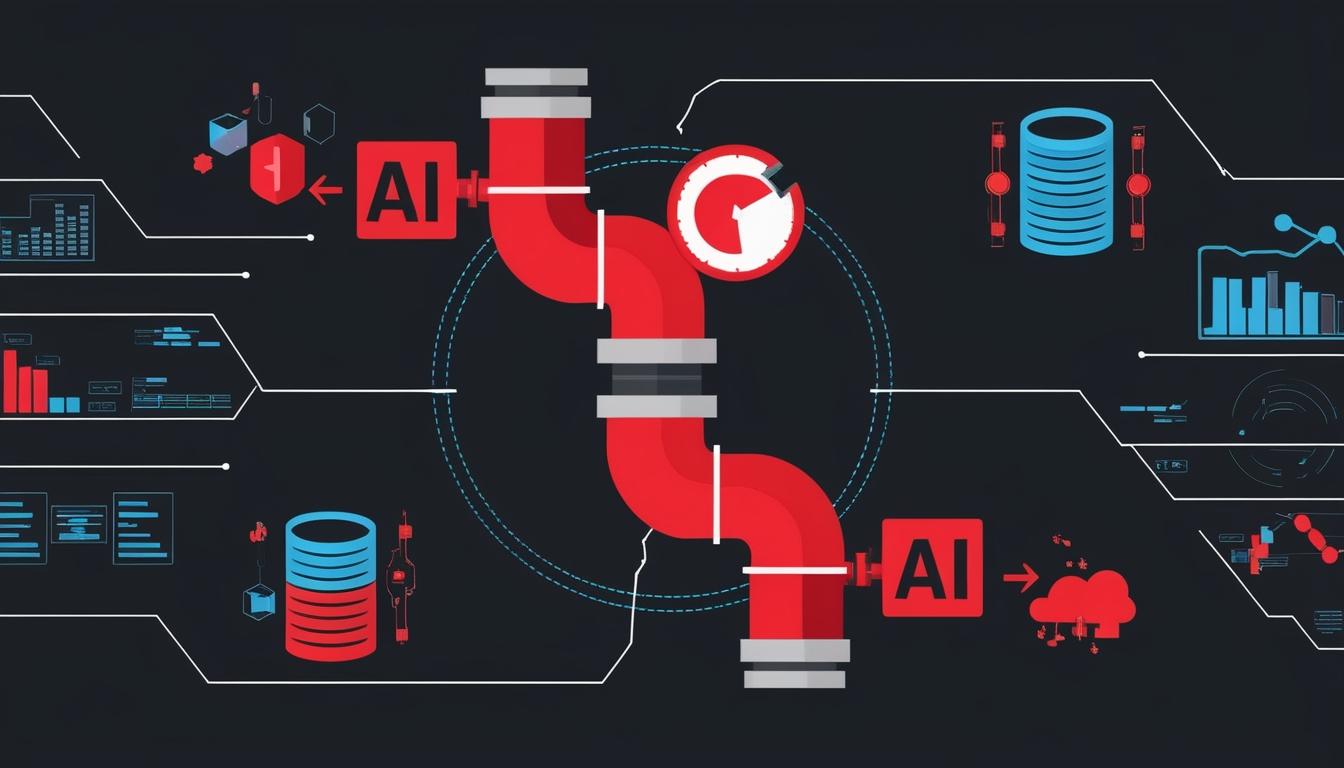
As businesses look to integrate artificial intelligence (AI) into their operations, the quality of data pipeline connections has emerged as a vital factor for the reliability of these systems. Outdated or inadequate data handling can lead to inaccuracies, referred to as "hallucinations," in AI-generated outputs, undermining user trust and application effectiveness. Itamar Ben Hemo, co-founder and CEO of Rivery, spoke to BetaNews about the significance of robust data infrastructures for the successful deployment of Generative AI (GenAI) applications.
Ben Hemo emphasised that the accuracy of GenAI applications is heavily dependent on the quality of the data they consume. "If this data is inconsistent, inaccurate or missing and fed into the LLM engine, users of the GenAI application will very likely get inaccurate or incorrect results," he explained. This underscores the critical nature of well-structured data pipelines that facilitate the seamless integration and flow of data.
The process of constructing data pipelines for GenAI applications differs significantly from traditional analytics. According to Ben Hemo, while analytics often involves structured data consolidated in data warehouses or lakes, the nature of data for GenAI applications is more varied. Data in this context can include structured, semi-structured, and unstructured formats found in text files, emails, and informal communications. The challenge lies in properly managing this diverse data to enable effective machine learning outcomes.
He outlined that the ingestion of unstructured data must follow a different modelling approach, one that structures the information logically to support vector-based storage solutions or AI services such as Amazon Bedrock. This allows for retrieval-augmented generation (RAG) workflows, enhancing the contextual capabilities of GenAI responses. Data engineers are now tasked with integrating a broader array of data sources and may need to employ new methodologies to transform and orchestrate these data sets for AI applications effectively.
Regarding security and scalability in data pipeline design, Ben Hemo highlighted the importance of adhering to best practices such as SOC2 and GDPR. While open-source solutions like Debezium exist to assist with data replication, scaling these protocols in line with security standards presents a considerable challenge. Adopting an extract-load-transform (ELT) approach, which utilises the capabilities of cloud data warehouses, can facilitate enhanced scalability and efficiency compared to traditional extract-transform-load (ETL) methods.
The rapid adoption of Software as a Service (SaaS) solutions has significantly increased the complexity of data management for businesses. “Organizations started to adopt software much faster without going through lengthy acquisition processes,” explained Ben Hemo. Data teams are now confronted with the task of managing data from potentially hundreds of different sources, often necessitating API integrations that demand ongoing updates as source APIs evolve.
Looking to the future, the role of data professionals is expected to transform with the rise of AI tools. While AI may streamline tasks such as code generation, data engineers will need to implement oversight measures to mitigate the risks of erroneous outputs. The emphasis will shift towards maintaining data quality, governance, and constructing scalable architectures, demanding a blend of technical and interpersonal skills. As the landscape of data management continues to change, the role of the data engineer will be increasingly pivotal in bridging technological capabilities and business strategies.
Source: Noah Wire Services