Researchers at the University of East Anglia (UEA) have unveiled the details of their innovative three-year initiative, the OpenLAND project, aimed at addressing critical challenges in soil health and sustainable farming practices. Launched with a budget of £4 million, the project is part of a broader effort to enhance climate-resilient interventions in land management.
The OpenLAND project will be spearheaded by Prof Rachel Warren, affiliated with the Tyndall Centre for Climate Change at UEA, and Prof Brian Reid, who is a key figure in the School of Environmental Sciences. Their collective expertise will lead the exploration of land management strategies focused on achieving net zero targets, enhancing biodiversity, and promoting sustainable agricultural practices.
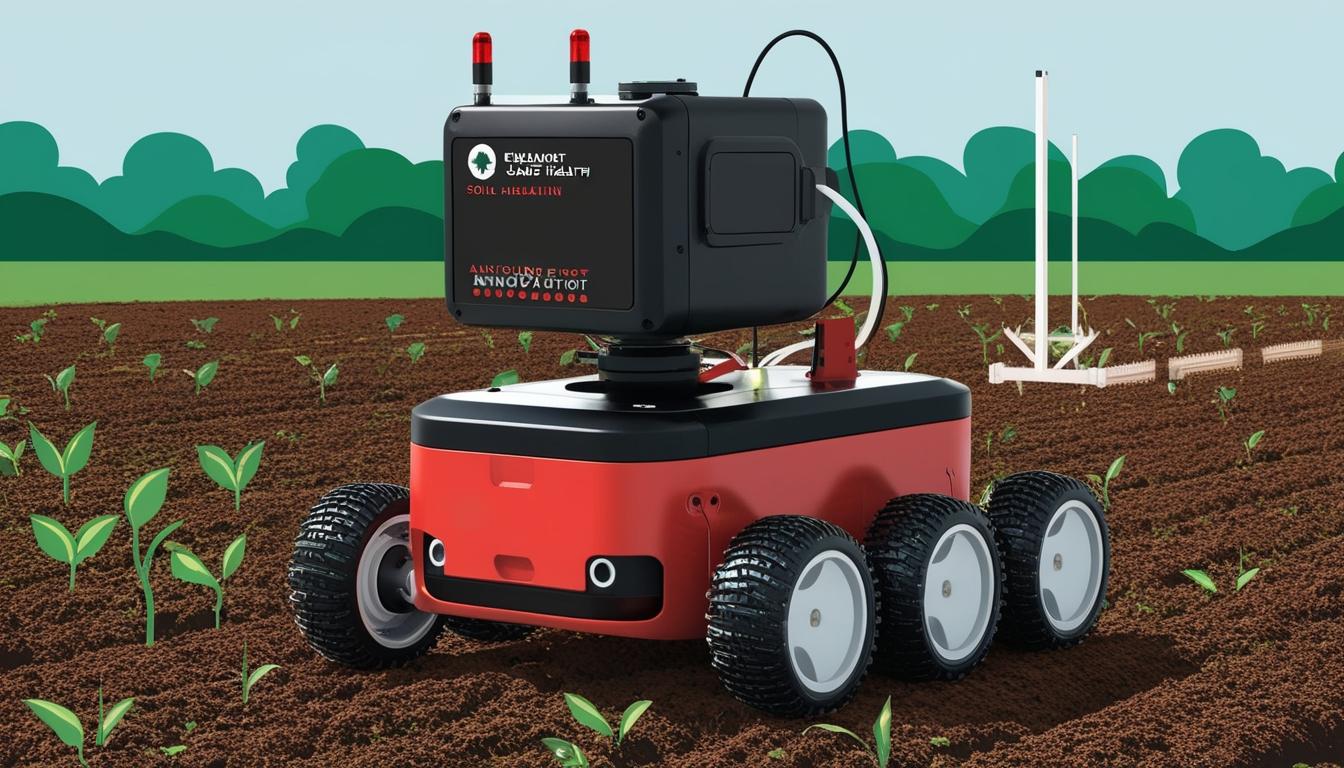
A significant component of the OpenLAND project involves the advancement of the "OpenCLIM" computer modelling framework, which will be expanded to include "ground-truthing" of soil health and carbon data. This will be achieved through the development and testing of soil sensors mounted on autonomous robots, in collaboration with the University of Plymouth. As Prof Reid articulated in comments to the Eastern Daily Press, “Using nature-based solutions to contribute to a net zero future has enormous potential. The funding will allow us to build a much better understanding of carbon storage, both above and below the ground, and to use eDNA approaches to link soil carbon properties to soil health.”
The project aims to leverage sensor technologies situated on in-field robots to enhance the assessment of soil carbon stocks and soil health. This innovative approach is expected to yield significant benefits for climate change mitigation while fostering a healthier and more resilient environment, according to Prof Reid.
Prof Warren elaborated on the project's objectives, stating, “OpenLAND will use computer models to look at how the way land is managed in the UK can contribute to net zero." She explained that the project will develop strategic plans for land management that integrate carbon storage, biodiversity restoration, and sustainable agricultural practices. The computer models will quantify and map the effectiveness of various land management strategies in collaboration with stakeholders to facilitate informed decision-making. Additionally, a key aspect of OpenLAND is the calibration of these computer models using measurements of carbon stored in the soil across multiple field sites in Norfolk and beyond.
The UEA's OpenLAND initiative is one of five projects awarded a share of £14.5 million in funding by UK Research and Innovation (UKRI) and the UK government, under the Transforming Land Use for Net Zero, Nature and People (LUNZ) programme. This programme is designed to enable research and innovation that provide essential solutions for achieving the UK’s ambitious net zero targets by 2050.
Commenting on the importance of the research initiative, Prof Gideon Henderson, chief scientific adviser at Defra, indicated that “Decarbonising agriculture and land use sectors is extremely challenging, and UK emissions have remained stubbornly high.” He highlighted that these new projects are crucial in addressing various land types, from grasslands to peatlands, and will offer valuable modelling capacities to identify optimal pathways towards net zero, while maintaining the ability to produce food essential for the population.
The OpenLAND project is poised to play a significant role not only in enhancing soil health and carbon storage practices but also in providing actionable insights that could redefine land management in the context of climate resilience and sustainability in the agricultural sector.
Source: Noah Wire Services