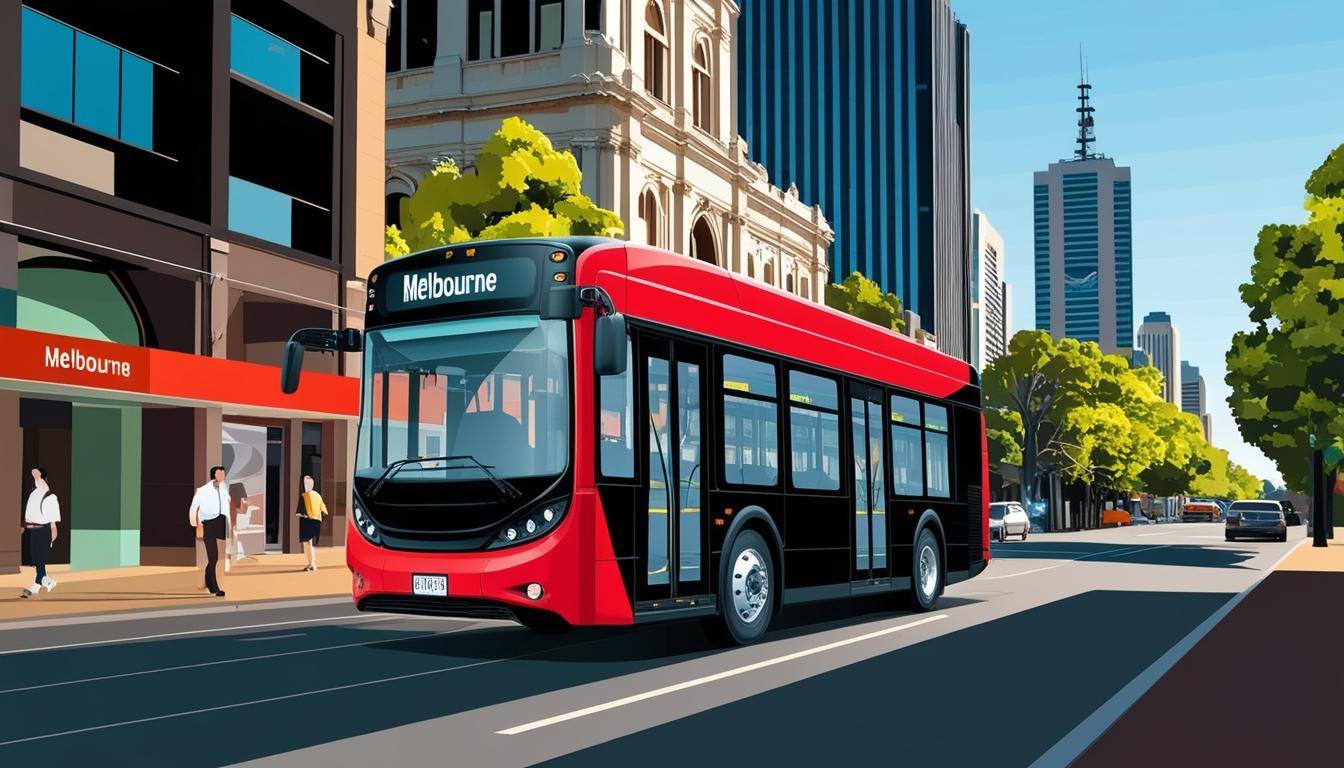
In a notable advancement for public transport in Australia, Kinetic Group has announced plans to expand its fleet of zero-emission buses (ZEBs) in Melbourne, Victoria. A total of 137 new ZEBs will join the metropolitan bus network, aligning with the state’s commitment to transitioning to a fully electric public transport system. This initiative is part of Victoria's Zero Emission bus transition plan, which is set to formally commence on July 1st, 2025, marking a significant shift in the region’s approach to public transportation.
Under this plan, all new public transport buses ordered in Victoria will be zero emission, which supporters argue will lead to cleaner air, economic savings, and an improved commuting experience. ZEBs are touted for their lower operational costs and maintenance, as well as for providing a smoother and quieter ride compared to traditional diesel buses. Commuters have expressed optimism about the benefits, with one reader noting the advantages of electric propulsion for stop/start operations, particularly in peak-hour traffic.
Michael Sewards, CEO of Kinetic Group, stated, “We are proud to continue to shape the future of Melbourne’s bus network in conjunction with the Victorian Government through a shared investment in zero emission infrastructure, assets and capability.” He added that the company's goal is to operate a fully electric urban fleet by 2035, with electric buses expected to comprise almost one-third of the biggest franchise within the next four years.
Supporting this transition, Kinetic has already introduced 37 electric buses and electrified two depots since winning the Metropolitan Bus Franchise (MBF) contract. The company will also enhance training for maintenance staff as part of its strategy to facilitate the growth of the electric bus fleet, which is projected to expand to 174 buses.
Emerging technologies are also supporting the growth of electric bus infrastructure. Kwetta, a company formerly known as Red Phase, has introduced an innovative solution to streamline grid connections for bus charging. By replacing five traditional components—high voltage switch, transformer, metering, distribution, and conversion units—with their Prime Grid Gateway, Kwetta claims to simplify the process significantly. This system can unlock up to ten times more power at sites constrained by utility limits, thereby avoiding costly upgrades that can amount to millions of dollars.
Dustin Murdoch, Founder and CEO of Kwetta, expressed a commitment to transforming the Electric Vehicle landscape in New Zealand and Australia by making charging solutions more accessible and cost-effective. “We take the complexity out of the process,” Murdoch stated, explaining that their team manages negotiations with power providers to allow bus operators to focus on fleet management rather than grid challenges.
Kwetta's technology has already demonstrated its capability, having been installed at numerous sites in New Zealand and is now expanding into Australia, showcasing its adaptability and future scalability for bus fleets comprising multiple vehicles.
In Queensland, a recent state election has led to a new conservative government, which has announced an extension to its newly launched all-electric metro bus system. Notably, during the announcement, there was little mention of the electric nature of these buses, highlighting what some are describing as a "silent revolution" in public transportation.
The transition to electric buses in Australia illustrates a significant shift in public transport strategies, driven by emerging technologies and a reassessment of environmental impacts. The ongoing developments in Melbourne, alongside the innovations from companies like Kwetta, indicate a robust movement towards cleaner, more efficient urban transport solutions.
Source: Noah Wire Services