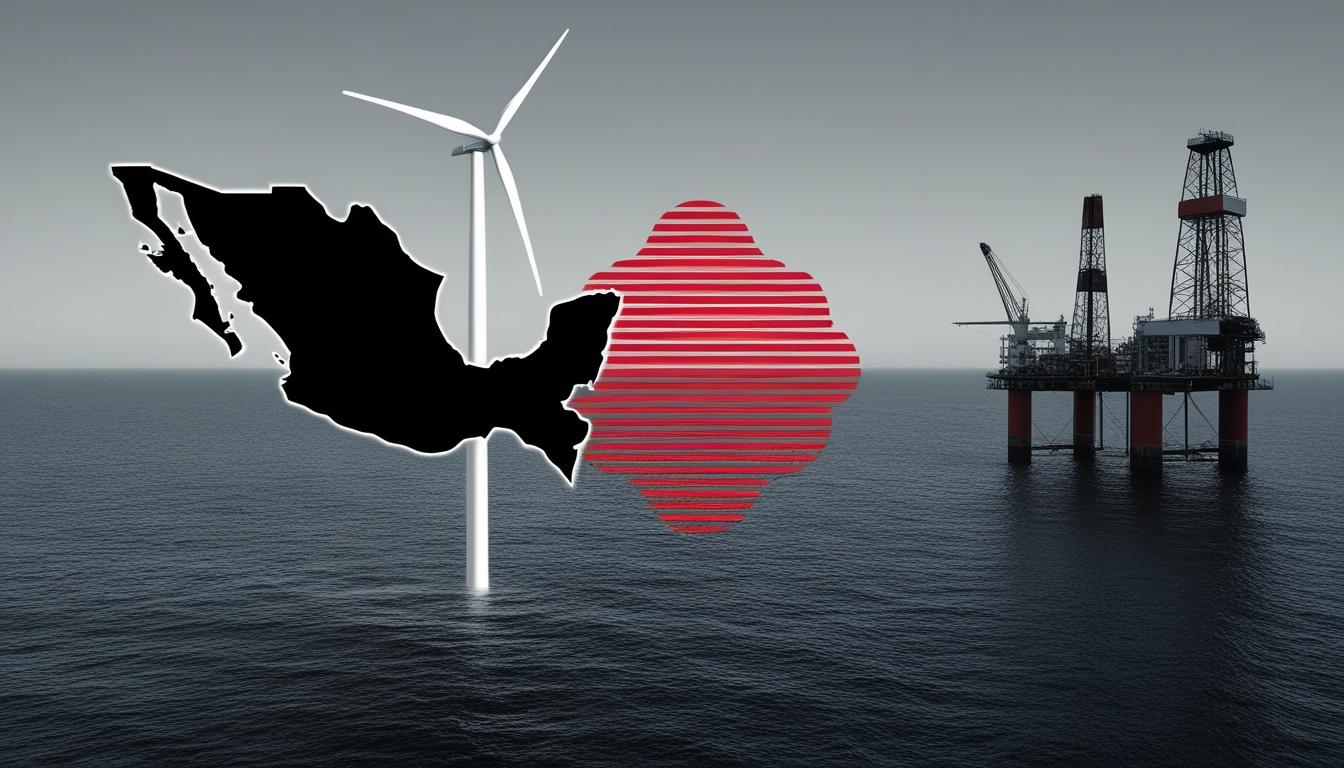
Recent discussions surrounding the future of American energy policy have highlighted a significant opportunity for enhancing government efficiency through innovative approaches, particularly with a focus on offshore energy resources in the Gulf of Mexico. President-elect Donald Trump, alongside entrepreneurs Elon Musk and Vivek Ramaswamy, has been urged to consider the potential of the Gulf as a multifaceted asset for economic and environmental prosperity.
The Gulf of Mexico serves as a notable hub for oil and gas, which currently supports approximately 400,000 jobs and contributes around $34 billion to the national economy annually. The offshore energy sector not only provides vital employment but also aids in funding important conservation initiatives. Furthermore, the industry has been responsible for over $6 billion in federal revenue in 2023, which historically soared to more than $17 billion during periods of favourable energy policies. The call for increased annual lease sales is clear, as the current administration's plan to conduct only three lease sales over the next five years is seen as a significant reduction that does not reflect the Gulf's full potential or the realities of energy demands.
Additionally, offshore wind energy is gaining traction, with federal lease sales yielding $6 billion. A regular schedule for lease offerings in this sector could provide firms with the necessary flexibility to navigate market fluctuations more effectively, ultimately benefiting consumers. The collaborative synergy between oil, gas, and wind energy is positioned to generate a beneficial ripple effect across the country, with economic gains reaching far beyond states directly involved in the projects.
States such as Texas, Louisiana, Florida, North Carolina, and even as far north as Wisconsin stand to gain from a diversified approach to energy production. The cooperation among different energy sectors can lead to a more robust economic landscape, showcasing how such sectors can complement rather than compete with each other.
The emerging offshore technologies, including carbon capture and storage as well as critical mineral extraction, further underscore the United States' potential leadership in the energy market. Bipartisan legislation is in the works to establish a standardised schedule for offshore oil and gas lease sales, anticipating predictable revenue streams which would strengthen national energy security.
In light of these developments, Milito posits that tapping into America’s offshore energy resources represents not just an economic opportunity but a strategic move towards integrating energy innovation with environmental responsibility. This would support the goals of the Department of Government Efficiency in addressing deficit spending while also positioning the United States as a leader in the global energy landscape.
As the discussions around government efficiency, energy policy, and innovation heat up, the Gulf of Mexico stands as a cornerstone of potential that could facilitate a future of sustained economic growth and energy independence for the nation.
Source: Noah Wire Services