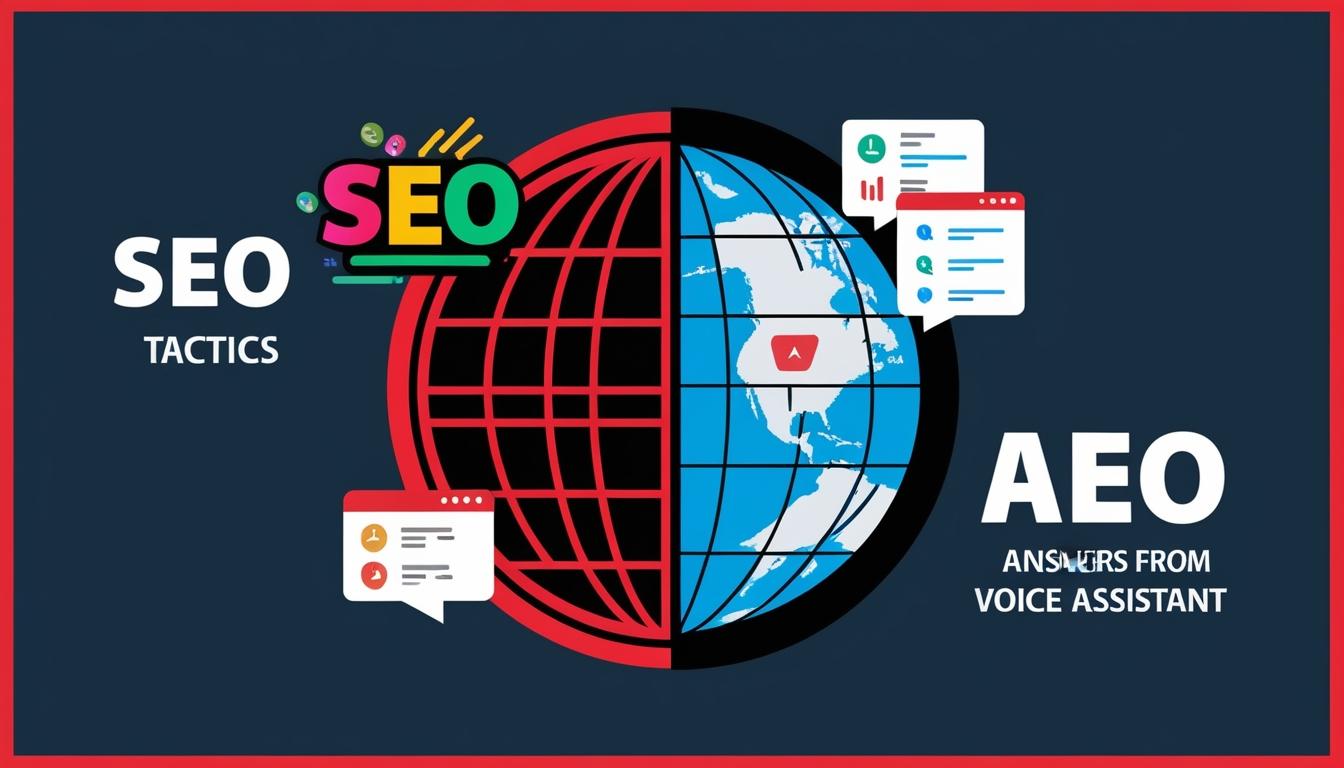
Over the past two decades, Search Engine Optimization (SEO) has been fundamental in generating organic traffic to websites, yet the evolution of search engine technology has paved the way for a new approach: Answer Engine Optimization (AEO). As these two concepts diverge in methodology and focus, understanding their differences has become crucial for marketing agencies aiming to navigate the shifting landscape of digital marketing.
The paradigm has shifted significantly, with search engines like Google advancing from simplistic algorithms to sophisticated systems that leverage artificial intelligence (AI) and natural language processing (NLP). These developments have produced a new search model, AEO, which prioritises providing immediate answers to user queries over merely ranking pages.
Traditional SEO centres on optimising both the visibility and presence of a website within search engine result pages (SERPs) by attracting organic traffic through targeted techniques. Key aspects of SEO include keyword research to identify relevant phrases, on-page optimisation of content and metadata, off-page strategies to improve site authority, and ensuring technical robustness for speed and accessibility. Additionally, the quality of content and user experience play vital roles in SEO performance.
In contrast, AEO prioritises delivering direct answers to user queries, shifting the focus from page rankings to succinct, informative responses. This approach is particularly effective in the context of voice-activated searches and the growing prevalence of zero-click searches, where users receive answers directly within the search results. AEO utilises structured data and schema markup to enhance the context and relevance of content, allowing search engines to easily extract pertinent information from web pages.
As the industry evolves, the methods of SEO and AEO differ significantly. For example, SEO seeks to enhance the breadth of content to draw in a wide audience, while AEO zeroes in on specific queries. Marketers are encouraged to consider both philosophies in their strategies. To that end, businesses should optimise SEO with traditional tactics while also preparing content for efficient extraction to ensure users obtain instant answers.
While SEO remains foundational for driving traffic, the rising prominence of AEO highlights the need for a diversified approach. The emergence of features like knowledge panels and featured snippets indicates a trend where search engines increasingly prioritise user intent and direct responses over traditional rankings.
Marketing agencies must recognise that the consumer’s search behaviour is changing. As users prefer instant responses and are more inclined to engage with voice search technologies, the necessity for businesses to adapt their strategies becomes evident. The growing functionality of AI-powered assistants such as Siri and Alexa necessitates an understanding of conversational search patterns, further underscoring the importance of AEO.
A cohesive strategy that integrates both AEO and traditional SEO will likely yield the best results as the digital landscape becomes increasingly competitive. By engaging with both methodologies effectively, businesses can not only maintain visibility within SERPs but also cater to the evolving demands of consumers seeking immediate and relevant answers in their online interactions.
As this transition continues, a hybrid approach combining elements of both SEO and AEO will be crucial for long-term success in digital marketing, enabling businesses to respond to the dynamic nature of user behaviour and trends within the search ecosystem.
Source: Noah Wire Services