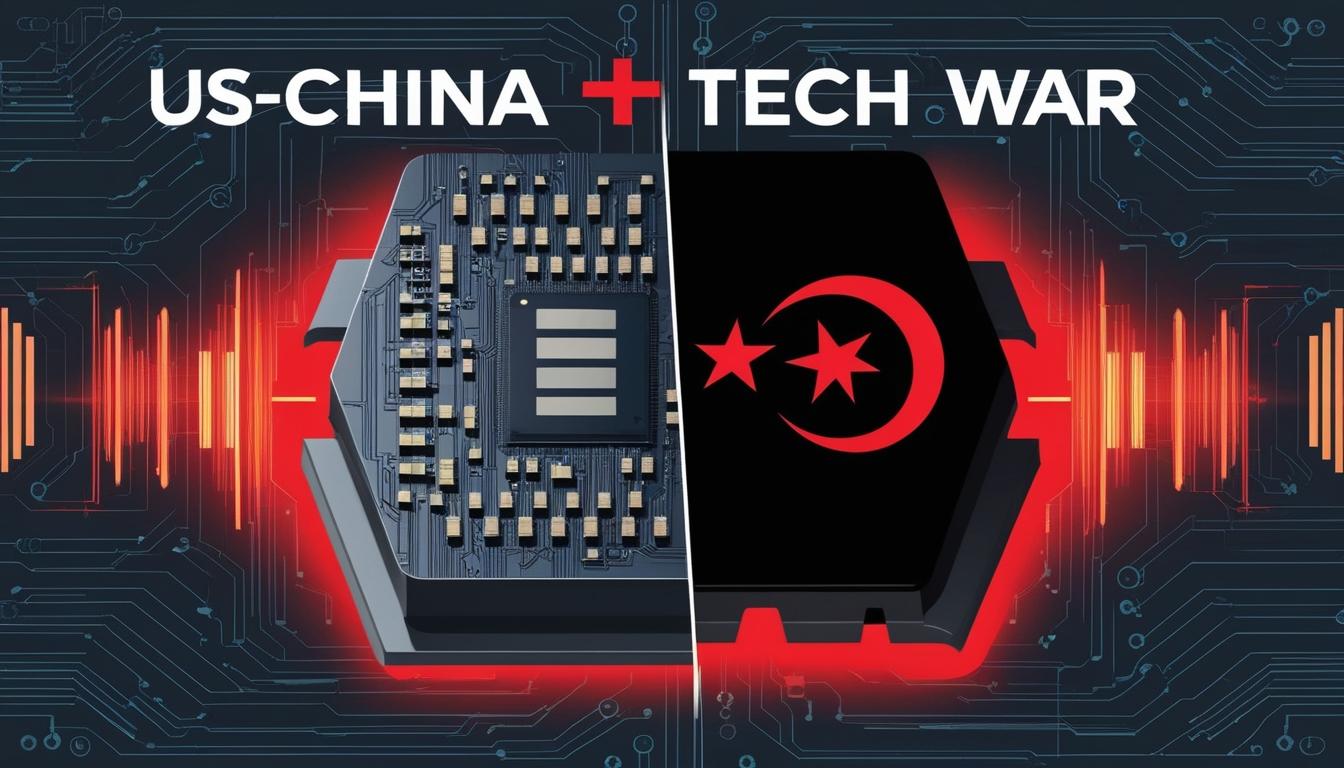
The implementation of new export controls by the United States has triggered strong reactions from the Chinese government, underscoring rising tensions between the two global superpowers. On Monday, the US Commerce Ministry announced restrictions on the sale of two dozen types of semiconductor-making equipment. This move aims to limit numerous Chinese companies' access to American technology, driven by concerns that these capabilities could be leveraged by Beijing to enhance its military and artificial intelligence (AI) systems.
These latest actions represent a significant escalation in the ongoing tech war between the US and China. Secretary of Commerce Gina Raimondo labelled the restrictions as "the strongest controls ever enacted by the US to degrade the PRC’s ability to make the most advanced chips that they’re using in their military modernization," signalling the gravity of the measures in the context of national security.
The backdrop to these developments is characterised by China's ambitions under President Xi Jinping. The Chinese leader has prioritised self-sufficiency in technology as a cornerstone of his economic strategy, aiming to establish China as a dominant force in the tech landscape. Recently, in line with this strategy, China introduced plans for a state investment fund aimed at bolstering its semiconductor industry, with a significant allocation of $47.5 billion from six major state-owned banks.
In a response to America's latest controls, China's Commerce Ministry has condemned the actions, accusing the US of "abuse" in its approach to export regulations and suggesting that these measures threaten the stability of global industrial and supply chains. The ministry's statement critiques the US for broadening the concept of national security and engaging in unilateral actions that it perceives as bullying.
Prior rounds of export controls from the Biden administration have sought to close loopholes and restrict the types of semiconductors available to China since legislation was initially released in 2022. Additionally, there are plans for further restrictions involving smart vehicles that utilise specific Chinese or Russian technologies, reflecting a broader concern over national security.
As both countries continue to manoeuvre within an increasingly competitive landscape for advanced military technologies, the political environment remains charged. Growing concerns surrounding China's potential intentions regarding Taiwan are also interwoven into the fabric of these technological tensions, further complicating US-China relations moving forward.
Source: Noah Wire Services