A new player in the business automation arena is making its debut as Cake launches from stealth mode, buoyed by support from Google’s AI-focused venture fund. Founded in 2022 in New York City by Misha Herscu, who serves as CEO, and Skyler Thomas, the company aims to streamline and enhance the open-source AI infrastructure for enterprises, thereby lessening the engineering burdens often faced by organisations adopting advanced technologies.
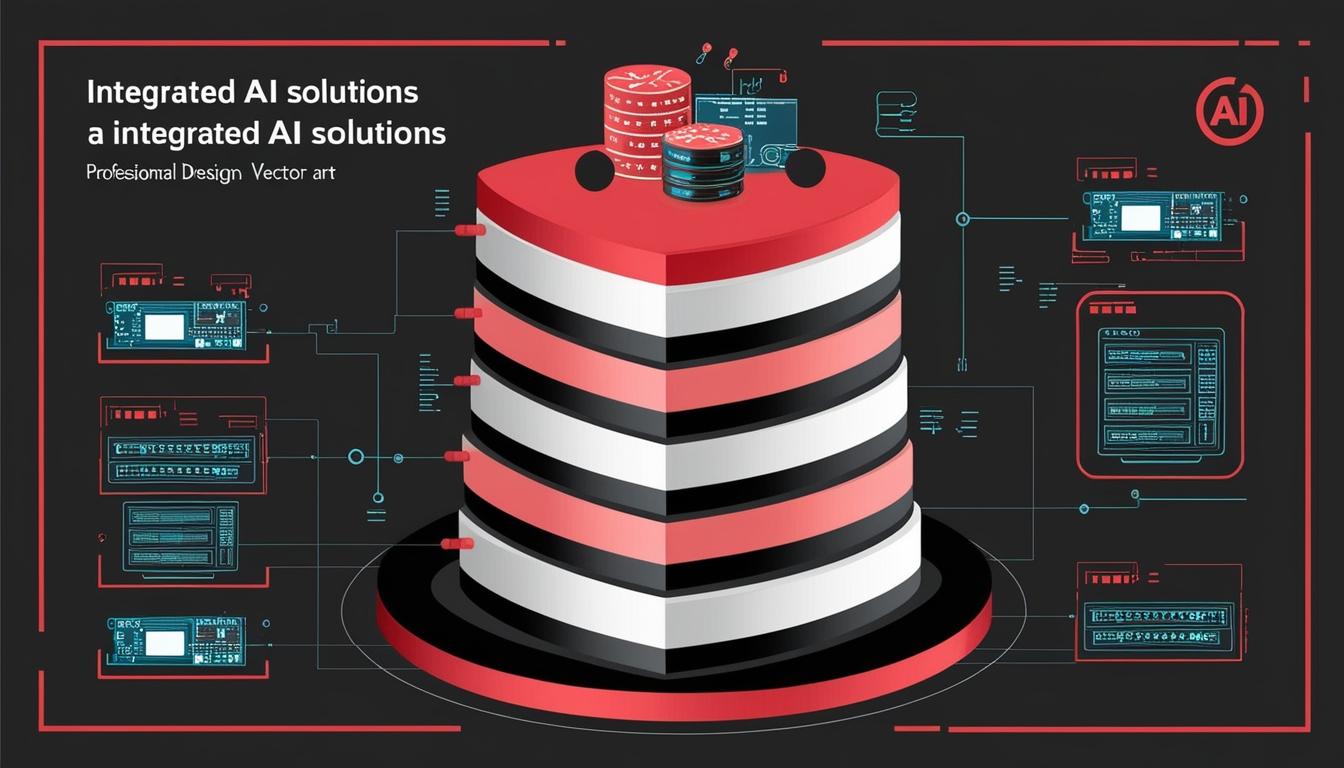
Cake offers a comprehensive integration of over 100 disparate components that play a critical role in an enterprise AI stack. This includes data source adapters like Apache Hadoop, data ingestion tools such as Apache Kafka, data labelling solutions including Label Studio, and a range of databases and APIs associated with generative AI. The company’s strategy is about harnessing the various "layers" of the AI stack, which is reflected in its name, suggesting a multi-layered approach that is both cohesive and practical for business applications.
In a recent interview with TechCrunch, Herscu explained their business model as addressing what he refers to as the "big picture problem" in AI integration. "I did over 200 customer discovery calls, asking what their biggest pain points and bottlenecks are,” he stated. He noted that the predominant issue wasn't just isolated workflows but rather the challenge of effectively integrating an array of components from a complex ecosystem into a functional, production-ready system.
Currently, Cake is already producing results, collaborating with clients such as AI bioscience startup Altis Labs and data intelligence insurtech Ping. The company has raised a total of $13 million in funding since its inception, with a $10 million seed round led by Google’s Gradient Ventures. This funding, along with $3 million acquired in pre-seed investment, underscores the level of confidence in the company’s prospects.
The business is already attracting attention in various sectors, with diverse use cases emerging for their services. For example, a financial services company may require a tailored system for handling millions of complex financial documents, while a healthcare provider might look to create a secure framework for analysing medical imaging data. The flexibility of Cake’s offerings positions it as a powerful solution for enterprises seeking to go beyond standard, off-the-shelf AI products.
Thomas, the CTO, who previously held senior roles at IBM and Hewlett Packard Enterprise, emphasised the widespread use of open-source tools across varied projects. However, he pointed out that integrating these tools into enterprise environments often proves challenging. “It takes a huge amount of time for even the largest enterprises to take what’s coming out of the labs and integrate it into what they do,” he remarked when discussing the pragmatic needs of enterprises in adapting innovative solutions.
In its comparison to other companies in the field, Cake draws parallels to established players like Aiven, a Finnish unicorn focusing on data infrastructure, and Red Hat, renowned for making Linux safe for enterprise use. Thomas likened their approach to that of Red Hat, aiming to provide similar integration and support models for AI technologies that incorporate open-source components.
While Cake currently operates in a self-hosted environment due to strict data privacy regulations prevalent in many industries, there are plans to develop a hosted version in the future and provide options for companies with fewer compliance obligations. Herscu noted that maintaining control over cloud infrastructures could simplify matters, indicating future direction towards more versatile service structures.
With regard to future financing, Cake’s trajectory has already placed it in a position akin to that of Series A companies. Herscu elaborated on their plans, expressing optimism about the next funding round expected around mid-2025, stating, “When we go to the Series A, it’ll probably look more like a Series B.”
In summary, Cake's launch stands at an intersection of enterprise need and technological advancement, promising to deliver integrated solutions designed to navigate the complexities of today's open-source AI landscape while reducing overheads for businesses aiming to leverage the power of AI more efficiently.
Source: Noah Wire Services