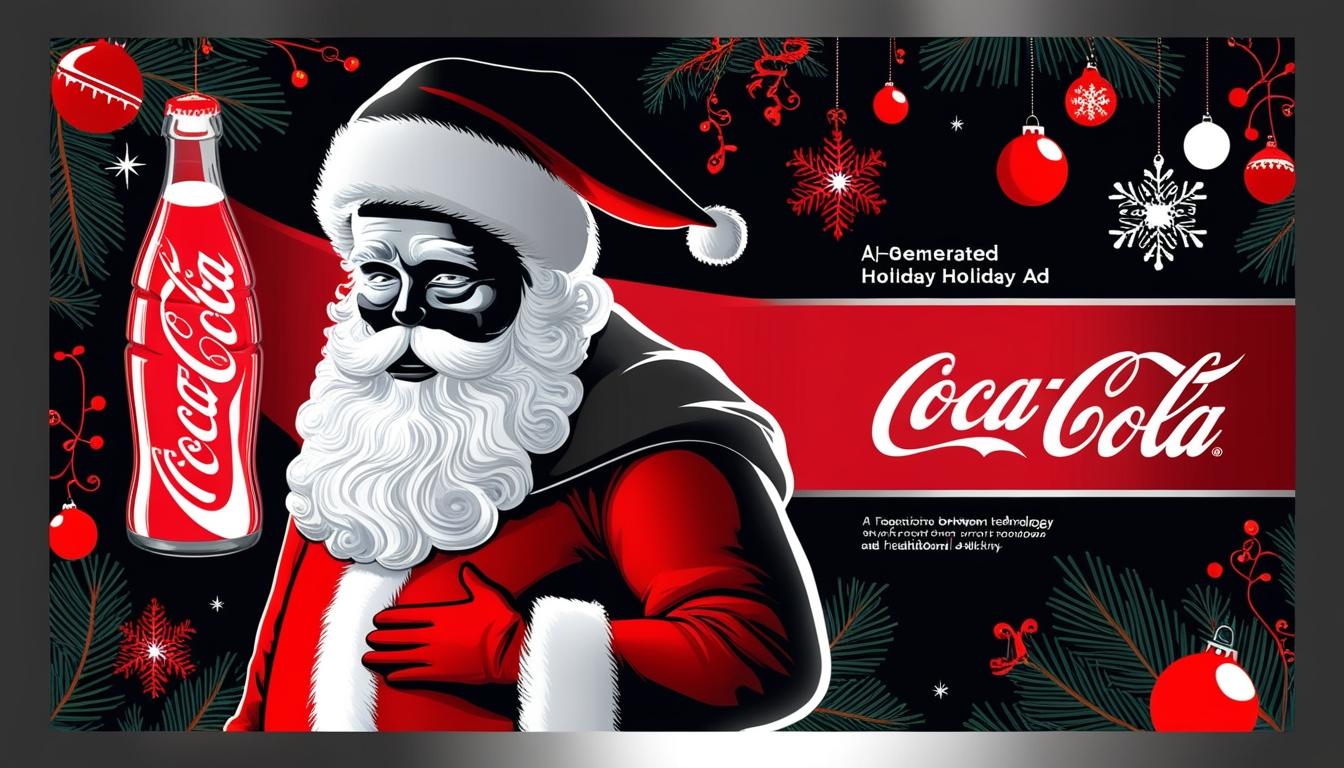
Coca-Cola's recent holiday advertisement has sparked significant criticism from both artists and the general public for its reliance on generative artificial intelligence, rather than traditional human creativity. The commercial, titled “The Holiday Magic is Coming,” has been described by various commentators as “unnatural,” “fake,” and “lazy,” raising concerns about the implications of AI in creative industries.
The 30-second advertisement was crafted using Coca-Cola's OpenAI-powered Real Magic AI platform, which has drawn upon the company’s extensive archives of creative assets. Unlike its nostalgic counterpart from 1995, which featured human actors, this new rendition does not utilise any human involvement, leading to allegations that it undermines the sentimental value associated with the original commercial. A prominent critic on social media quipped, “Nothing like celebrating the spirit of Christmas with the most soulless commercial possible.” Alex Hirsch, creator of the Disney animated series “Gravity Falls,” further condemned the approach, stating, “FUN FACT: @CocaCola is ‘red’ because it’s made from the blood of out-of-work artists! #HolidayFactz.”
The advertisement's development involved not only Coca-Cola’s proprietary AI tools but also collaboration with three other AI studios—Secret Level, Silverside AI, and Wild Card—each contributing its own interpretations of the promo. Despite the potential advantages of using AI in advertising, such as cost savings and efficiency, the backlash highlights deeper issues regarding the ethical implications of depriving artists of recognition and remuneration for their work, particularly when AI models are trained on existing artistic material.
The use of Christmas-themed imagery and messages has also been highlighted as potentially insensitive, with critics perceiving the ad as dehumanising, further fuelling public discontent. The growing trend of companies embracing AI-generated content raises questions about what creativity may mean in an era where technology plays an increasingly central role.
In defence of its decision to utilise generative AI, a spokesperson from Coca-Cola stated, “We are always exploring new ways to connect with consumers and experiment with different approaches. This year, we crafted films through a collaboration of human storytellers and the power of generative AI.” This is not Coca-Cola’s first foray into AI advertising. In March 2023, the organisation partnered with OpenAI to produce a commercial entitled “Masterpiece.” This earlier project featured animated paintings and sculptures that interact with a bottle of Coke within an art museum setting. The company maintains that it is committed to balancing the integration of technology with human creativity, asserting that it “will always remain dedicated to creating the highest level of work at the intersection of human creativity and technology.”
As businesses increasingly look towards automation and AI as tools for advancing their marketing strategies, the debate surrounding the impact of such technologies on traditional creative professions intensifies. The fallout from Coca-Cola's recent advertisement underscores the tension between innovation in commercial practices and the preservation of artistic integrity.
Source: Noah Wire Services