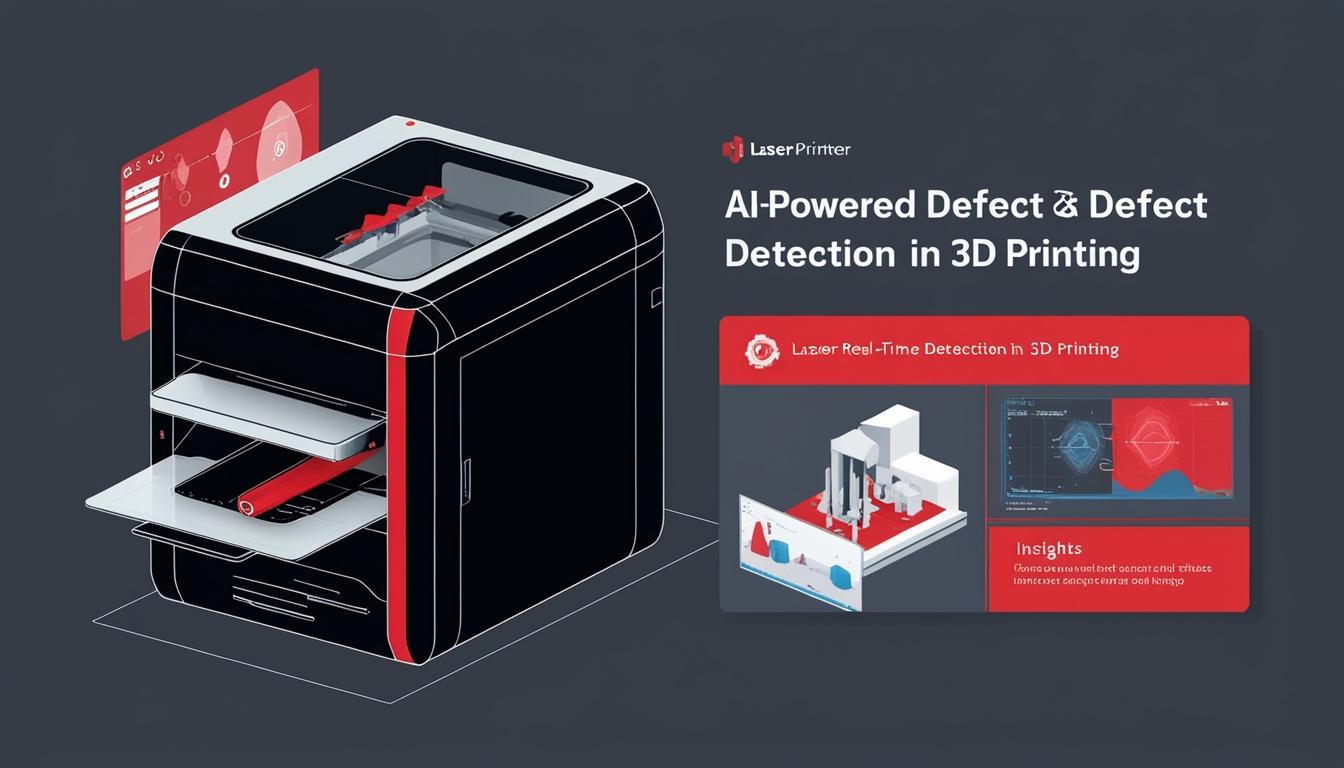
Iceland-based startup Euler has recently emerged from stealth mode with the launch of its AI-powered defect detection software tailored specifically for laser powder bed fusion (LPBF) and selective laser sintering (SLS) 3D printing processes. This advancement is set to bolster the capabilities of manufacturers in the additive manufacturing industry. Euler has integrated its innovative process monitoring tool within Autodesk's cloud-native CAD/CAM 3D design software, Fusion, forming an integral part of 3D printing quality assurance.
Euler’s software, available as a Software as a Service (SaaS) application within Autodesk Fusion, employs existing 3D printer camera data and sophisticated AI algorithms to provide real-time, automated analysis of 3D printing. Its primary function is to detect common defects in the 3D printing process, such as spatter, recoating issues, burn marks, and poor powder distribution, while also predicting potential failures. This tool enables users to filter data into actionable insights and standardizes system-to-system performance comparisons, particularly useful for industrial-scale applications.
The integration of Euler's AI capabilities with Autodesk Fusion enhances existing data management processes by correlating real-time sensor data from 3D printers with detailed design files. This synergy effectively allows for a streamlined workflow across CAD design, preparation, and post-processing stages, facilitating rapid iteration for industrial manufacturing purposes.
Following several months of beta testing at Autodesk’s Boston Technology Center, it has been reported that the onboarding of Euler’s software was straightforward, establishing a seamless connection between the 3D printer and the Euler Cloud platform. The Autodesk team noted that machine operators derived "incredible value" from the automatic AI insights provided by the tool. For example, during testing, Euler's software successfully identified a recurring fluctuation in spatter, signalling a hardware defect in the 3D printer that could have led to subpar quality in the final parts.
According to Autodesk, Euler’s defect detection tool plays a significant role in bridging communication gaps that often exist between design and manufacturing teams. The integration fosters a shared understanding of process capabilities and limitations, positioning designs that are not only innovative but also feasible for production.
As demand for high-quality 3D printed parts escalates, particularly in sectors such as aviation, aerospace, and defence, live monitoring and quality assurance tools are becoming increasingly critical. Euler is part of a growing landscape of companies committed to advancing real-time defect detection capabilities. Notably, Chicago-based Phase3D has launched a significant tool known as Fringe Qualification, designed for its metal 3D printing in-situ inspection platform. This tool automates layer-by-layer inspection across multiple printers, ensuring quality control during high-volume production cycles.
Similarly, California's Velo3D has introduced the Assure Quality Assurance and Control System for their Sapphire 3D printers, offering live monitoring capabilities. The system automatically detects defects and generates comprehensive quality control reports for each print job, thereby enhancing production efficiency.
Moreover, Ceramics 3D printer manufacturer 3DCeram has unveiled CERIA, an AI tool optimised for ceramic 3D printing. CERIA includes features for continuous monitoring and mid-process adjustments, reinforcing a smooth production flow.
As the additive manufacturing industry continues to evolve, the integration of advanced AI technologies like Euler’s software into existing frameworks is anticipated to significantly influence business practices and operational efficiencies. The implications of these emerging technologies are likely to resonate throughout various sectors, shaping the future of 3D printing and beyond.
Source: Noah Wire Services