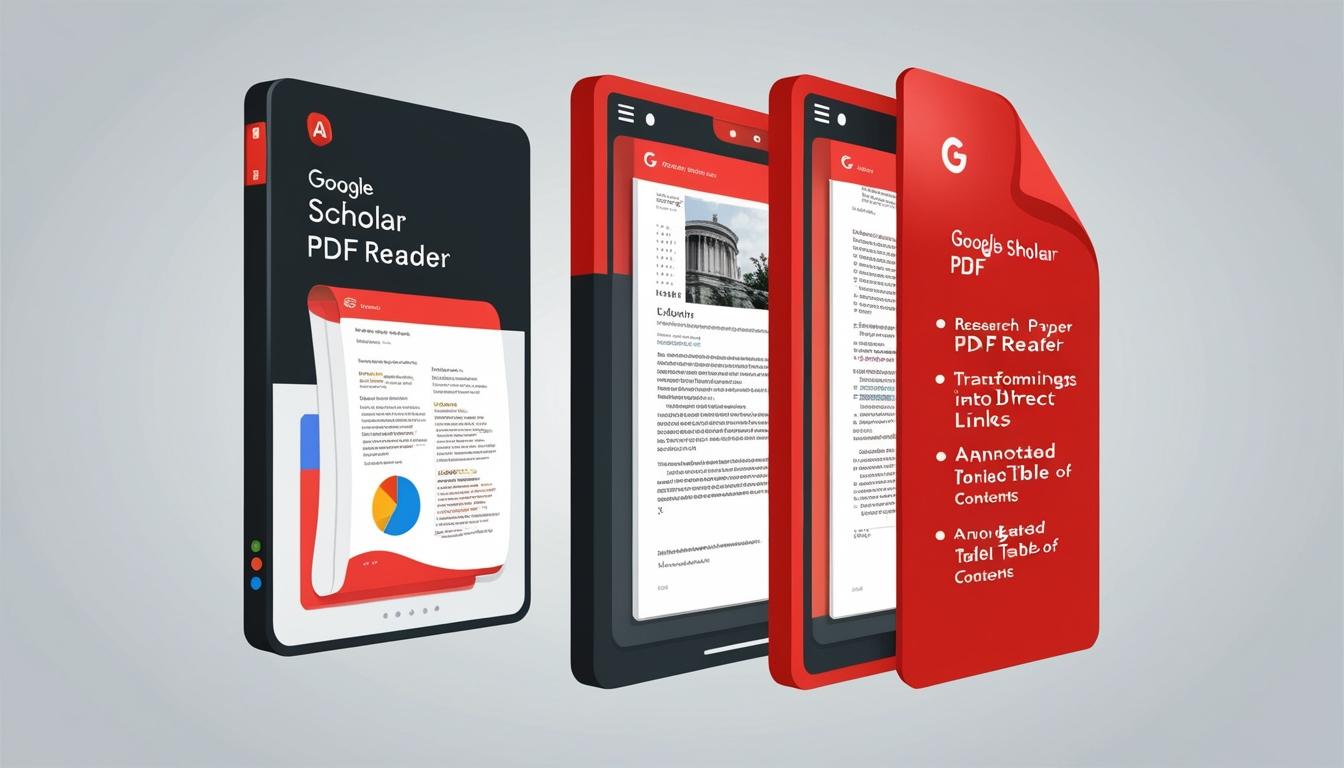
Google Scholar has embraced the advancements in artificial intelligence, introducing new features through its PDF reader that leverage generative AI technology powered by Google’s Gemini AI tool. This development aims to enhance the efficiency of reading and navigating academic research papers and comes as Google Scholar marks its 20th anniversary, having been co-founded by Anurag Acharya on November 18, 2004.
In an interview with Tech & Learning, Acharya discussed how educators and students can optimise their use of these new AI capabilities via the Google Scholar PDF reader extension. He remarked that his experiences as a former computer science professor and the challenges he faced gaining access to research materials have significantly shaped his vision for Google Scholar.
Acharya noted that when he arrived in the U.S., he found himself a more effective researcher due to the wider availability of resources. He stated, “I got access to resources, I didn’t become smarter,” indicating that accessibility remains a critical issue for many scholars and researchers. Recognising the barriers faced by researchers, Acharya and his co-founder, Alex Versta, endeavoured to create a platform that would expedite the research process and facilitate access to academic work for a broader audience, including students and enthusiasts.
The AI enhancements in the Google Scholar PDF reader primarily focus on improving the user experience when dealing with individual research papers. Acharya explained that navigating citations has historically been cumbersome for researchers, often involving manual look-ups in the citations section of a paper. To simplify this process, Google Scholar PDF now transforms citations into direct links, enabling users to access referenced papers with ease.
Another innovative feature is the AI-generated annotated table of contents, which not only lists the sections of a paper but also provides quick descriptions for each section. This functionality allows users to click through to the specific parts of the paper they wish to read, making prominent what Acharya referred to as “skimming” and “going into detail,” depending on the users' needs. He emphasised that these tools might reduce the intimidation factor associated with lengthy academic papers, particularly for novice researchers.
As for the future of generative AI in research, Acharya expressed optimism about its potential to further aid scientific inquiry. He stated, “The fundamental ability to understand language will enable us to do many more things.” He envisions future capabilities allowing users to quickly summarise related research, flagging contradicting studies and newer publications that have emerged since a particular paper’s release. Although the technology does not currently support these functionalities, Acharya remains committed to addressing complex challenges in research.
Acharya’s aspirations for the integration of generative AI in academic research underscore a burgeoning era of innovation. He concluded his thoughts by stating, “It's a wonderful time to be able to be participating in these efforts. There’s so much possible... I think we have only scratched the surface, so I look forward to what is yet to come.”
As AI technology continues to evolve, the impact on academic research practices and the accessibility of scholarly resources may redefine the landscape for educators and students alike.
Source: Noah Wire Services