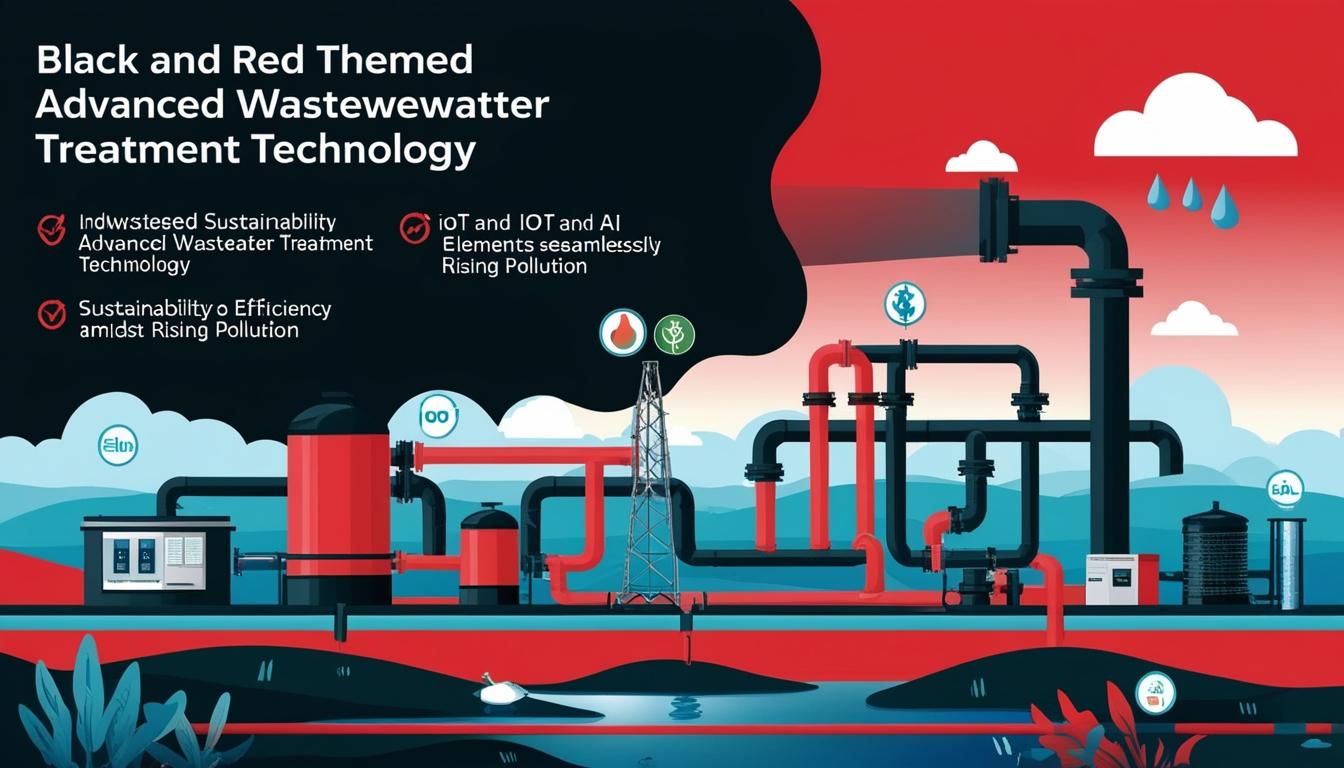
The industrial wastewater treatment market has been identified as a critical sector for managing the negative impacts of industrial operations on the environment. Recent analyses indicate that as industries expand globally, the demand for efficient wastewater management systems is becoming increasingly crucial. This need is particularly pronounced in industries such as pharmaceuticals, food and beverage, textiles, oil and gas, and chemicals, which generate significant volumes of wastewater on a daily basis.
According to Data Bridge Market Research, the global industrial wastewater treatment market is projected to experience substantial growth, rising from USD 299.83 billion in 2022 to an estimated USD 497.5 billion by 2030. This trajectory reflects a commendable compound annual growth rate (CAGR) of 6.53% between 2023 and 2030. Notably, regions like North America, Europe, and Asia-Pacific dominate this market, with Asia-Pacific leading in growth rate attributed to rapid industrialisation and urban expansion.
Leading corporations such as Veolia Environnement, Xylem Inc., SUEZ, and Pentair are at the forefront of this market, offering a range of solutions—from chemicals and filtration systems to comprehensive wastewater treatment facilities and digital services. These companies are increasingly tailoring their offerings to meet the specific environmental and operational needs of various industries, promoting sustainability and efficiency in wastewater treatment practices.
Historically, the treatment of industrial wastewater has evolved significantly from basic physical and biological processes to more sophisticated technologies. The emergence of advanced treatment methods, including tertiary treatment, membrane technologies, and chemical treatments, has enhanced efficiency in pollution removal and resource recovery. More recently, the focus has shifted towards zero-liquid discharge (ZLD) practices and water reuse, with industries working to treat wastewater to a level that allows for its repurposing in operations.
Moreover, digital innovations such as the Internet of Things (IoT) and artificial intelligence (AI) are now integral to modern wastewater treatment systems. These technologies enhance monitoring and optimization, allowing for real-time data collection and predictive maintenance that improve operational efficiency and minimise downtime. Speaking to openPR, a representative from Data Bridge Market Research commented on the trends, highlighting that “the integration of IoT and AI into wastewater treatment systems allows companies to swiftly identify and address issues, ensuring consistent and effective treatment.”
Several factors underpin the growth of the industrial wastewater treatment market. Increasing industrialisation, particularly in developing regions, creates a heightened demand for effective wastewater management solutions to tackle the associated environmental challenges. Moreover, as global awareness of the environmental consequences of industrial processes rises, stakeholders—including consumers and investors—are compelling businesses to adopt sustainable practices.
Technological advancements also play a pivotal role, with innovations such as membrane bioreactors and advanced oxidation processes making wastewater treatment more efficient and cost-effective. The rising cost of water, particularly in arid areas, further emphasises the need for water conservation and recycling, fuelling investments in advanced water treatment technologies.
In addition, government regulations and incentives significantly influence market dynamics. Policies aimed at promoting responsible wastewater disposal and treatment are becoming increasingly prevalent. These regulations not only mandate compliance but often provide financial incentives for businesses adopting environmentally-friendly technologies.
In summary, the industrial wastewater treatment market is poised for considerable growth as industries seek to align with sustainable practices, regulatory requirements, and technological advancements. With an ongoing emphasis on recycling, energy-efficient technologies, and smart monitoring systems, this sector is evolving to meet the challenges posed by environmental sustainability and waste management.
Source: Noah Wire Services