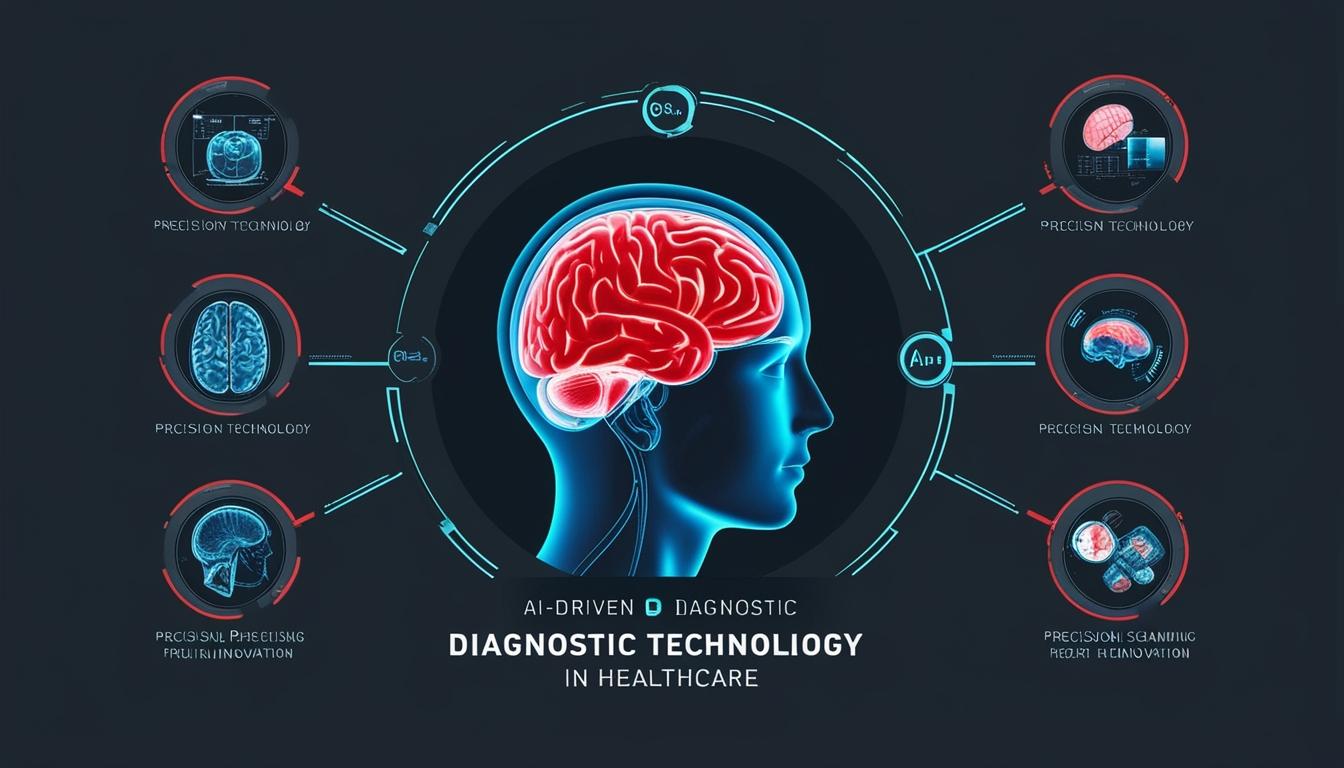
The rapid integration of Artificial Intelligence (AI) into the healthcare sector, notably in diagnostics, has marked a significant transformation in medical practices, according to recent commentary. The advancements in AI algorithms and machine learning techniques are enabling the analysis of vast amounts of medical data, leading to enhanced diagnostic accuracy. The sector encompasses various fields, including radiology, pathology, cardiology, and oncology.
A report by ResearchAndMarkets indicates that the AI diagnostics market is anticipated to expand at a compound annual growth rate (CAGR) of 33.47%, predicting a growth from US$1.716 billion in 2024 to an estimated US$7.268 billion by 2029. Speaking to the publication, the report highlighted how machine learning and deep learning algorithms have quickly adapted to processing extensive medical datasets, facilitating precise and timely diagnoses. For instance, a study noted that a deep learning system achieved a remarkable 94.5% accuracy in identifying skin cancer, surpassing human dermatologists. Similarly, findings published in the Journal of the American Medical Association reported a sensitivity of 94.5% for AI in detecting breast cancer via mammograms.
North America has emerged as the frontrunner in the AI diagnostics market, attributed to its robust healthcare infrastructure, continual technological advancements, and a supportive regulatory environment. The region has seen substantial investments in AI research and development, further propelling the integration of AI in medical diagnostics.
In a significant initiative, Avant Technologies, Inc., through its partner Ainnova Tech, has launched a pilot programme in Costa Rica aimed at combating diabetic retinopathy, a severe complication resulting from diabetes that can lead to blindness. This strategic alliance includes Roche, a global biotech entity, and healthcare provider Salud 360. This pilot programme is set to leverage AI to analyse retinal images, assisting in the early detection of diabetic retinopathy amongst the approximately 10.4% of Costa Ricans affected by diabetes. Alvaro Soto, General Manager of Roche Central America, Caribbean, and Venezuela, commented on the collaboration, stating, “At Roche, we are committed to timely diagnosis of diseases to improve clinical outcomes and thus contribute to the sustainability of the healthcare system.”
The pilot programme aims to enhance access to vision screenings, with high-risk patients being referred for specialised ophthalmology care. The anticipated success of this initiative may inform the expansion of similar programmes across the U.S., Canada, and Europe.
Recent developments in the healthcare technology landscape include Roche's definitive merger agreement to acquire Poseida Therapeutics, which has pioneered donor-derived CAR-T cell therapies. This acquisition builds on an established partnership aimed at enhancing treatment options for haematological malignancies.
Moreover, the completion of a merger between Recursion Pharmaceuticals, Inc. and Exscientia has created a significant player in the AI-driven drug discovery arena. Co-Founder and CEO Chris Gibson remarked on the collaboration's positioning in the space, stating, “I believe the combination of the incredible teams and platforms at Exscientia and Recursion position us as the leader of the AI-enabled drug discovery and development space.”
Tempus AI, Inc. has also forged a collaboration with Flatiron Health to integrate comprehensive genomic testing into Flatiron’s cloud-based Electronic Medical Record platform, OncoEMR®. This integration aims to enhance precision medicine in oncology by streamlining the testing process for oncologists.
Another notable advancement comes from Intuitive, which has received FDA clearance for labelling revisions regarding its robotic-assisted surgery technology based on real-world evidence, affirming the comparability of outcomes between robotic and non-robotic approaches.
The concerted efforts of these companies in harnessing AI technologies highlight an ongoing trend anticipated to reshape business practices within the healthcare industry, ultimately aiming for improved patient outcomes and system efficiencies.
Source: Noah Wire Services