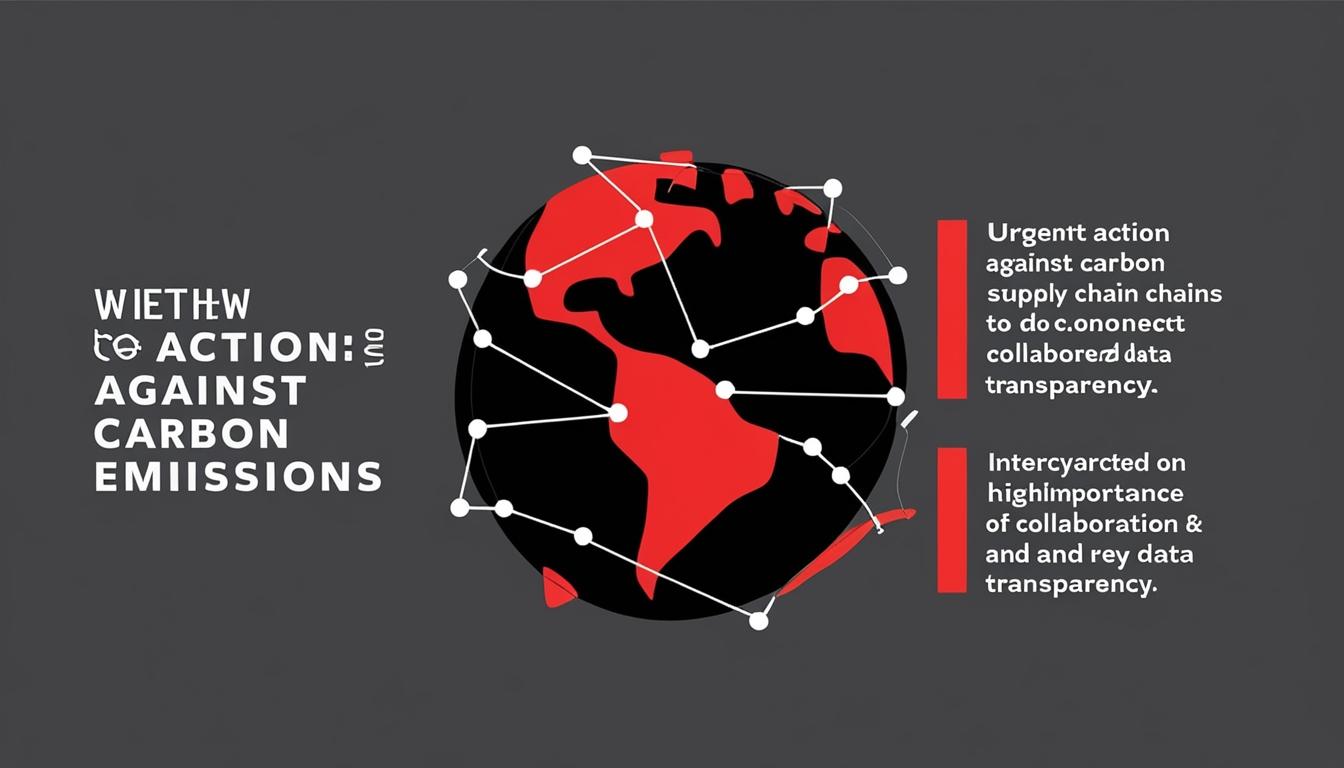
Collective action and credible data are deemed essential in addressing the pressing issue of global carbon emissions, with the consequences of inaction posing significant risks to the economy. Leading industry insights, as reported by SupplyChainBrain, highlight that failure to decarbonize could jeopardise up to 20% of profits by 2030, underlining the urgency for organisations to reevaluate their environmental strategies.
Focusing primarily on Scope 3 emissions, which are those generated by a company's supply chain partners, businesses are coming to realise that these emissions represent the most critical frontier in their decarbonisation efforts. Notably, supply chain emissions are reported to be 11.4 times higher than operational emissions (Scope 1 and Scope 2). To effectively mitigate this impact, firms must obtain supplier-specific data, though this has proven to be a considerable challenge. A study by Ivalua indicates that more than 60% of organisations characterise their supply chain emissions reporting as merely "best guess," relying heavily on industry averages that fall short of providing actionable insights.
The report underscores the importance of setting up comprehensive supplier engagement initiatives as a proactive approach to reducing emissions. Such steps include:
Understanding Climate Impact: Businesses must recognise how climate change influences their operations and vice versa. Acknowledging this intersection allows for meaningful leadership engagement by identifying key value drivers linked to climate strategy.
Setting Programme Goals: Initial objectives typically involve mapping out the supply chain, followed by the establishment of data collection targets, ultimately working towards science-based targets for emissions reduction.
Prioritising Supplier Engagement: Due to the complexity of supply chains, organisations are encouraged to focus their efforts on suppliers where the greatest emissions reductions can occur. This is achievable through the GHG Protocol’s guidelines, which suggest ranking suppliers based on potential emissions contributions. For businesses with mature programs, direct data from partners can facilitate this process, while less mature organisations may rely on industry averages.
Data Collection: Identifying priority suppliers opens the door for gathering supplier-specific data. Companies can enhance data collection by utilising existing public databases, ESG reports, and industry organisations. This step is critical for establishing a baseline for Scope 3 emissions, regardless of the maturity level of a climate programme.
Data Management: With significant data accumulation comes the need for robust data management systems, which can be developed in-house or through existing software solutions. Standardisation is also essential for effective comparisons and progress tracking.
Educating Suppliers: Beyond mere data collection, businesses are tasked with empowering their suppliers through education and collaboration. This involves offering training sessions tailored to suppliers at varying maturity levels, covering core elements of GHG accounting, emissions calculations, and decarbonisation strategies.
Incentivising Reductions: To motivate significant participation from suppliers, companies can incorporate climate-related requirements into agreements, provide improved contract terms, establish benchmarks, and publicly recognise efforts.
Tracking Progress: Continuous monitoring and reporting of emissions is essential as stakeholders increasingly demand transparency regarding climate disclosures. The forthcoming regulations in the European Union further amplify the necessity for companies to maintain proactive engagement with their supply chain partners.
Tim Weiss, chief executive officer of Optera, emphasised that engaging with the top 80% of emissions contributors is only the beginning. Striving for further outreach and refining strategies is imperative to achieving substantial results in carbon output reduction.
In an encouraging trend, an Optera survey indicated that 70% of companies are already engaging suppliers to lower carbon emissions. This reflects a collective movement towards actionable change, highlighting that each incremental improvement contributes to broader environmental goals. The insights from SupplyChainBrain serve as a foundational overview for businesses aiming to navigate their unique challenges in the realm of carbon emissions and supply chain sustainability.
Source: Noah Wire Services