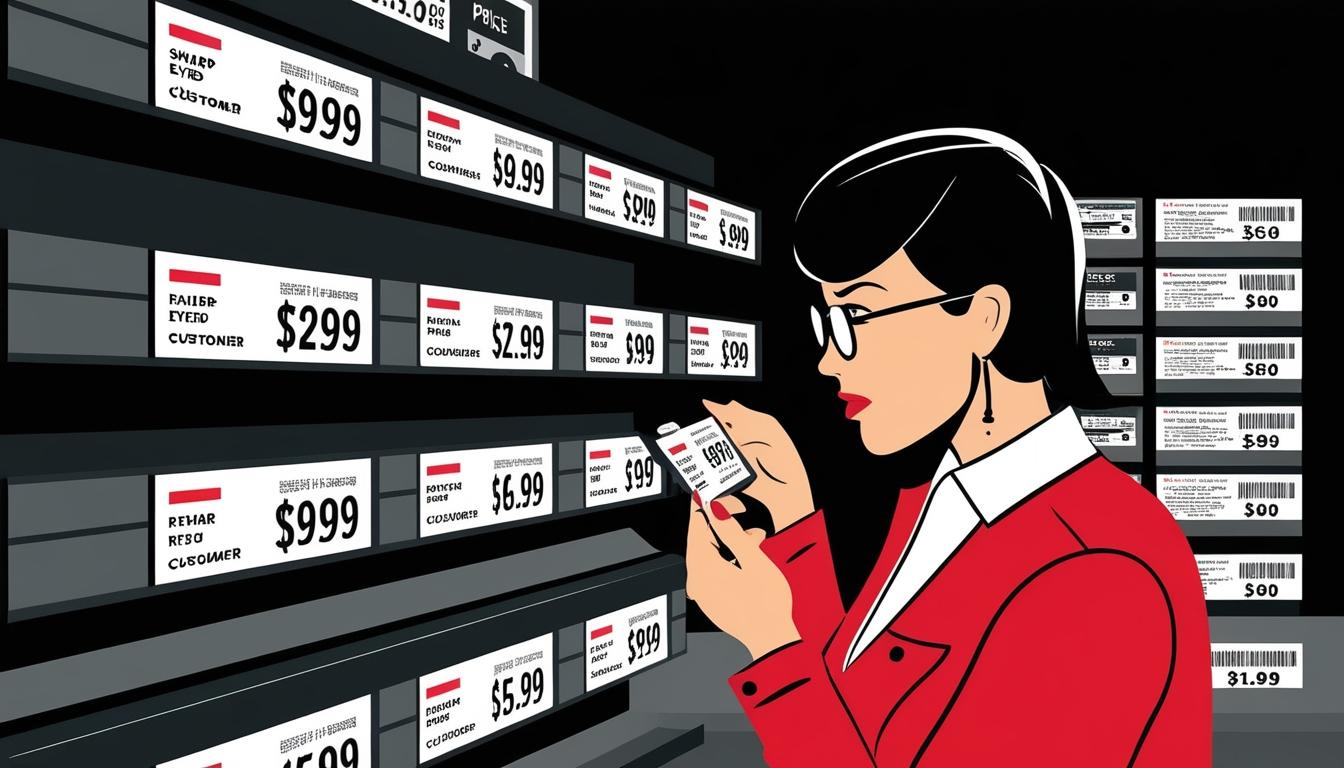
A federal investigation is currently underway to determine the impact of AI-driven "surveillance pricing" on consumers, as shopping habits increasingly intersect with advanced technology. This inquiry comes in the wake of growing concerns that businesses may be employing artificial intelligence to adjust prices based on individual customer profiles, including their identity and location.
Jessica Spencer, an AI expert associated with the local firm Penguin Connective, commented on the investigation, stating to WRAL News, "It's definitely going on, I think they're still trying to understand exactly how it's being used." The Federal Trade Commission (FTC) announced in July that it is investigating a range of companies, including major players like Mastercard, JP Morgan Chase, Task Software, and Revionics, all of which have relationships with prominent retail businesses such as McDonald's, Starbucks, Home Depot, and Tractor Supply.
The concept of surveillance pricing goes beyond traditional price gouging. It dynamically adjusts costs according to specific customer data, which may include browsing history, demographic information like gender, and even geographical data regarding their physical presence in a store. Stephanie Nguyen, a chief technologist with the FTC, explained that while this practice isn't necessarily novel, there are historical instances highlighting its potential harms. She pointed out that studies have indicated that test preparation companies in the early 2010s manipulated pricing based on customers' ZIP codes, resulting in inflated charges for certain demographics, including Asian American consumers.
Nguyen further illustrated the gravity of the situation, detailing that certain customers might be charged higher prices simply based on their location in relation to a retail outlet. "We really don't want people to be charged based on their race or their gender," she stated, stressing the importance of fairness in pricing, especially for lower-income individuals who might face limited purchasing options.
Emerging technologies such as those developed by Eyeware, a Swiss company, utilise eye-tracking technology to provide retailers with insights into customer behaviour and preferences. Spencer mentioned, "It's not super widespread, but it's something that is being used more and more in bigger chains," suggesting an expanding trend in data-driven retail strategies.
In light of these developments, Penguin Connective advises consumers to thoroughly review terms and agreements associated with shopping applications to understand how their data is being utilised. Spencer expressed her support for the FTC’s investigation into surveillance pricing, emphasising the importance of consumer protection. She noted that if the investigation reveals problematic pricing policies within certain stores, it could empower consumers to reconsider their shopping choices, thus exerting influence over retail practices.
As the investigation unfolds, it reflects a broader shift in how businesses leverage technology and data in their pricing strategies, raising important questions about the intersection of consumer rights and technological advancement.
Source: Noah Wire Services