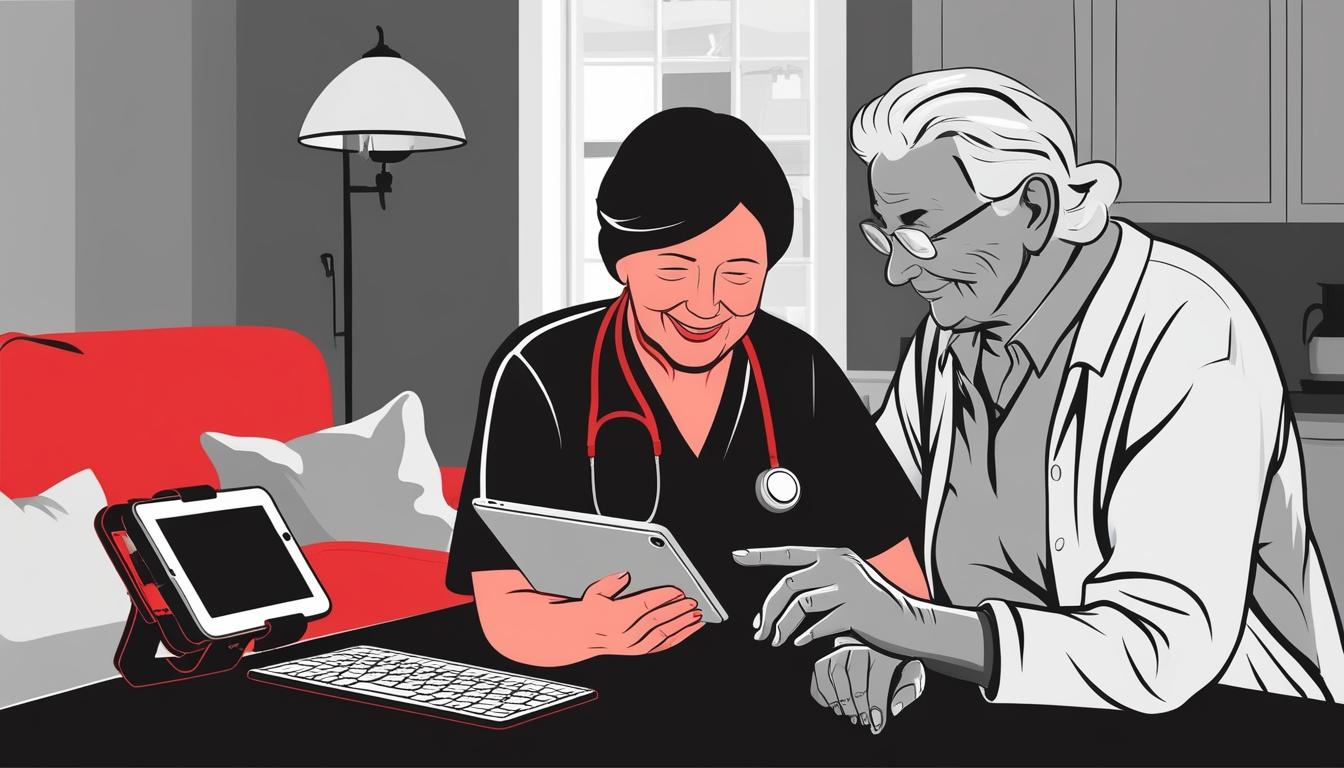
The demand for home-based care is on a marked increase, with industry leaders voicing the critical need for technological solutions to address ongoing staffing challenges within the sector. As the elderly population continues to grow, healthcare professionals are recognising the importance of embracing technology to enhance service delivery and meet patient needs.
Tim O’Rourke, president of Help at Home, emphasised the societal shift towards home care, stating, “We know that most adults want to age in place at home, which is the right place as it’s proven to be better for overall health and well-being and more cost-effective than an institutionalised setting,” as reported by Home Health Care News. Help at Home, based in Chicago, operates more than 200 locations across 11 states, positioning itself as a key player in this evolution towards home and community-based services (HCBS).
The effective integration of technology within home care systems promises to transform caregivers’ delivery of services, making processes significantly more efficient and responsive. Advances in artificial intelligence (AI) and machine learning are being utilised to facilitate predictive analyses, identify at-risk patients, and enhance resource allocation strategies. Todd Houghton, president of Homewatch CareGivers, noted, “AI and predictive analytics will continue to be game changers in home care, helping with early detection of potential health issues and allowing for more proactive care.” Homewatch CareGivers—originating in Colorado—provides one-on-one careful service through its franchise network of 243 locations.
Another vital aspect of technological advancement is the increasing prevalence of telehealth and remote patient monitoring. Mike Johnson, chief researcher for home care innovation at Bayada Home Health Care, commented on the demand for such services, stating, “Alternative ways to share data or visit a provider through telehealth and remote patient monitoring should continue to grow because people will demand them.” Bayada operates across 21 states and five countries, delivering home health, home care, and hospice services.
Emerging technologies such as virtual reality and wearable health-monitoring devices are generating interest for their potential to address issues of loneliness among seniors and facilitate real-time health tracking. Houghton further explained that these innovations could lead to more personalised support, tailoring care strategies to meet individual client needs.
Furthermore, advancements in communication technology are enhancing real-time support for patients, according to Dr. Patrick Kneeland from DispatchHealth, a Denver-based provider of high-acuity in-home medical care. He noted, “As technology advances, real-time communication and support will continue to improve. We’re already texting, calling and video chatting in real-time, day or night.” He expanded on the possibilities of home-based care, suggesting that advancements in care services could alleviate the burden on healthcare systems by providing complex care services at home, an area where technology could deliver comparable care fidelity to hospital settings.
The forecast for the future of home health care indicates a significant shift towards offering services within the home. A study conducted by McKinsey predicts that by 2025, approximately 25% of services for Medicare and Medicare Advantage patients could be delivered at home, leading to improved patient satisfaction and economic benefits for providers. O’Rourke stated that integrating clinical care with home care services is essential to address care gaps and support social determinants of health (SDoH).
Christian Rodriguez, CEO of Woundtech, anticipates a burgeoning role for home health services within the overall healthcare ecosystem, asserting, “This shift will be partly driven by increased vertical integration among managed care companies.” Woundtech focuses primarily on home-based wound care, underscoring the trend towards integrating various healthcare services in the patient's residence to improve economic and health outcomes.
As the role of technology in care provision expands, the need for skilled professionals will grow. The U.S. Bureau of Labor Statistics predicts a 22% increase in the demand for home health aides by 2032, surpassing average job growth rates. Houghton adds that the complexity of client needs will require aides to enhance their skills and engage in ongoing training to adapt to new technologies and care techniques.
The future of home care relies heavily on the marriage of technology and nursing skill sets, aiming to create a more responsive and effective health care delivery system while addressing the needs of an aging population.
Source: Noah Wire Services