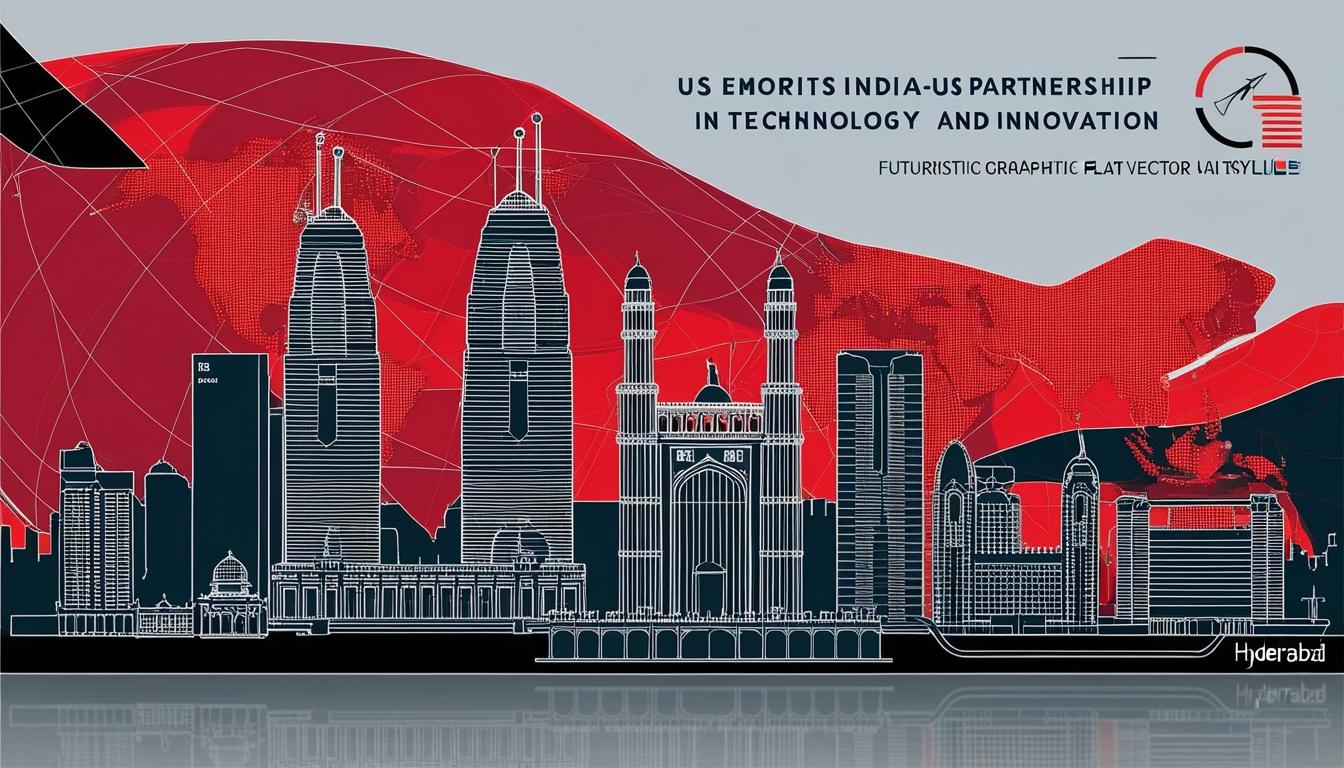
During the recent fourth India-USA Space and Geospatial Business Summit held in Hyderabad, a significant announcement was made regarding the India-US Geospatial Alliance. This initiative aims to expand bilateral trade in geospatial technologies from its current value of $2.5 billion to $10 billion by the year 2030. Various experts gathered at the event underscored the importance of deepening technological cooperation, driving innovation, and unlocking economic opportunities across several sectors including defense, disaster management, urban planning, and climate resilience.
Jennifer Larson, the US Consulate General in Hyderabad, spoke to attendees about Hyderabad’s crucial role in the global geospatial landscape, stating, “Hyderabad processes more geospatial data than anywhere else in the world.” Larson highlighted the progressive integration of artificial intelligence (AI) and machine learning (ML) with geospatial technologies, noting their potential to address pressing global challenges such as climate change and food security.
The summit also focused on enhancing India’s geospatial sector, which is currently valued at approximately $1.92 billion. This sector has garnered international recognition for its ability to deliver cost-effective solutions. Sanjay Kumar, the CEO of Geospatial World, praised the transformative impact of geospatial technologies during the COVID-19 pandemic and referred to the India-US partnership as a strategic collaboration encompassing trade, defense, education, and healthcare.
Larson expressed optimism regarding the prospects of leveraging both geospatial and space technologies to promote sustainability and drive global impact. She pointed out the necessity for actionable goals, including improved visa facilitation and expanded space cooperation, to work towards the ambitious $10 billion target by the time of the next summit.
The growth of the geospatial and space industries in India has been significantly propelled by the National Geospatial Policy 2022 and the Space Policy 2023. Srikant Sastri, Chairman of the Geospatial Data Promotion & Development Committee, indicated that empowering private entities in spatial data acquisition and infrastructure modernization is essential. He articulated that incentivizing demand from the private sector would not only strengthen the geospatial industry, but also expand bilateral trade.
Rajeev Jyoti, the Director (Technical) at IN-SPACe, touted the NASA-ISRO SAR (NISAR) Mission as a notable example of India-US collaborative efforts. With the global Earth Observation (EO) industry anticipated to achieve a compound annual growth rate (CAGR) of 16%, it is projected to reach a market value of $8 billion, positioning India as a pivotal player in this arena.
As the summit concluded, it became clear that the key to future progress lies in fostering enhanced research collaborations, advancing manufacturing processes, and streamlining technology transfer. Strengthening networks across businesses, governments, and research institutions is expected to position geospatial technology as an essential driver of economic growth and strategic partnership between India and the United States.
Source: Noah Wire Services