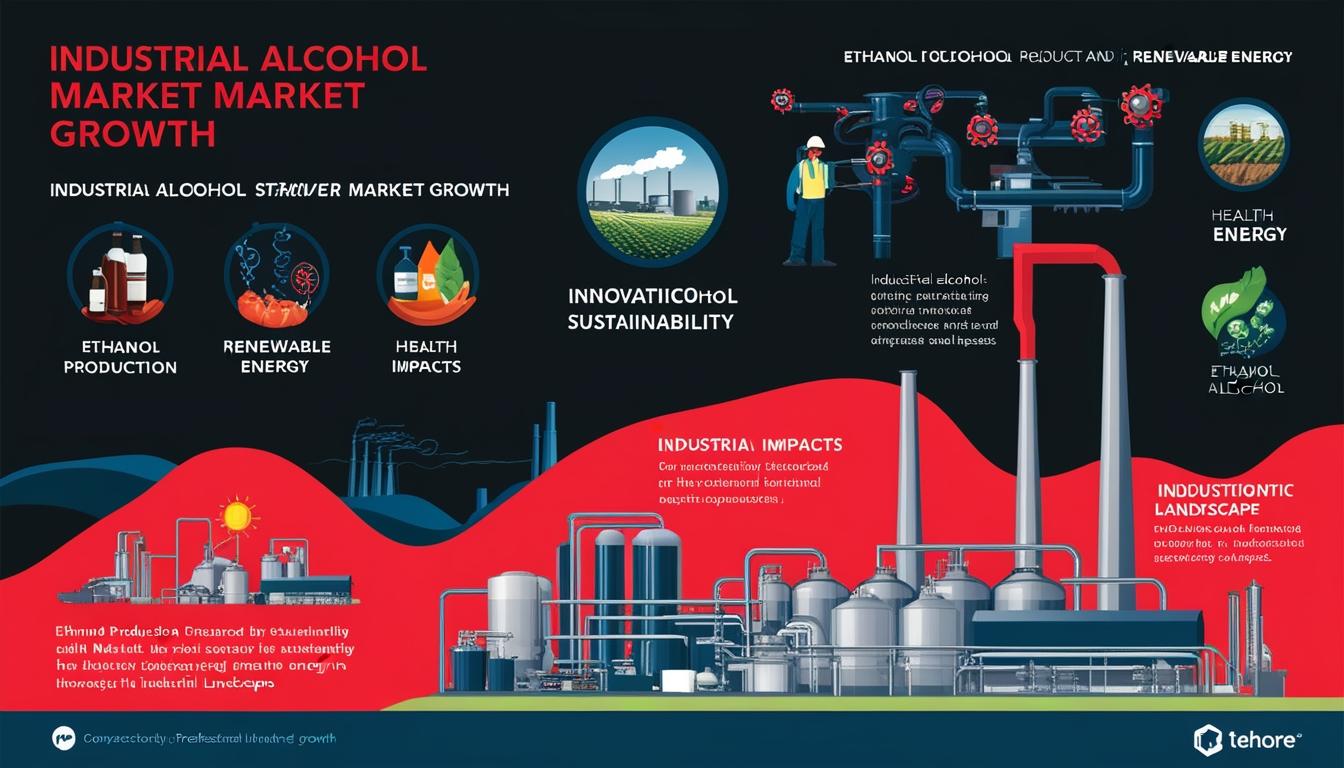
The industrial alcohol market is projected to experience significant growth over the next decade, expected to reach approximately USD 277.0 billion by 2033, marking an increase from USD 131.9 billion in 2023. This growth translates into a compound annual growth rate (CAGR) of about 7.7% from 2024 to 2033, according to a report published by Market.us.
Industrial alcohol encompasses non-consumable alcohols manufactured for various industrial applications, including ethanol, methanol, and isopropyl alcohol. These products find usage across industries such as chemicals, pharmaceuticals, automotive, and food and beverages, showcasing the sector's extensive applicability.
A primary factor driving the growth of this market is the escalating demand for biofuels, particularly due to the environmental push towards renewable energy sources. The pharmaceutical industry is also a significant contributor to this demand, reflecting substantial growth in the manufacturing of sanitisation products. The global trend towards increased manufacturing activities further boosts the necessity for industrial alcohol. In India, for instance, the alcoholic beverage export market is projected to grow by 15-20% for the year 2024-25, which is anticipated to increase the demand for industrial alcohol, particularly ethanol used in spirit production.
However, the industrial alcohol market faces scrutiny regarding health implications. As indicated by the World Health Organization, each year sees around 2.6 million alcohol-related deaths worldwide, leading to increased governmental scrutiny and health initiatives aimed at addressing these issues. For instance, in the UK, the Department of Health and Social Care plans to allocate £154.3 million in 2024-25 to improve public health services connected with alcohol consumption, complemented by an additional £266.7 million in 2025 to tackle alcohol-related health problems.
Despite these challenges, the market is poised to expand, buoyed by robust demand from key sectors and burgeoning export opportunities. Ethyl alcohol, in particular, commands a dominant market share of 58.5%, underscored by its versatility for use as a solvent, in sanitisation products, and in various consumer goods sectors like personal care.
The Asia-Pacific region leads the industrial alcohol market, accounting for 41.6% of the global share, valued at approximately USD 54.3 billion. This dominance is attributed to rapid industrialisation and a growing commitment to renewable energy incentives in powerhouse economies, such as China and India.
Moreover, the market is characterised by a range of sources for industrial alcohol, with sugar and molasses contributing 37.3% to production, indicating a clear shift towards bio-based inputs. Increasing regulations and policies addressing environmental sustainability are expected to further catalyse this transition.
Technological advancements are anticipated to play a crucial role in refining production processes through innovations aimed at increasing yields while reducing environmental impact. Companies are elevating their focus on green and bio-based solutions, aligning with consumer demands and government incentives.
Several major players in the market, including Archer-Daniels-Midland Company, Cargill, and ExxonMobil, are contributing to this evolution by investing in sustainable technologies and expanding bioethanol production capacities to meet the anticipated growth in market demand.
In summary, the industrial alcohol market is on the cusp of substantial transformation due to increasing demand for sustainable solutions across multiple sectors, coupled with significant advancements in technology and a concerted push towards environmental sustainability.
Source: Noah Wire Services