As small businesses across the globe gear up for the festive season, the dual pressures of increased customer traffic and operational demands can lead to significant stress. The holiday rush requires meticulous management, with owners often besieged by a barrage of spreadsheets, inventory lists, and caffeine. However, advancements in artificial intelligence (AI) technology present new opportunities for easing these burdens.
AI tools are transforming how small businesses prepare for and navigate the holiday flood. Among the notable applications is demand prediction, revolutionising inventory management. AI-powered platforms such as TradeGecko and Zoho Inventory analyse sales trends, market data, and even environmental factors to forecast necessary stock levels. This eliminates guesswork, allowing businesses to prepare adequately and avoid disappointing customers who may be searching for specific items.
During the holiday shopping season, customer inquiries tend to escalate rapidly. AI chatbots like Intercom and Tidio enhance customer support by handling a spectrum of questions, from product availability to delivery times. These systems function around the clock, ensuring that businesses can maintain a responsive customer service profile without overwhelming their human staff, thereby reducing the risk of burnout.
Marketing tasks can also become cumbersome during this busy period. Fortunately, AI solutions such as Mailchimp and HubSpot offer automation capabilities that allow businesses to run personal email campaigns and targeted advertising without extensive manual labour. These tools utilise data to optimise marketing performance, freeing business owners to allocate more time toward other responsibilities.
Order fulfilment, another critical aspect during the holidays, can become chaotic. AI platforms like ShipHero can streamline this process by automating various stages, from prioritising orders to recommending shipping methods and packaging sizes. Such capabilities can lead to more efficient operations and quicker deliveries, which are crucial during peak shopping times.
Furthermore, it is essential to keep the morale of employees high during the intense holiday season. AI scheduling tools, such as When I Work, consider employee availability and peak business hours to generate effective work schedules. By promoting a balanced workload and preventing employee burnout, businesses can ensure a smoother operational flow.
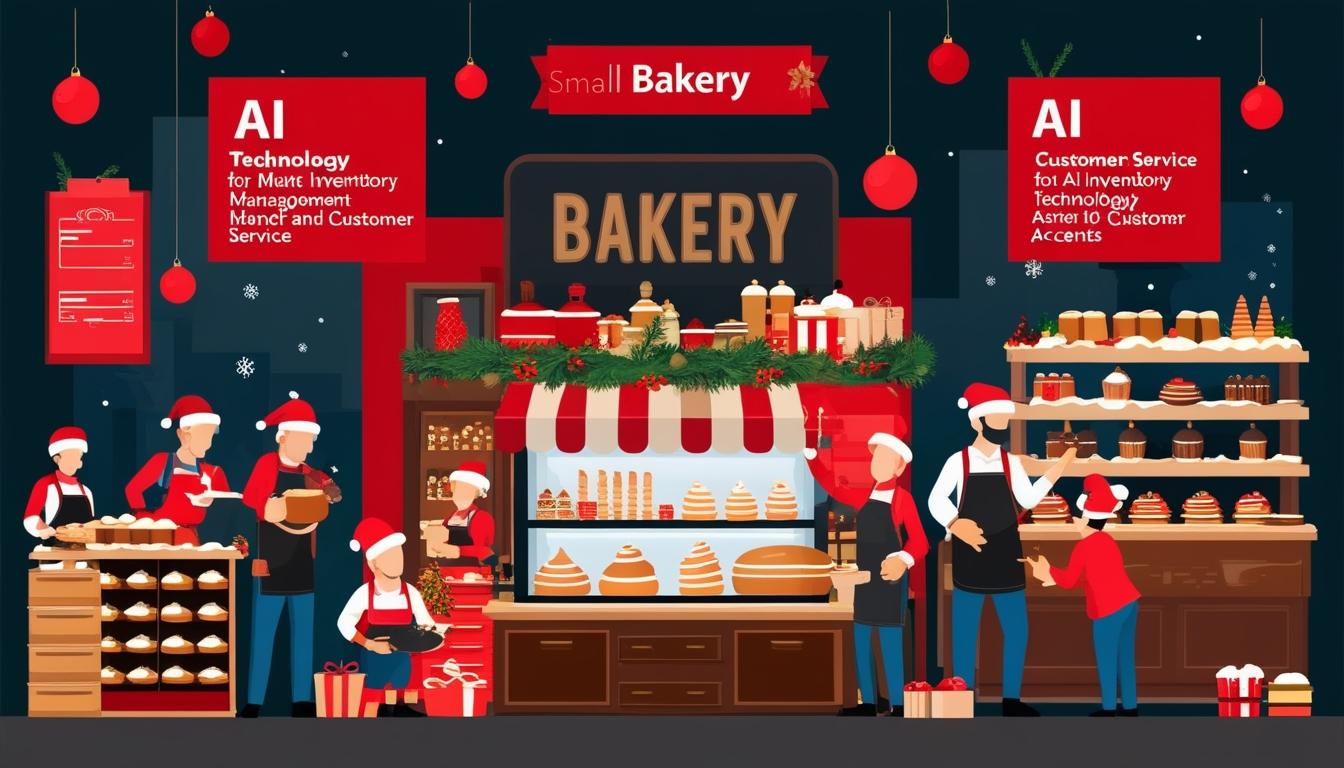
For instance, a small-town bakery that traditionally sees a tripling of sales each December illustrates the potential of AI intervention. Prior to adopting these technologies, the business faced challenges such as declining order fulfilment and overwhelmed staff. Post-AI implementation, they harnessed inventory tracking for ingredients, outsourced most customer interactions to chatbots, and executed highly targeted email campaigns that attracted new customers. The result was a vastly improved holiday experience for both staff and customers, aligning operational efficiency with increased profitability.
As the holiday season represents a critical revenue period for many small businesses, harnessing AI not only facilitates management during peak times but also fosters a year-round operational advantage. The integration of these smart technologies allows businesses to adeptly scale their activities while maintaining a manageable stress level, thus ensuring that growth does not come at the cost of employees’ well-being or customer satisfaction.
In summary, as the busy festive shopping period approaches, small businesses are urged to embrace AI technologies that predict demand, automate customer support, and streamline order fulfilment, potentially transforming their holiday experience from chaotic to celebratory.
Source: Noah Wire Services